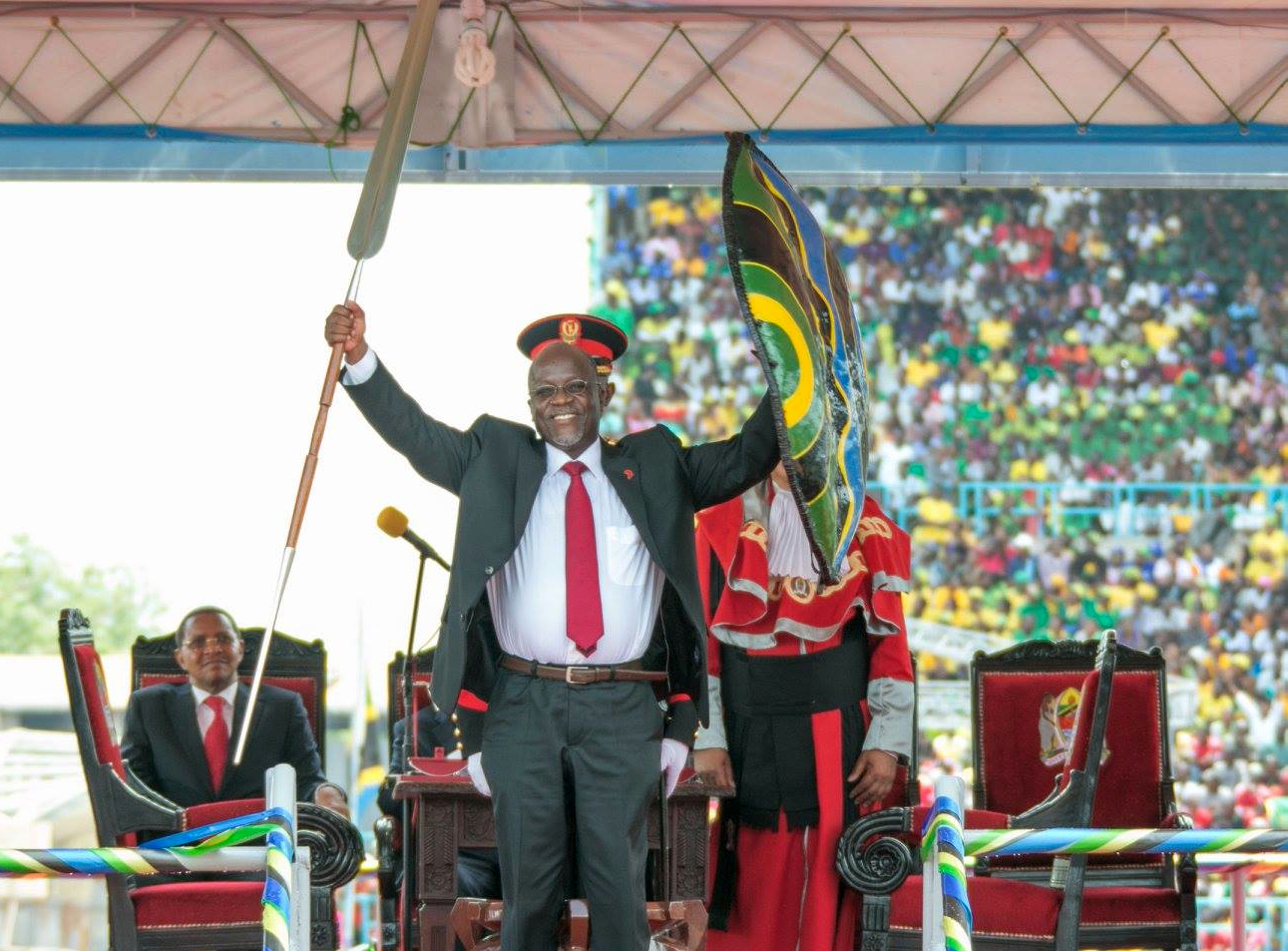
“Mr President Magufuli was my man with a good heart to his people,” says local mountain guide, Faraja Mwaijande, of the late President of Tanzania, who died of heart complications on 17th March 2021.
Dr John Magufuli was a divisive figure within the governmental ranks, one citizen described him as “the president Tanzanians needed”. However, throughout his presidency he was heavily criticised and known by many as “The Bulldozer”.
But why the controversy? What was it about this man and his presidency that divided opinion throughout not only Tanzania, but the rest of the world too?
Tanzania under President Magufuli
“The Bulldozer”
When asked how Magufuli’s presidency impacted Tanzania, a local tour guide reported:
“The best of all is that he installed integrity in the entire society, from governmental heights to individual level with us as citizens.”
From the start of his presidency, anti-corruption was an important issue to Magufuli. As reported by Africa News in 2016, he “vowed to root out corruption in his ruling party, threatening ‘no mercy’ for anyone giving or taking bribes”.
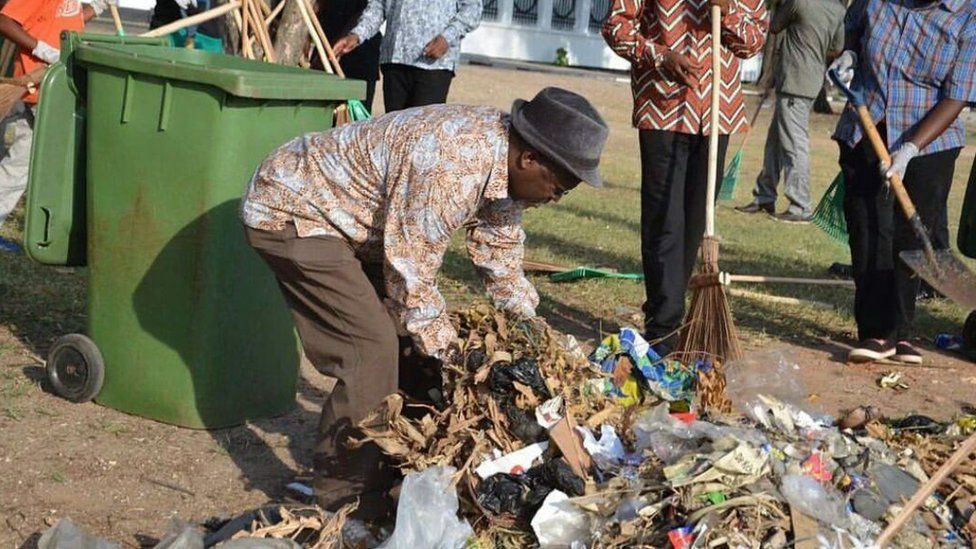
Within days of becoming president, he was making big changes, such as cancelling Tanzania’s independence day fete and instead putting this money towards much-needed roadworks. He also fired many government officials in what the BBC described as his “anti-corruption crusade”.
It was his hard-headed approach that bestowed him the nickname, “The Bulldozer”. However, Tanzanians, and people throughout Eastern Africa, found admiration in his methods.
A man that loved his nation
Magufuli’s view on the relationship between the government and its citizens impacted many Tanzanians. Mwaijande claims that thanks to Magufuli:
“People know it is the responsibility of government office to help and solve problem on behalf of Tanzanian citizens… He was the best president of Tanzania after our first President Nyerere, in my opinion.”
Coming from a humble background, Magufuli wanted to help the poverty levels of Tanzania. James Nasary, a local guide, shared:
“President Magufuli grew up a labourer. In his lifetime he wanted to remove the strata of his people between the ‘haves’ and the ‘have nots’.”
Magufuli endeavoured to do this by enhancing the use of resources within the country and encouraging hard-work and dedication.
Mwaijande explains:
“You know, we have so many natural resources, but most local people didn’t know how we could benefit from them. Mr President Magufuli opened Tanzanian eyes to know we can get our shares from all big companies’ investment.”
Another citizen described:
“His motto was ‘hapa kazi tuu’, meaning working is the only valid thing. This boosted the nation’s spirit of labour to a level that Tanzania was last year announced by World Bank it has entered intermediate economy.”
Who was Magufuli? (1959-2021)
On 29th October 1959, John ‘Walwa’ Joseph Magufuli was born in Chato, North-West Tanzania.
The Citizen calls him “a peasant’s son”, and explains how, “author Mathias Kabadi describes John Magufuli’s family as: ‘a very common family of farmers and pastoralists’.”.
He worked his way from primary education at Chato School in 1967, to graduating in Maths and Chemistry from the University of Dar es Salaam in 1974.
In 1982, he achieved a Diploma in Education of Science, specialising in Chemistry and Maths. This led to his first job, teaching Maths and Chemistry at Sengerema Secondary School.
This was a short lived employment, as in 1983, due to compulsory laws in Tanzania, he joined the National Service (JKT). The Citizen reports that according to JKT training, “Magufuli was a dedicated and hardworking man”.
After his service, Magufuli returned to education in 1985 until 1988, gaining a Bachelor of Science in Education, majoring again in Chemistry and Math.
Following a short time working as a chemist in a Nyanza Cooperative Union factory, Magufuli went to the University of Salford (UK) from 1991 – 1994 and obtained a Master’s degree in Science. He later achieved a PhD in Chemistry at the University of Dar es Salaam in 2009.
It was whilst gaining his PhD that Magufuli began to pursue governmental responsibilities.
He was first elected MP for Chato in 1995 and appointed Deputy Minister for Works by then-President, Benjamin Mkapa. He was re-elected MP for Chato in 2000; made Minister of Lands, Housing and Human Settlements from 2005 – 2008; and appointed Minister of Livestock Development and Fisheries in 2008 – 2010.
Magufuli was elected President of the United Republic of Tanzania in 2015 and re-elected for his second term in October 2020. He served up until his death on 17th March 2021.
This statement is supported by the World Bank, declaring:
“Following two decades of sustained growth, Tanzania reached an important milestone in July 2020, when it formally graduated from low-income country to lower-middle-income country status.”
Magufuli also focused on trying to optimise structures within Tanzania. Nasary, explains:
“[He] build country infrastructures, healthy centres and he was trying to unite East Africa countries in business alliance and development to each other… He trusted that citizens could build their own country… He build the capital city in proper way in terms of roads, electricity railway and tried to build Dar es Salaam as business city. Also, Magufuli build international airport in Chato in order to widen tourism sector in Northern parts.”
So, why the controversy?
Amongst the good intentions he had for Tanzania, he has been heavily criticised and often described as a dictator. This has been brought about by a range of policies and bans that he put in place:
Media restrictions
One of the greatest criticisms of Magufuli is his censorship of media. The BBC reported that Magufuli “muzzled Tanzanian media, shutting down several newspapers, radio and TV stations as well as social media platforms simply for reporting what the government didn’t like.”
Due to these restrictions, Tanzania ranks 124/180 on the 2021 World Press Freedom Index.
Travel restrictions for public servants
In November 2015, Magufuli limited foreign travel to emergencies only for all public officials. By 2019, this policy was relaxed, but they could only travel with a permit.
This strategy was in place to reduce government spending, and the BBC reported that:
“A central bank report in early 2017 revealed that the government had saved $430m (£330m) by limiting foreign travel between November 2015 to November 2016.”
Pregnant schoolgirls
In Tanzania, schoolgirls are expelled if they fall pregnant. Although Magufuli has been widely criticised on this issue, it was in place for four decades before his presidency.
However, when there was opportunity to nullify the policy, Magufuli did not go through with it. This caused division within his government.
Political rallies
From the start of his presidency, Magufuli was clear that he did not want political leaders initiating rallies. The BBC reported:
“He argued that people should be left alone to focus on ‘building the country’, and political leaders should wait for the next election in 2020 to hold rallies.”
This did cause concern amongst some citizens, as one shared, “…he also almost killed democracy in Tanzania”.
COVID-19
Magufuli’s stance on the pandemic has caused great conversation and concern throughout the whole world. He believed in taking a natural approach to the virus and did not lock down the country. On 21st February 2021, Reuters reported:
“President John Magufuli’s sceptical approach towards COVID-19 has caused alarm among WHO officials.”
Although there are clear concerns in the way that Magufuli tackled issues within Tanzania, there has still been praise from its locals. A Tanzanian, stated:
“He believed in Tanzania’s wealth; something that made him an enemy with most western countries calling him a dictator. Even if he was one, to me he was a leader I really wanted to help end Tanzania ignorance with many.”
A new presidency
Since Magufuli’s death, his vice-president, Samia Suluhu Hassan, has taken office. These are new and exciting times for Tanzania as she is the country’s first female president.
Mwaijande has shared his thoughts regarding this:
“I am very positive about my president Samia Suluhu Hassan. She was working with President Magufuli so they had same goals… She is true leader we have to give her time to show how much respect and love she has for our country… For me, I expecting a lot from my President Samia Suluhu Hassan… I pray for her to have power to do the best for our country.”
Although there is an air of positivity surrounding this new appointment, there are concerns surrounding the return of corruption. One local shared:
“I think Magufuli’s death may impact Tanzania integrity, a thing which may bring back corruption… from only a day after his death we experience big scandals of corruption, which forced Madam President Samia to re-appoint a new cabinet of ministers to assist her reign.”
A citizen observed that an appointment of a female president may have been Magufuli’s plan all along:
“Magufuli knew of his health status and he was always ready to departure, though wishing to leave a legacy… It’s like he knew for Tanzania to have a female president it will be a dream with current generation.”
Having already made a difference in media freedom and foreign policy, it will be exciting to see what further work the new President Hassan has in store for Tanzania.
I wrote this article in May 2021 for an International Journalism module. We were tasked with writing a 1,500 word topical feature article on a country of our choice.
Cover image credit: Paul Kagame via Flickr
 GRACEFULL REFLECTIONS
An excellent and well-balanced article, Poppy.
LikeLike