A Year Without You: A how to guide on handling grief 


Ok, so the title may be a bit misleading. There’s no right or wrong way to handle grief because it varies for everyone. But the 30th July marked one year since my Mum passed away, and I thought I’d write a little bit about how grief has affected me in the last year – including how I’ve faced physical, mental and emotional challenges, and what I did to overcome them.

What is grief? 

HelpGuide.org describes grief as “a natural response to loss”. I like this definition because it’s true, it’s a natural response – there’s nothing that we can do to stop it, in fact the more we try to block it, the greater it will be. 

Something that really surprised me in my experience with grief is the physical effects of it. In the following couple months of Mum dying, I could barely think straight and at times struggled to put a sentence together (something that would come as a surprise to anyone that knows me and what a chatterbox I am). I also experienced stomach and muscle pains, and extreme fatigue. 

Mentally, doing life was quite a challenge too. I found myself having vivid dreams with Mum in and struggling to be in large social settings. It felt weird to be continuing on with normal life when there was such a storm and loss inside. Plus, before Mum’s passing, everything was very intensely about caring and supporting her, adjusting back to normal life felt a bit like whip lash. 

And of course emotionally – there are so many emotions that come with grief, and it varies from sadness to relief to guilt to anger to regret to peace to so much more. One minute you’re fine, the next minute you’re in tears – it’s very confusing. I found that I was feeling emotions, without even realising it. Something inside felt unsettled and it wasn’t until I sat down and thought it through that I would realise where the emotions where coming from. 

In a nutshell, grief is confusing. It comes in many forms, and is often masked by other things. Most importantly though, it’s different for everyone. 

The six month mark 

Everyone talks about the “whatever-number-the-article-tells-you stages of grief” – health.com has done one on The 7 Stages of Grief.

Personally, I don’t resonate with this at all. Perhaps I recognise some of these stages from when Mum was ill. But I don’t think grief is that simple. It hits you from no where, often in quite an unexpected way. 

For me, the toughest time I felt was the six month mark. At the end of January, everything got very dark and gloomy. My energy was sucked from me and I had no motivation to do anything, even the things that I usually loved. It felt like all I could think about was work, or the fact that Mum had died and I would never speak to her again. I struggled communicating with my husband, and avoided seeing the people I would usually love to see. 

It was interesting though, I didn’t even realise it had reached the six month mark. This wasn’t my mind knowing that a milestone was coming up, this was my body physically reacting to the loss that I felt in my life. 

Dealing with grief 

I just want to reiterate, there is no right or wrong way to deal with grief. There may be unhealthy ways to respond to it, but we all react differently to difficulties in life. Here are some of the ways that I handled grief: 

Having a positive focus

Two months after Mum passing away, I married my now-husband, Shem. Although the timing of this has come with difficulties, this has overall been a wonderfully positive thing to focus on. Starting a new life offered a fresh start and a future to focus on. Plus, planning the wedding in just three months provided moments of joy and purpose amongst the grief. 

I also started a new job in the following October. This kept my mind and hands busy, and focusing on goals kept me looking forward rather than backwards. 

Other positive things to focus on includes going to the gym / getting fit, starting a new hobby (or rediscovering an old one), and booking a trip and having something to look forward to. 

Although these are all positive things to do, they come with a warning: don’t fill your time and mind as a way of running away from grief. There’s a fine line between a healthy focus and distraction. The more we avoid our emotions during such a difficult time, the bigger they get, which leads me onto my next point…

Facing your feelings 

Sometimes my feelings hit me hard. I’m not an overly emotional person so when emotions do come, I can often feel overwhelmed. My natural response is to find something to fill my time or do something as some sort of escapism. 

I’ve learnt that the best way to deal with difficult emotions is to work through them, which can sometimes look like you’re not coping. But working through emotions means doing the difficult thing and just sitting in them. There were days where I just didn’t leave my bed, even attending church wasn’t possible at times. 

Talking to someone can be helpful too. At church, we have a pastoral worker that I’ve been speaking to throughout the whole process of Mum’s illness and then her passing. It’s great to know that when I have more difficult feelings there’s someone that I can talk things through with. 

The more we face our emotions, the clearer and easier they become. The sooner we understand the root of our feelings, the sooner we are able to come out from our gloom pit and reconnect with the light. 

Writing it down 

In my darkest days, I struggled to remember simple things from the stressful times in the run up to and following Mum’s death. It was frustrating to look back on that period and realise that time was jumbled and memories were hazy. 

Something that has really helped me with this is starting this blog. To look back on the time period and puzzle the pieces together, understand emotions around things, and recognise where God was working through it all, has been amazingly helpful. 

Writing a blog is a little OTT, I know. But it actually started with journalling. On the days where thoughts were swimming around my head, I wrote them down. The thought of “keeping a diary” felt a little cringey, so I used a journalling app on my phone that’s Face ID protected. 

Getting thoughts down stopped them from swimming around my head, and helped me to begin to work through them. 

Being patient with yourself 

Being patient with yourself is such an important part to all of this. There have been, and still are, some days where I wonder if I’ll ever see the other side of this. In all honesty, it’s unlikely I will. There is always going to be something that I wish I could say to Mum, or an event that I wish she could be at. But slowly the bad days are getting further and further apart. 

It’s helpful to ask others to be patient with you too. At the age of 27, there aren’t that many people that will know what it’s like losing a Mum. Sometimes it’s helpful to just remind people of the difficult feelings you’re experiencing.

Shem has been amazingly patient with me, and such a support during this time of grief. But there have been times where I’ve still needed to remind him, or even just simply asked, “How would you feel in this circumstance after recently losing a loved one?” 

Lovingly reminding those around you to be patient with you is just as important as reminding yourself to be patient too. 

Having faith 

Being a Christian has really got me through all of this too. I won’t lie though, sometimes I’ve been asking God some very big questions. Other times I have been crying out “Ok, that’s it. Haven’t I had enough happen? Can I please stop feeling like this now?” 

But that’s the point, I’ve had a direction for my prayers. I can recognise that life can be really rubbish, and feel like it’s falling on top of you but through it all, God is with me and comforts me. I know He understands the feelings I feel because when Jesus was on this earth, He experienced the same feelings of loss and suffering. 

Even though my prayers were often calls of despair, He still heard them and each day He gave me the strength I needed to get through. He helped me to see the blessings that were in my life, and has provided me with people that comfort, love and support me. 

Faith also means trusting in the process and recognising that you are being shaped in the midst of trials, and that you are being shaped to help and comfort other people too – which continues to guide me today. 

Marking a year in a positive way 

As mentioned above, 30th July marked a year since Mum passed away. This was an interesting time, and such a milestone, as with grief as a whole, hits people differently. For me, it wasn’t as bad as the sixth month mark. I think because I knew it was coming, I was mentally very aware of it, but I didn’t have the same physical responses as the end of January. 

When Mum died, she spent her final week at The North Devon Hospice. Whilst she was there she received amazing care and they enabled her to die in the way that she wanted to – and all for free!

Whilst she was at the hospice, I made a little promise to myself that each year I would raise money for such a wonderful charity as a positive way to remember Mum’s passing. 

So, that’s what I did – I arranged a charity quiz night and invited family, friends and all of the community – 120 people turned up and we raised £1,379! 

Planning the event and remembering the anniversary of Mum’s death in such a way gave me a positive focus and made the day really special. It offered an opportunity to gather close friends and family together, whilst doing something proactive and meaningful too. 

Doing something so big may not be how you want to remember the anniversary of your loved one dying, but I really recommend doing something positive to mark the day. It helps to bring closure and turns the day into something special. 

Grief is a journey without a clear map, but with time, patience, and support, it’s possible to find moments of light even in the darkest times. I hope that by sharing my story, others will find some comfort in knowing they’re not alone.

The Lord is close to the brokenhearted and saves those who are crushed in spirit.” (Psalm 34:18)

Choosing a Life Partner: From dating to marriage in just 10 months


Shem and I started dating in November 2022. On 23rd September 2023, we got married. In just ten months, we chose each other as life partners. 

This was quite an unexpected turn of events for me. Before becoming a Christian, I had other relationships and I never would have thought about moving things so quickly.

But I’m just going to go ahead and say it – Christians date to marry. 

It’s something I’ve found quite refreshing actually. Starting a relationship with clear intentions minimised anxiety, uncertainty and stress.

It meant that we had very frank and honest conversations, right from the start. Whilst I think this is partly due to our unique personalities, I believe it’s quite common for Christians to approach dating in this same way.

However, not all Christians get married so quickly so I thought I’d share a little bit about the thinking behind the journey that Shem and I took together from dating to marriage, and the way that God helped us shape our decision making. 

You can find a more detailed timeline of our relationship in the first series of this ‘life partner saga’: finding a life partner

Deciding in turbulence 

Starting a new relationship shortly after finding out your mum has Stage 4 breast cancer is quite a bold move. My life at the time was very turbulent. We didn’t know how long Mum had left to live and I was travelling between Bath and North Devon regularly. 

The uncertainty of dealing with this understandably had an interesting impact on my emotions. Beginning a relationship with someone can come with enough challenges as it is, let alone under these circumstances. But I think it was something that God graciously used to strengthen our relationship. 

A lot of relationships start with a ‘honeymoon’ period. This is the term that people use to describe the ‘puppy love’ that people experience when first dating. Everything seems new and exciting, and it feels like you’re on some sort of high. 

This was not the case for Shem and me. Because of mum’s situation, Shem and I experienced learning to navigate real-life hardships right from the start. 

It meant that we had to communicate well, and I very quickly learnt what a supportive and caring person he is. We also quickly discovered how each of us responds when faced with difficult situations. 

Learning together 

Being Christian really helped us navigate these challenges. It was so wonderful to have someone by my side that also trusted in God, and was able to encourage and remind me of His promises on the tough days. 

We started reading the Bible together very soon into dating, and this was something that had an amazing impact on our relationship. The Bible is full of wisdom and talks so well into real-life situations. 

By reading the Bible with someone, you both reflect on and discuss what you’ve read so it meant that we were having fruitful and open conversations with one another – helping us to get to know each other in a very honest way. 

Plus, and this is a bit of a funny one, when we started talking about getting married, someone from church recommended we read a marriage book. We started readingMarriage Matters by Winston Smith, which was very insightful. It reminded us that marriage is about the every day moments, and that when we approach them with a Christ-like attitude, these ordinary moments can extraordinarily show us God’s love. 

I think the best part about all of this reading was that we were being intentional in our conversations. We both put in the effort to learn how to love each other well, knowing that the best way to do this was by learning more about Jesus’ love for us together.

Sex (or lack of it) before marriage

I know that this topic seems ludicrous to most people nowadays but yes, Shem and I chose to wait until we were married to have sex.

Sex is a beautiful and enjoyable gift that God has given us. But Shem and I both believe that it’s something that God created for marriage, and so we waited. 

I think not having sex until marriage was, although difficult at times, a really wonderful decision. It allowed us to get to know each other in a non-physically intimate way. 

During the time we spent together, we focused on understanding each other’s personalities and didn’t get blind-sided by the desires that stem from physical intimacy. I could relax, knowing that Shem wouldn’t pressure me into having sex before I was ready – a feeling I’d been all too familiar with before becoming a Christian.

It’s a very controversial choice in today’s culture but it was a really beautiful thing to do. 

Getting to know one another, in a really detailed way 

One practical approach that greatly helped us was creating a list of topics to discuss. This was Shem’s bright idea (he loves making lists), and it also provided us with something meaningful to talk about on our dates. 

The topics ranged from practical living to Christian ideologies and included: 

  • Life / career ambitions
  • Political view points
  • Church etiquette
  • Consumerism / spending money 
  • Starting a family and if / how many children we’d like 
  • Make up / beauty
  • Marital roles 
  • Tithing / giving money to charity
  • Medical treatments 
  • Parenting styles
  • Money and banking as a married couple

The key to these discussions was not necessarily agreeing on everything but understanding each other better through them.

Talking about money, for instance, has proved very useful as we start our marriage. Finances can often cause arguments in couples, so it was great to get used to talking freely about it early on. 

Praying together

Prayer has been, and continues to be, an essential part of our relationship. After every significant conversation, we make it a point to finish with a prayer. This practice helps us incorporate God into our relationship and the decisions we make.

Also, with everything going on in my life whilst Shem and I were dating, he was praying for me constantly – it felt like I had a little prayer warrior by my side. This was especially helpful when we faced challenges.

When we don’t pray around conversations, it’s much easier to get caught up in emotional responses. Prayer enables us to discuss something, and then give it to God and trust that He is working in the situation. 

In summary 

Choosing a life partner is an important decision. For Shem and me, our journey was guided by faith and intentionality.  Here are my key takeaways: 

  • Clear intentions: Starting with clear goals minimised anxiety and stress.
  • Honest communication: Open conversations helped us understand and support each other.
  • Faith as a foundation: Prayer and Bible reading deepened our bond and provided wisdom around decision making.
  • Waiting for marriage: Our decision to wait for sex taught us patience and respect.
  • Practical discussions: Talking about important topics early on aligned our goals and expectations.
  • Continuous prayer: Prayer helped us navigate challenges and trust in God’s guidance.

I hope our story shows that faith, open communication, and intentionality can really help in choosing a life partner. It’s been such a blessing to be able to trust God through it all, and I’m so grateful to have Shem by my side, knowing that we will now be facing life’s challenges together. 

Two are better than one, because they have a good return for their labor: If either of them falls down, one can help the other up.” Ecclesiastes 4:9-10 

The author is pictured with her husband on their wedding day. There are sparklers and people surrounding them.

Overcoming the anxiety of decision making: Practical tips and Biblical advice


Making decisions. It’s something we all have to do. Some of us are better at it than others. 

I am not very good at making decisions, I actually find them rather stressful. My brain seems to ruminate and go over all of the different options again and again. I want to say yes to everything but also don’t want to say yes to anything because I never know what’s around the corner.

When I speak to Christian loved ones about it, their answers are often the same: Trust God and pray about it. Although this is a true statement, I don’t always find it the most helpful. I trust God completely, He’s taken me this far! But it doesn’t change the fact that I actually need to decide on an outcome and which path to take. 

So, as always, I thought I’d write about it. 

Decision making schools of thought

Everyone addresses decisions differently, some people like pros and cons lists, others follow their instincts, some people just procrastinate until the very final moment. 

UMass Dartmouth has put together a helpful, rather straight forward document on decision making. They suggest seven simple steps:

  1. Identify the decision
  2. Gather information
  3. Identify alternatives
  4. Weigh the evidence 
  5. Choose among alternatives
  6. Take action
  7. Review you decision

This is great advice if you aren’t very emotions-based, or if the circumstances accommodate the decision being this straight forward. But for those that need a little more thought, Indeed has put together 12 more tender tips for making decisions

  1. Try not to overthink
  2. Take care of yourself 
  3. Remove yourself from the situation 
  4. Don’t shy away from your mistakes
  5. Examine the opposite of your decision
  6. Ask for feedback
  7. Give yourself advice
  8. Manage your emotions
  9. Weigh short and long term consequences
  10. Accept the possibility of making a poor decision 
  11. Stay true to your values
  12. Use data 

I think a balance between these two lists could be helpful. The first one is very practical, and the second one seems to fill in the gaps of the emotions flying around decision-making. However, I think there’s more to it…

Understanding the difficulty in my decision making

I think the key issue I have in decision making is control. Between having a rather chaotic childhood and now having hard some real hardships in adult life, I am fearful of the unknown because I want to always be prepared for what could come next.

Making a decision is stepping into an unknown and a new environment, which can make me feel anxious that I won’t be in control of a new circumstance if bad news were to arise. 

Another issue I have is that when I don’t know what’s coming next and have too much time on my hands, I seem to get more anxious about every day situations and stress over small things.

I’ve had a very intense couple of years and I know that I am in need of time off, but I seem to be spending my time off obsessing over what I should be doing next, rather than being in the moment and enjoying the gift of rest. 

Given the difficulty and stress that I faced last year, and then jumping into a very demanding job, it’s understandable to feel this way – but it doesn’t mean it is right. 

I think identifying the issues of why I’m struggling with decision making, offers me a good ground to understand what God may be trying to teach me in these circumstances. 

A bit of Biblical application

“And we know that in all things God works for the good of those who love him, who have been called according to His purpose.” (Romans 8:28)

First of all, talking into the control that I struggle with, the verse above is a very helpful reminder. I need to remember that I can’t control everything that happens in life, but I can trust that God knows what will happen and that when I trust in Him, He works all things for my good. 

And He has done this again and again in my life so far! 

“Be still before the Lord and wait patiently for him.” (Psalm 37:7)

This verse reminds me to be still in knowing who God is and that He is the one in control. It is good to wait patiently on Him, trusting that He will guide me to where I need to be. 

A quote that I keep coming across on Instagram at the moment is, “Whilst you’re waiting for God to open your next door, praise Him in the hallway.” This may be a little cheesy, but perhaps it’s something I need to try to be better at. 

“He makes me lie down in green pastures, He leads me beside quiet waters, He refreshes my soul. He guides me along the right paths for His name’s sake.” (Psalm 23:2-3)

This little snippet actually reminds me of two truths:

  1. The ‘quiet waters’ of rest that we are given refreshes my soul. I should enjoy the opportunity of rest that I’m in now. 
  2. God will guide me ‘along the right paths’. I might not know how or when this will happen, but I can trust that it’s a promise that He makes. 

“Look at the birds of the air; they do not sow or reap or store away in barns, and yet your heavenly Father feeds them. Are you not much more valuable than they?” (Matthew 6:26) 

This verse is a beautiful reminder that God knows and cares for all of the animals on this earth, and He loves me even more than that. 

By trusting and following God, I have a relationship with the Creator that feeds the birds so I know that I do not need to worry about tomorrow because His grace is sufficient for this life, and the one that is to come! 

“As for me and my house, we will serve the Lord” (Joshua 24:15)

This verse is the anchor to all my decision making. I believe that my purpose in life is to try to be servant hearted to those around me, and imitate the way that Jesus lived whilst on this earth. When making a decision, the question I should always ask is, “Does this glorify God?”

In summary

Writing this has been helpful. The Bible passages highlighted seem to really point to being still and taking joy in this opportunity to refresh my soul. 

I’m so grateful to know God and to be able to relinquish the control that I seek to Him because trying to control and know everything only leads to more stress. 

Often when I’m making a decision, I do keep in mind that God rules overall, so I try to make a decision at a cross roads that will put me in line with His path for me. 

Although I recognise God’s supremacy, this way of thinking still tries to put a lot of control in my hands. 

A gentleman at church once said to me that we often do this but we have it all backwards. Really what God teaches is that we should make a wisdom-based decision but step out in faith, knowing that God is with us in whatever path we take. 

Our punitive decision making, isn’t going to effect God’s supremacy and overall plan. The decisions we make – whether they are right or wrong ones – are all part of His plan, and teach us more about Him along the way. 

How do you handle decision-making? Share your thoughts in the poll below!

“So whether you eat or drink or whatever you do, do it all for the glory of God.” (1 Corinthians 10:31)

Picture of a sign post on the South West Coastal Path with the sea in the background. The picture signifies being at a cross roads of decision making.

Reflecting on an unexpected chapter


You may be pleased to know that I’m coming to the end of my little politically themed writing stint.  It was very helpful to stay on topic during such a busy six weeks at work and I hope that, for those that have kept up, a fresh insight into politics may have been provided. 

But as my job as a campaign organiser is nearing an end now, I thought I’d take a moment to reflect on yet another interesting, unexpected chapter of this crazy old ride of my life.

God works in mysterious ways

If you were to tell me five years ago that I would be working in politics and caring about the results of a General Election, I would have thought you were joking. But it’s funny how things turn out, and sometimes God works in rather unexpected ways… 

During the turbulence of the last couple of years, there were three months that were particularly full on. From July to September, I was planning my wedding with Shem; full-time caring for Mum; dealing with her passing away; planning Mum’s funeral; cleaning out Mum’s house; looking for somewhere to live (but I was unemployed and Shem was going into his final year of university); moving into a new flat; and then getting married. 

I had been working at my church in the run up to this but that job was finishing. I needed to look for a new job but understandably didn’t have the head space to do this. One night in August, I was about to have a quick look on Indeed but beforehand I prayed: 

“Lord, I need a job because we need to pay our rent and bills. But I’m tired and I have so much going on right now [Mum had died just a couple of weeks before], I just don’t have the energy. But I know, Lord, that you know where I’ll be, I know that you have a plan for me, so please will you clearly show me. Please make it really obvious where you want me to be.” 

Given the particularly difficult circumstances, I found myself praying boldly and meaningfully for clear guidance, something I don’t often do.

So, I continued to look on Indeed, everything looked rather generic and nothing particularly great, so I went to sleep. The following morning I woke up to a message from the Parliamentary Candidate (now MP!) for the South Cotswolds Lib Dems saying that they’re looking for a campaign organiser and would I be able to do it. We hadn’t spoken for over a year, and I only knew her briefly when working on a project with her during my degree. 

As I’ve mentioned before, politics has never been my thing. I always thought “same muppet, different puppet”, but after praying such a bold prayer and receiving such a random message, I thought I would find out a bit more information about her values and vision as an MP… long story short – I took the job! 

Commit to the Lord whatever you do, and he will establish your plans” Proverbs 16:3

Shem and I got married on 23rd September 2023 and then went away for our honeymoon until early October. My plan for after this had been to potentially have a mini-breakdown after the craziness of the prior 3 months, spend some time processing Mum dying, and to then start a job in November. 

But God had different plans. My new job wanted me to start ASAP so I ended up just having a week after the honeymoon to unpack my newly-moved-into flat before starting my new job as a campaign organiser. 

It’s wonderful though because it’s times like this that I remember how well God knows me, He knows me better than I know myself. To have a new job and exciting experience like this is exactly what I needed. To be able to pick myself up and focus on something was a much better idea than wallowing. 

However, I knew it was going to be difficult, and that I would need God’s help. Working in politics was a brand new territory for me and, especially as a Christian, this can be quite difficult. Before starting my new job I decided that I would endeavour to read my Bible each morning before work because it was essential that I had my armour of God on in this new, in-some-ways scary situation: 

Therefore put on the full armour of God… Stand firm then, with the belt of truth buckled around your waist, with the breastplate of righteousness in place, and with your feet fitted with the readiness that comes from the gospel of peace. In addition to all this, take up the shield of faith, with which you can extinguish all the flaming arrows of the evil one. Take the helmet of salvation and the sword of the Spirit, which is the word of God.” (Ephesians 6:13-17) 

It’s amazing how these kinds of situations can bring you closer to God. Even though it’s been a very busy nine months, and the job has been quite demanding, my relationship with God has stayed at number one, and He’s taught me a lot along the way!

When I am afraid, I put my trust in you” (Psalm 56:3)

January was really tough. I don’t do well with the winter in the darkness and gloominess. I was working too often and my long commute meant I was often driving in the dark, which only added to the tiredness. 

But it was more than that. The end of January marked six months after Mum had died, and six months is a milestone where grief can really creep up on you. 

I think I was also reeling a little bit from those crazy three months. My identity was feeling a little confusing. Losing your mum in many ways affects your identity. I think the fact that I don’t have a dad either left me feeling a little waif-like. Plus, although a happy occasion, getting married changes your identity too. Especially as a woman, I didn’t even hold my name anymore! 

I think because of all of this, alongside working in a job that I never saw myself going into, I was feeling a little lost. 

But tough times often mean that your body and mind are processing things – and that’s good, even if it doesn’t feel like it at the time. And I’m grateful for the people that God has put into my life that love and support me through such times. 

Most importantly of all though, it’s helpful to remember when feeling such feelings of waysided-ness, that my true identity lies in Christ, and He did graciously remind me of this. It was off of the back of this difficult period that I decided to start writing this blog! 

Give thanks to the Lord, for He is good; His love endures forever.” (Psalm 118:1) 

I must say, this whole job has been an amazing experience, even with the long hours and high demand that it involves. I thought I’d share, even just for my own benefit to look back on, some of the wonderful opportunities this job has provided, and to recognise the goodness of the adventures that God has taken me on. 

  • Working with hundreds of volunteers that care about and want to see a positive change in their communities.

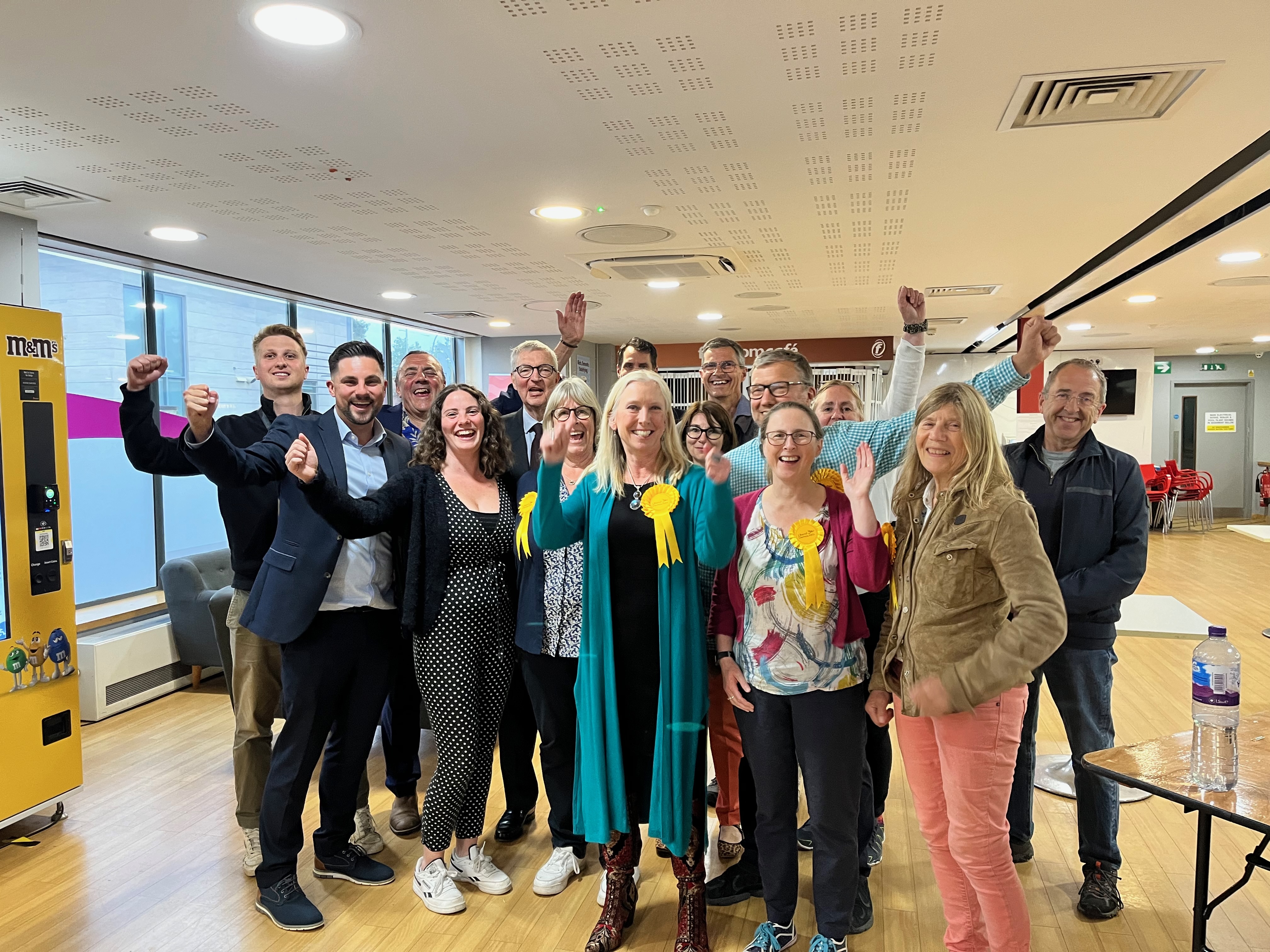
  • Winning the General Election with a 5,000 majority, and the fourth highest turnout in Britain.

  • Learning about local politics and working alongside councillors that work hard for their local areas.

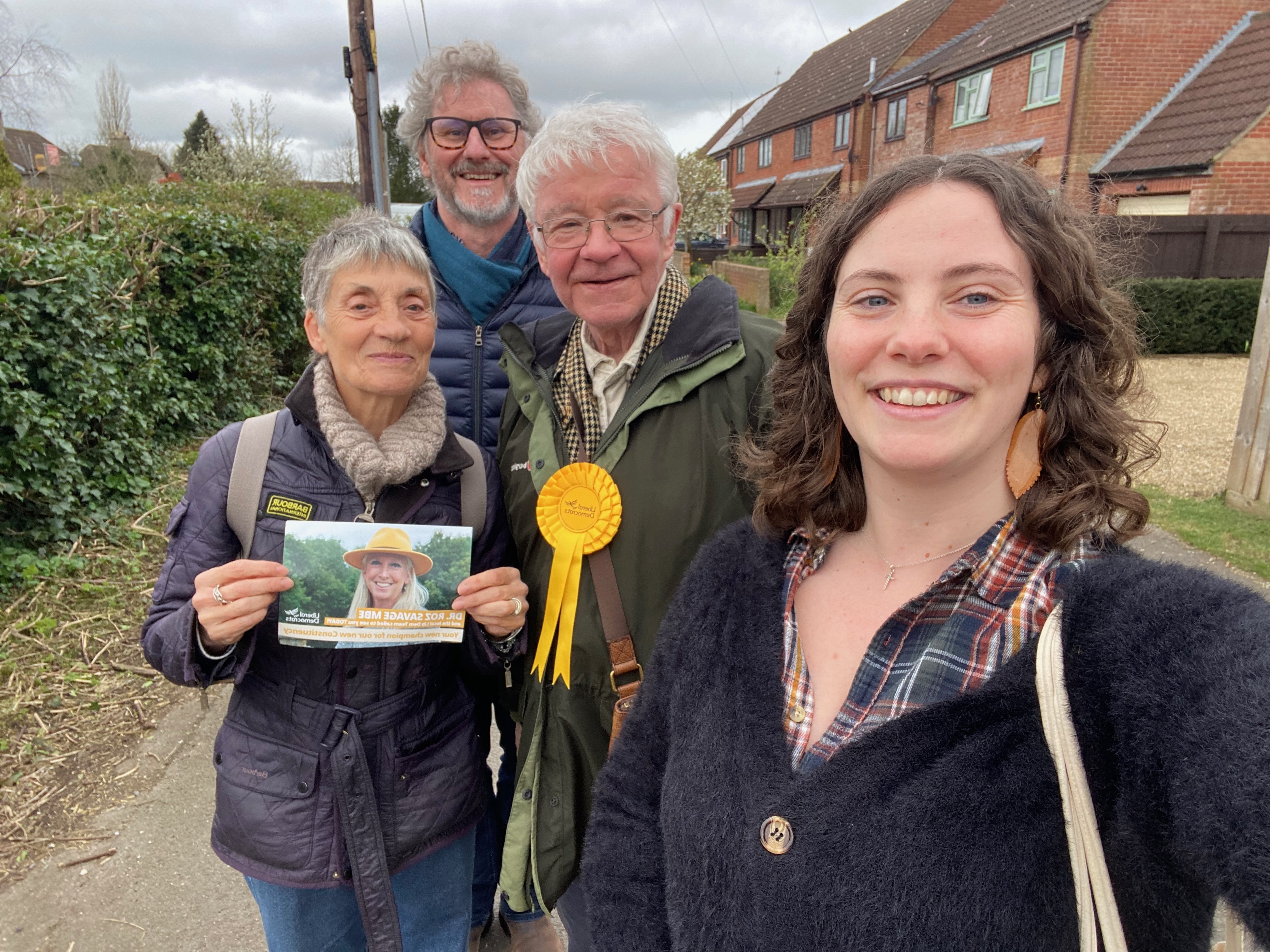
  • Working with and learning from Roz Savage, the new MP for the South Cotswolds. It’s been beautiful to see someone get into politics with such integrity and who really cares about her community, wanting to serve and represent the people within her constituency.

  • Zooming around Cotswolds Waterpark on an inflatable dingy with Ed Davey, Roz Savage, Councillor Joe Harris and fellow organiser, Isaac.

  • Being in such a demanding job and working such long hours could have been rather damaging for a first year of marriage but Shem’s support and love throughout this time has only strengthened us.

  • Being able to pray through the stress of the every day life of working in such a fast paced and hectic environment, the fruit of those prayers being shown in peace, joy and patience, and this being a testament to the people that I’ve been working with.

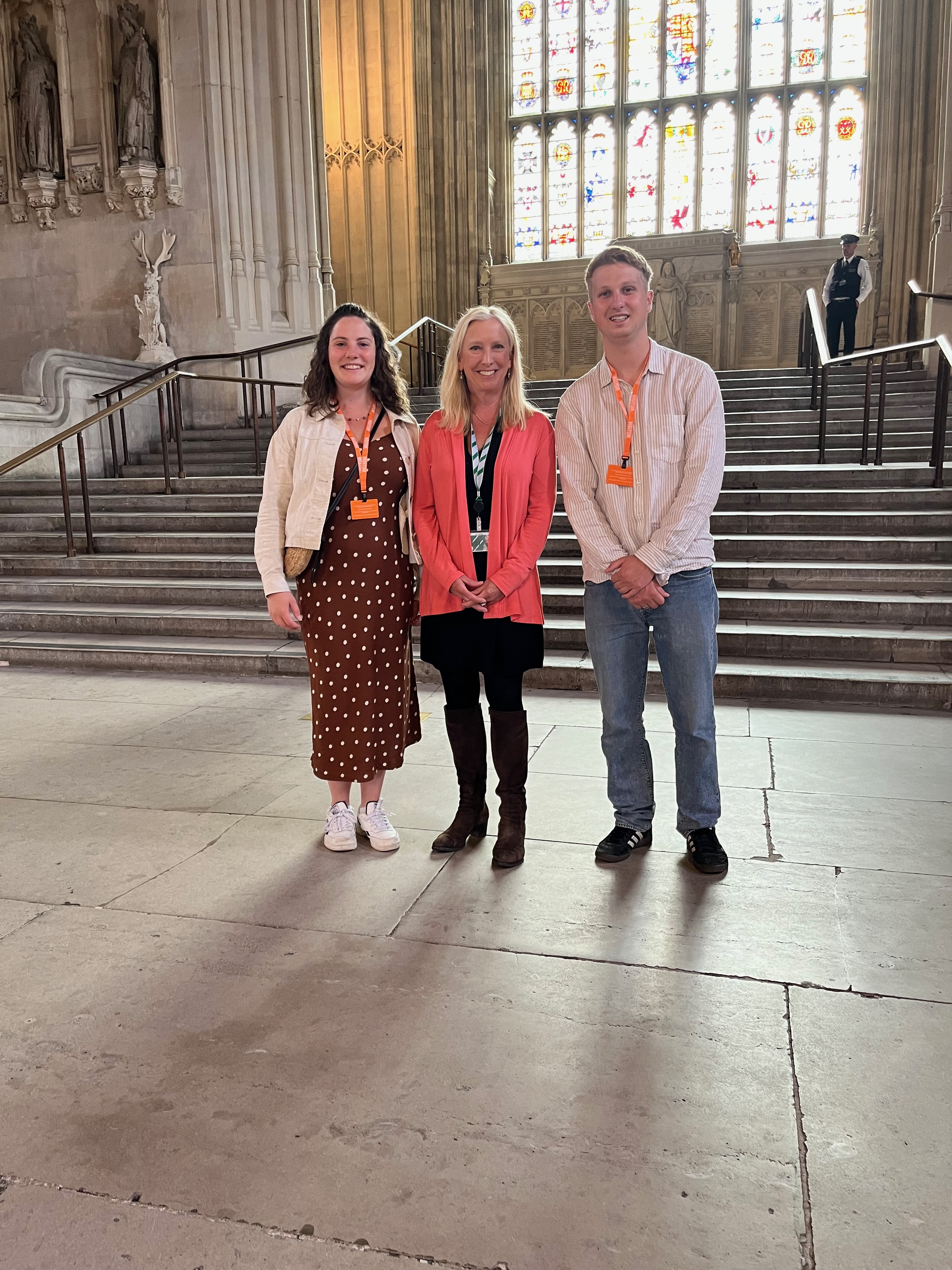
  • Getting to visit Parliament with Roz and Isaac on Friday was probably the cherry on the top of this whole experience. It was an honour to get a tour from Roz, and seeing where all of our hard work has got her!

Many are the plans in a person’s heart, but it is the Lord’s purpose that prevails.” (Proverbs 19:21)

Finding Peace in the Midst of Chaos: How to Cope with Stress


It’s been a tough four weeks. The General Election got called on 22nd May and, as I’m a political Campaign Organiser, this has had a very big impact on my life. I’ve been doing up to 15 hour days and 71 hour weeks. 

Plus, amongst all of this, I went to Bulgaria for 9 days to clean out my Mum’s house. She passed away last July and this trip was organised before the General Election was called. 

When the days are so long, and there’s so much to do, managing stress can feel like a difficult task. 

Responding to stress

I think it’s probably rather obvious now where the source of my peace comes from. I’ve spoken a little bit on here about the turbulence of these last couple of years, and through it all I’ve clung on to Jesus and the peace that He offers: 

Peace I leave with you; my peace I give you. I do not give to you as the world gives. Do not let your hearts be troubled and do not be afraid.” (John 14:27)

By holding on to this, I am helpfully reminded of who Jesus is, and how He calls me to live in response to this. When in the midst of trials, Jesus doesn’t want my heart to be troubled, He wants me to bear His fruit, and not my own. 

What does this look like, you may ask? 

Well Galatians 5 sheds a bit of light on this: 

But the fruit of the Spirit is love, joy, peace, forbearance [patience], kindness, goodness, faithfulness, gentleness and self-control.” (Verses 22-23) 

This is compared to a few verses earlier that describes our fruit, or “the acts of the flesh”:

…sexual immorality, impurity and debauchery; idolatry and witchcraft; hatred, discord, jealousy, fits of rage, selfish ambition, dissensions, factions and envy; drunkenness, orgies, and the like.” (Verses 19-21)

And as I write this, it’s so wonderful to reflect (as I usually do when I read this section of the Bible) on how far Jesus has brought me. Before becoming a Christian, my go-to for stress relief would be to smoke weed, go out drinking with friends, or selfishly/angrily moan to other people – all of which actually brought a bit of an empty feeling rather than stress relief.

Now, I’m far from perfect in how I respond to stress, but I’ve come a long way. However, becoming a Christian doesn’t magically fix things, and make everything easy. 

When things go wrong at work, I naturally want to respond with anger. 

When people let me down, I naturally want to gossip and moan about them.

When stress gets on top of me, I naturally want to turn to worldly pleasures. 

In order to bear His fruit rather than my own, I need to be spending time with God regularly. The more time I spend with Him, the more He reveals Himself to me.

How do I spend time with God?

There are three main ways I spend time with God: reading the Bible, praying, and through worship. 

By reading the Bible, I am installing God’s words of wisdom, hope and peace into my heart. 

Through prayer, I am expressing the intimate relationship that I have with the Creator of this entire world, and taking my joys, sorrows and burdens to Him. 

And in worship I am recognising how big God is, compared to how small I am. This can be done at church, where I hear teaching from the Bible and get to sing with my church family; or this can be done alone, by listening and singing along to songs written about God’s goodness and character. 

I’ve noticed the difference when I stray away from these things. It’s so much harder to practise peace and self-control when I feel my temper rising. Having patience with that difficult person at work feels like much more of a challenge. And speaking to the people I love with gentleness often becomes short and snappy instead. 

Furthermore, when life is stressful and there are way more triggers than usual, it’s especially important to spend time with God and think about the ‘fruit’ I’m bearing. 

But when I’m working 15 hour days and it’s hard enough to find a moment to eat, let alone spend time with God – what do I do? 

3 ways I bring God into my everyday: 

𝟭. 𝗦𝘁𝗮𝗿𝘁 𝗺𝘆 𝗱𝗮𝘆 𝘄𝗶𝘁𝗵 𝗛𝗶m

Beginning the day by spending time with God gives me a head start. At the moment especially, before I have even begun reading my Bible, I start with a prayer thanking Him for the day – this reminds me that this day is His and whatever it throws at me, He is in control. 

My Bible reading then reveals different attributes of God to me, and tells me tales of different people in history that have dealt with a lot more than I’m dealing with and how God has brought them through it all. 

I then spend some time praying through the anxieties I have about the day, and reflecting on where I struggled to show His fruit the day before.

𝟮. 𝗪𝗼𝗿𝘀𝗵𝗶𝗽 𝘁𝗵𝗿𝗼𝘂𝗴𝗵𝗼𝘂𝘁 𝘁𝗵𝗲 𝗱𝗮𝘆

I drive a lot in my job. When I first started working, I found this very frustrating. When stuck in a small moving box, not able to get through my huge to-do list, my stress levels would often rise. 

However, I now see my long car journeys as an opportunity to listen to some worship music, sing along, and pray around different things. I now get to my destination feeling refreshed and renewed, rather than stressed and distracted. 

𝟯. 𝗥𝗲𝗺𝗲𝗺𝗯𝗲𝗿𝗶𝗻𝗴 𝗛𝗲 𝗶𝘀 𝘄𝗶𝘁𝗵 𝗺𝗲 𝘁𝗵𝗿𝗼𝘂𝗴𝗵 𝗶𝘁 𝗮𝗹𝗹

When I’m doing the mundane jobs at work, God is with me. When I’m facing a stressful work crisis, God is with me. When I’m having conversations with difficult people, God is with me. It’s such a comfort to remember this when everyday stresses occur, and it keeps me joyful during the more boring parts of the day.

It’s been a helpful reminder to think through this, and I’m grateful for all the wisdom I’m able to find in the Bible when dealing with the day-to-day of life.

How do you deal with stress? Do you have any tips for incorporating God into your day? Please do share your thoughts below, send me a message on Instagram, or email me on poppyreesevans@gmail.com.

Rejoice in the Lord always. I will say it again: Rejoice! Let your gentleness be evident to all. The Lord is near. Do not be anxious about anything, but in every situation, by prayer and petition, with thanksgiving, present your requests to God. 

And the peace of God, which transcends all understanding, will guard your hearts and your minds in Christ Jesus.” (Philippians 4:4-7) 

Large, wild daisies growing in a patch together. They remind the author of peace and this is what the blog post is about

‘Political homelessness’ and the perfect governance that is to come 


Since becoming a political Campaign Organiser in October, I have spoken to hundreds of people whilst canvassing, and so many are saying the same thing. They’re fed up. There’s a huge distrust of politicians and people have no idea who to vote for. 

The Independent recently shared an article stating that “Britain is heading for the lowest general election turnout in modern history, pollsters have warned, with the main parties and their leaders leaving many voters ‘politically homeless’.”

I’d like to reflect a little on this… 

A democratic country

Here in the UK, we’re supposed to be one of the more politically stable countries. We’ve had a consistent democratic system for a very long time, and currently have the freedom to express ourselves through protests and free speech. 

The Freedom House has given the UK a “freedom score” of 93/100. This is in comparison to North Korea scoring 3, Russia scoring 13, and Nigeria scoring 44

When we compare ourselves to other countries in the world, we have a pretty good system – yet, it still consists of corruption and lies. 

Although we have the democratic right to vote and apparent political freedom, none of our national political leaders seem worthy to vote for. It feels as though there is something seriously wrong for this to be the case. 

The root of the problem

Humanly speaking, there never has been and never will be a perfect government. Our world is too broken. 

We fight for freedom, justice and equality, and yet too often human nature takes over and a good intention soon becomes a hunger for power. Society struggles to agree on an issue because we have pride, greed and envy. Even when we’re fighting for what we think is right, it often comes from a selfish cause. 

Why is this?

Well, I believe that we have been created in God’s image – this is where our thirst for justice and righteousness comes from. We feel angry when we see corruption. We feel sorrow when we see poverty. We feel frustration when we see inequality. We feel these things because that is how God feels when He sees corruption, poverty and inequality.  

However, humankind also adopted a sinful nature. This means that even when we have the best intentions, we often put ourselves first. God created humans to be equal and to worship Him as King, but we often steal His crown, reject His ways and put ourselves above others. God created the world with order and purpose but more and more often, we fight against it.

I think that this is the root to the disruption we find ourselves in. The more our society celebrates individualism and self, the more unrest and disagreement there seems to be – it spreads from our every day living all the way to the politicians sitting in Parliament. 

And yet, there is hope

When I look around, I’m tempted to fall into despair. When everything seems such a mess, what can we do? The more we try to fix things as humans, the worse things seem to get. 

But before I reach despair, I look to my Bible for the promises within. 

The Bible gives an overview of all of time, and even looks forward to what is to come. At the end of the Bible, it points to a time when Jesus will return and reign forever: 

The kingdom of the world has become the kingdom of our Lord and of His Christ, and He will reign forever and ever.” (Revelation 11:15)

But it doesn’t only talk about it at the end, this promise was also given 700 years before Jesus was even born! Isaiah describes what this promised reign will look like:

He will reign on the throne of David and over his kingdom, to establish and sustain it with justice and righteousness from that time and forevermore.” (Isaiah 9:7)

This points to the perfect governance that we long for, one of justice and righteousness. But it is important to see that this governance lies in Jesus, it lies in being reunited with the image that we were created to mirror. 

So really, what I’m trying to say is:

1) When all seems doom and gloom, and we feel anger and frustration at the political state of this country – that is understandable. There is something in all of us that feels the brokenness of this world and it is within our DNA to want better.

2) Recognise that it is a privilege to live in a country that allows us to vote and have political freedom. Research your local politicians and what they stand for. We need more politicians with integrity, and if those with integrity give up on voting, we’re only going to get more political corruption. 

3) Most importantly of all, keep your eyes up and remember the reason why things feel broken. Work on having a relationship with the One that you were made to mirror, so that you too can look forward to the perfect governance that is to come. 

Jesus answered, ‘I am the way and the truth and the life. No one comes to the Father except through me.’” (John 14:6)

A bright orange sky thanks to a sunsetting over the sea. The picture signifies hope and the article talks about the hope that is to come in a perfect governance.

Politics through a Christian lens


Politics is such an interesting subject when addressing it from a Christian perspective – especially in this day and age when it often feels like our country’s politics are anti-Christian. 

As I spoke about in my last post, our government is run by human beings, and we all have flaws. Sometimes it feels like our system is so unjust and broken, it doesn’t seem right to follow it. So how should a Christian respond? 

Recognising authority

I’ve recently been reading through 1 Samuel in the Old Testament and one of the recurring themes is David honouring and respecting Saul because he is the one that God anointed to have authority over him – even though Saul was trying to kill him! 

He [David] said to his men, “The Lord forbid that I should do such a thing to my master [Saul], the Lord’s anointed, or lay my hand on him; for he is the anointed of the Lord.” 1 Samuel 24:6

This points to 1 Peter 2:13-17 from the New Testament: 

Submit yourselves for the Lord’s sake to every human authority: whether to the emperor, as the supreme authority,or to governors, who are sent by him to punish those who do wrong and to commend those who do right.

And also points to Romans 13:1:

Let everyone be subject to the governing authorities, for there is no authority except that which God has established. The authorities that exist have been established by God.

This is essentially saying that by honouring our worldly authorities, we are honouring God and recognising that He is sovereign in His appointment of these authorities. 

But it is vital to remember in this that God, through Jesus, holds true authority over the entire world, as Matthew 28:18 states,

Then Jesus came to them and said, “All authority in heaven and on earth has been given to me.

What does this look like in practice? 

It’s wonderful that, although Jesus was on earth 2,000 years ago, He spoke into so many real life situations that are still relevant today – and politics is no different. Here’s a snippet from Mark 12: 

Later they sent some of the Pharisees and Herodians to Jesus to catch him in his words. They came to him and said, “Teacher, we know that you are a man of integrity. You aren’t swayed by others, because you pay no attention to who they are; but you teach the way of God in accordance with the truth. Is it right to pay the imperial tax to Caesar or not? Should we pay or shouldn’t we?”

But Jesus knew their hypocrisy. “Why are you trying to trap me?” he asked. “Bring me a denarius and let me look at it.” They brought the coin, and he asked them, “Whose image is this? And whose inscription?”

“Caesar’s,” they replied.

Then Jesus said to them, “Give back to Caesar what is Caesar’s and to God what is God’s.”

And they were amazed at him.

Context is key 

It’s helpful to remember the context of this passage. During this time, Jews were being forced to pay taxes straight into the Roman emperor’s treasury – it signified the Roman oppression over Israel. The Jews hated having to pay it and some more patriotic Jews (such as Zealots) refused to pay it at all. The Pharisees and Herodians were asking Jesus an immensely controversial political question.

This reminds me of today’s political sphere. Our government seems corrupt, and society seems to be moving further and further away from the Christian faith. But I find the context of Mark 12 helpful to remember because even during a time of oppression, Jesus still recognises the authority of the Roman Empire. 

One commentator has described Jesus’ answer as, “Full of consummate wisdom. It establishes the limits, regulates the rights, and distinguishes the jurisdiction of the two empires of heaven and earth.”

This is built on even more later in the Bible. When Romans and 1 Peter were written (passages quoted above), Nero was emperor of Rome and he burnt Christians alive! Even during such oppression of Christians, believers were still being called to recognise that “the authorities that exist have been established by God”. 

What is “Caesar’s” and what is God’s? 

Jesus calls us to follow Him. The Bible reveals to us the way that God wants a Christian to walk. God wants our worship, devotion and love. 

In the UK, our government tells us to pay taxes, follow their laws and to live in a land peacefully. 

Our relationship with God must always come first, as He is the true authority. This means that if our government commands us to do something that is against God, our loyalties and honour lie with God first, and then His anointed governance.

However, other than that I think the Bible clearly shows us the importance of submitting to and honouring our government. 

This is a truth that I really struggle with. Out of my friends, I’m probably the first one to point out when the government is doing something for their own gain, or lying to us, or acting corruptly. 

After reflecting on all of this, I need to really check in with myself as to how I respond in these situations. But it’s also important to recognise where your heart lies in the simple things like paying taxes, keeping to speed limits, and not pushing the boundaries of basic civil etiquettes.

Let everyone be subject to the governing authorities, for there is no authority except that which God has established. The authorities that exist have been established by God.” (Romans 13:1)

Believe it or not, there’s more that could be said about this! Here’s a sermon my church did around Jesus and Politics:

3 things I’ve learnt working in politics


The General Election was called on Wednesday, which means the next six weeks are going to be pretty busy for me…

For anyone that doesn’t know, I am the campaign organiser for the Liberal Democrats, which means the calling of the General Election will have me rather tied up in the coming weeks. Unfortunately, this means that I may get a little behind on my new writing venture, but I’ll do my best to keep up! 

Not that political…

I used to say that I’m not very political, in fact I used to not even vote! I felt that all parties are the same, and that our votes don’t make much of a difference anyway, so what’s the point. Furthermore, on a national level, it just seems to be between Labour or Conservative and I don’t feel like I align with either of these parties, I’ve always thought of myself as more of a centrist. 

After working in this job since October 2023, I can no longer say that I’m not political – I understand it all a little too much now! However, I am thankful for the opportunity to gain a better understanding of politics – so here are some of my key takeaways.

1) There is no perfect government

I think this is quite an obvious one, especially when we look at the political world around us. No country has it right. Britain is supposed to be one of the politically ‘better’ countries and look at what a mess our government is in. 

I think this comes down to the fact that our government is made up of human beings, and not one of us is perfect – even the so called “goodens” have flaws. Plus, everyone has different opinions on moral, social and economic issues, so no government will keep everyone happy, we’re all too subjective. 

However, I think working in politics and seeing some of the ‘behind the scenes’, has given me a greater understanding of the privilege it is to have the right to vote. Knocking on doors and speaking to people about their concerns and where they feel the government has helped or let them down, has given me a greater insight into our democracy. This is something that has come as quite a surprise to my historically-cyncial self. 

2) Local politics is important

I think the biggest thing I’ve learnt in this job is to appreciate local politics. I still feel that on a national level, our votes don’t really make that much of a difference.

But they do matter locally, and I don’t think this is something that’s emphasised enough. How often do we look into the candidate that we are voting for, rather than just putting a cross next to the party that we think we may relate to the most? When we’re voting for a party, the person we’re voting for locally can often be rather different to the party we’d be voting for nationally. 

What’s more, when do we (especially younger people) pay any attention to local elections and the voting in of local councillors? It’s been an honour to work closely with councillors throughout North Wiltshire and The Cotswolds. Many of them are hard working and have stood for councillor because they really care for their community and area.

Realistically, if we do ever have a problem, it will be our local political representatives that we will be turning to. 

3) Trusting where God has placed me

In all honesty, sometimes this job is really tough. It’s a big old challenge (even before the General Election was called!), and some days are just really hard. Because I’m not particularly politically driven, when I’m finding the job hard, it can be difficult to find motivation. 

In these moments, I turn to God in prayer. He graciously reminds me that I am where He has placed me, and I remind myself that He probably has a lot to teach me: 

For I know the plans I have for you,” declares the Lord, “plans to prosper you and not to harm you, plans to give you hope and a future.” (Jeremiah 29:11)

And really, this job has been a wonderful experience. It’s helped me to get a better understanding of people and the needs and challenges they’re facing. Plus, I’m grateful God has given me the opportunity to gain such an understanding of how our country is run nationally and locally, and I’m excited to see how He will use me after having gained this knowledge. 

I also want to close highlighting what many of us are feeling. As the General Election approaches, it’s clear that we need people of integrity and honesty in government. It’s a privilege to have the right to vote, and when we are using this democratic privilege, please do your research (especially on a local level) – perhaps using The Electoral Commission. Please think before putting down that cross, and celebrate that we have the right to do so. 

But overall, remember the true governance of this world. But more on this next time…

For to us a child is born, to us a Son is given, and the government will be on his shoulders. And He will be called Wonderful Counsellor, Mighty God, Everlasting Father, Prince of Peace.” (Isaiah 9:6)

Does God heal?


After Mum was diagnosed with cancer, she went through what I call a “full faith I’m going to be healed” phase. In all honesty, I found it really tough. 

I’m not sure how familiar you are to Christianity but there are many schools of thought around this subject, and it can be a bit of a touchy one. So, I’m going to talk about what I experienced around God’s healing through Mum’s journey, and how I navigated my way through this tender topic. 

Mum’s full faith that she’ll be healed…

For those of you keeping up with my writing, you’ll already know that my mum was diagnosed with breast cancer in May 2022 and chose to take the alternative route in treating it. Approaching cancer alternatively, involves looking at different avenues of cancer treatment, and often watching a lot of videos online. 

My mum has always been a Christian (perhaps more on the lukewarm side of Christianity) and so during her cancer research she came across a lot of videos talking about God healing people’s cancer. 

In choosing to treat her cancer naturally, Mum was already approaching her illness with faith. Trusting in God and recognising the world that He’s made, and many of its healing properties. However, the videos that she came across, to me, seemed like a different level of this. 

In October 2022, Mum was watching a video about a woman that declared a date that God started healing her and then lived in “full faith” that she was going to be healed. Mum also started doing this. 

Just to say, it sounds like the lady from the video has an amazing testimony and that God very graciously healed her. (Hallelujah). 

However, it felt difficult Mum doing this. She started declaring that the 8th October was the day that God had started healing her. She said that she would live for many more years and would be able to see me get married and have children, and be a grandmother to them. She had “full faith” that she was going to be healed.

I really struggled with this. I, of course, wanted Mum to be healed, but I was already trying to wrap my head around the reality that she may not live to meet my future children or see me get married – so her saying that she would, felt very emotionally confusing.

She was also asking me to pray in “full faith” that she was going to be healed – and this is something that was difficult for me. I was scared that it could affect my own relationship with God if she didn’t get healed, and I also wanted to understand the biblical standing behind having “full faith” that God would do anything! 

The Biblical premise of healing

In both the Old and New Testaments, the Bible is scattered with healing, and, of course, Jesus revealed Himself as God through miracles, many of which were healings. The Bible is clear, God can heal. 

Jeremiah 33:6: Nevertheless, I will bring health and healing to it; I will heal my people and will let them enjoy abundant peace and security.

Isaiah 57:18-19: I have seen their ways, but I will heal them; I will guide them and restore comfort to Israel’s mourners, creating praise on their lips. Peace, peace, to those far and near,’ says the Lord. ‘And I will heal them.’

Mark 5:34: He said to her, ‘Daughter, your faith has healed you. Go in peace and be freed from your suffering.’

Mum, understandably, took a lot of comfort in verses like these. She was listening to similar ones on repeat through YouTube videos such as, ‘Powerful Healing Scriptures with Music‘. Her favourite verse to quote was Matthew 17:20, “Truly I tell you, if you have faith as small as a mustard seed, you can say to this mountain, ‘Move from here to there,’ and it will move. Nothing will be impossible for you.

Furthermore, when I was at a Bible study in Bath during this time, we were looking at James 5, which has the following verses: “Is anyone among you in trouble? Let them pray. Is anyone happy? Let them sing songs of praise. Is anyone among you sick? Let them call the elders of the church to pray over them and anoint them with oil in the name of the Lord. And the prayer offered in faith will make the sick person well; the Lord will raise them up. If they have sinned, they will be forgiven.” 

My conclusion was that God can heal, and it’s right to pray for healing but I still struggled to do it in “full faith”.

Why was I sceptical?

I think my issue was just because God can heal, it doesn’t mean He will heal – otherwise there would be fewer Christians dying! And although the Bible talks a lot about healing, I don’t believe that it is something that God promises… in this life. 

So I started looking into what the Bible does promise. 

Many of the Bible verses around healing also include peace, restoration and forgiveness. Often, when the Bible talks about things, there is a physical and spiritual meaning. Although God can physically heal, and says we should pray for it, I believe He promises a spiritual healing of peace, rest and forgiveness to those who seek it.

Matthew 11:28: Come to me, all you who are weary and burdened, and I will give you rest.”

And in all honesty, I didn’t know where Mum was with this. Although she always knew who Jesus is, she didn’t necessarily live for Him. So I decided to pray for her spiritual healing too. 

The rest that is to come…

Now, many of us are all too aware of the pain and suffering of this world. Where the Bible promises peace, we may ask ourselves will we ever really experience it? As soon as life feels good and peaceful, something happens to disrupt that and we once again face sorrow. 

We live in a broken world. You just need to look around and see the war, hatred and craziness to confirm this truth. But Revelation 21 promises something better: 

Then I saw “a new heaven and a new earth,” for the first heaven and the first earth had passed away… And I heard a loud voice from the throne saying, 

‘Look! God’s dwelling place is now among the people, and He will dwell with them. They will be his people, and God Himself will be with them and be their God. He will wipe every tear from their eyes. There will be no more death or mourning or crying or pain, for the old order of things has passed away.’

I believe that when the Bible promises “abundant peace and security”, it is pointing to this new heaven and earth spoken about in Revelation 21 – the place where God dwells with His people. 

This is a place of eternal healing – where there will be “no more death or mourning or crying or pain”. I think this is why the verses around healing often speak of forgiveness too, and why when Jesus was here, so many people were healed and “freed from suffering” because it was a small snippet of what was to come when He eternally dwells with His people. 

So when I was praying for Mum’s physical healing, I knew that I needed to, more importantly, be praying for her spiritual healing. Because God could have healed her from her cancer, but death is inevitable. In order for her to receive the eternal healing promised in Revelation 21 – she needed to be at peace with God, one of His people.

A spiritual healing 

I am delighted to say that I believe God granted this spiritual healing, and I think it was amazing how He did it. 

The author's mother sat smiling in the sun thanks to the wonderful care at North Devon Hospice.

All the time that Mum was asking for physical healing, listening to Bible verses around this, and spending more time with Him in prayer – I think her faith was growing. She believed she needed to let go of emotional trauma and that in order to heal, she needed to be more forgiving. She started showing more signs of Jesus working in her life and in her general attitude and demeanour.

And when she lived her final week at North Devon Hospice, she had such a peace about her. Her smile was radiant, and she said that she was ready to go and be with Jesus. 

I sometimes wonder if I should have been more faithful in prayer for her physical healing. But I am so thankful to God that He healed her spiritually. I’m thankful that, although I do miss her a lot, I can have peace because I believe she is now with Jesus. I’m thankful that I can have faith that when there is a new heaven and earth, Mum will be one of God’s people that He lives among. 

He will wipe every tear from their eyes. There will be no more death or mourning or crying or pain, for the old order of things has passed away.” (Revelation 21:4)

If you have any thoughts or would like to learn more about this topic, and what I mean when I say “to be at peace with God”, please do email me on poppyreesevans@gmail.com.

Answered Prayer: Finding a life partner


True story: In November 2022, during a night of lots of crying, I prayed that God would send me a family. Two days later someone from church asked me on a date. Ten months later, I married said someone. 

I’ve promised you the highs and lows of the past two years, and I’m delighted to say that this is the happy story of how I found my life partner, Shem Fair. 

A God that hears prayers 

And when the Lord saw her, he had compassion on her, and said unto her, Weep not.” (Luke 7:13)

A little background behind why I was crying out to God in that November 2022. I haven’t seen my dad since I was three years old, and he passed away in 2020. My mum, at this time, had Stage 4 cancer and it was only so long until she passed away too. Family relations with others were fraught and difficult. It felt like the little family I did have was slipping away. 

And so I cried out to God. I told Him that I was ready now, ready to have my own family. I needed something to look ahead to, everything was feeling very dark. 

I am so thankful for the power of prayer. God doesn’t always answer prayer in the way that we expect but He always listens. He is our refuge, an ever-present help in times of trouble (Psalm 46). 

But this time, He did answer my prayer – quite quickly and quite miraculously. Within two days of this emotional, late night scene, Shem asked me out on a date. 

Feeling like an Israelite 

Now, you’d think that after the prayer I’d prayed, I would have been very happy about all of this. Well actually, it sent me into a bit of a mini-break down. I didn’t know what to do and it all seemed rather scary. 

I did like Shem, very much. We’d grown closer and become quite good friends, often spending most of our Sundays together. I was happy about his request to get to know each other better, and yet I still felt fear. 

I reminded myself of the Israelites in the Old Testament. God had just freed them from being poorly-treated slaves in Egypt (you may be familiar with the story), and they were wandering in the desert on their way to the Promised Land. 

In Exodus 16:3, the Israelites complained, “If only we had died by the LORD’s hand in Egypt! There we sat around pots of meat and ate all the food we wanted.

So what did God do? He rained down bread (manna) from heaven to feed His people. But the Israelites still weren’t happy, in Numbers 11:4-6 they cried out, “If only we had meat to eat! We remember the fish we ate in Egypt at no cost—also the cucumbers, melons, leeks, onions and garlic.

Although God was hearing and answering their prayers, the Israelites were still miserable and distrusting of God! This is a bit of a digression, I know, but I wanted to just highlight that sometimes when God is answering our prayers, we don’t always notice it. It’s our natural instinct to run in fear or complain, rather than stand firm and trust in Him. 

A Timeline of Shem 

The following days after Shem’s proposition, I spent time praying around making the right decision. I had just prayed for a family, and the timing of his asking felt very apt. But I didn’t want to get too carried away. I decided that whether Shem would be the one I married or not, it was good to take that first step and go on a date with him.

One of the reasons for my fear and anxiety was because I had a lot going on with everything happening with Mum. I, understandably, wasn’t sure if it was the right time to get into a relationship. 

But Shem was very patient and understanding of this. We decided to do regular check-ins to determine our feelings around the relationship. In January 2023, we officially became ‘boyfriend and girlfriend’. 

As Christians, we both felt that you date to marry. If you don’t want to marry the other person then it’s best to let them know ASAP to not waste each other’s time. Shem was always very forthright about this, and it often meant a direct line of questioning. On our second date, we were discussing marital roles and how we envisage the future. 

A snapshot from the happy couple's engagement. The author is showing her engagement ring on here finger with two glasses of champagne and a sunset in the background. The location of the picture is a field on Kelston Round Hill in Bath.

By April 2023, the conversations around marriage turned into conversations around our marriage and what that could look like. On 29th May 2023, Shem proposed at Kelston Roundhill, as the sun went down. 

Finally, we needed to decide on a wedding date – this came with a lot of difficulties, which I’ll talk about another time. We wanted Mum to be at the wedding but her health was rapidly deteriorating. We decided on 23rd September 2023 – sadly Mum died before this time. 

But God had answered my prayer. Amongst the sorrow and grief of losing my only parent, God had provided me with a new family, a fresh start, and a brighter future to look forward to. 

God has taught me so much through my relationship with Shem, and I’m really excited to share with you all. He has been so gracious in offering me a life partner that has helped me through the last few months since Mum passed away. And thank you also to Shem, for your love, support and ongoing patience.

There is so much more that I could say around this so I think I’m going to have to break this love story down – keep an eye out for more posts around this.

The Lord is near to all who call on him, to all who call on him in truth. He fulfils the desires of those who fear him; he hears their cry and saves them.” (Psalm 145:18-19)

Hey there!

Want to stay in the loop with our love story? Just drop your email below and join the adventure.