Diary of a clueless gardener: A muddy cure for a bad day


Well, it’s been a hot minute since I’ve posted on here. In all honesty, it’s been a hot minute since I’ve been out in the garden too.

But I’m delighted to share that I did manage to get out and enjoy a sunny afternoon in the garden on Wednesday.

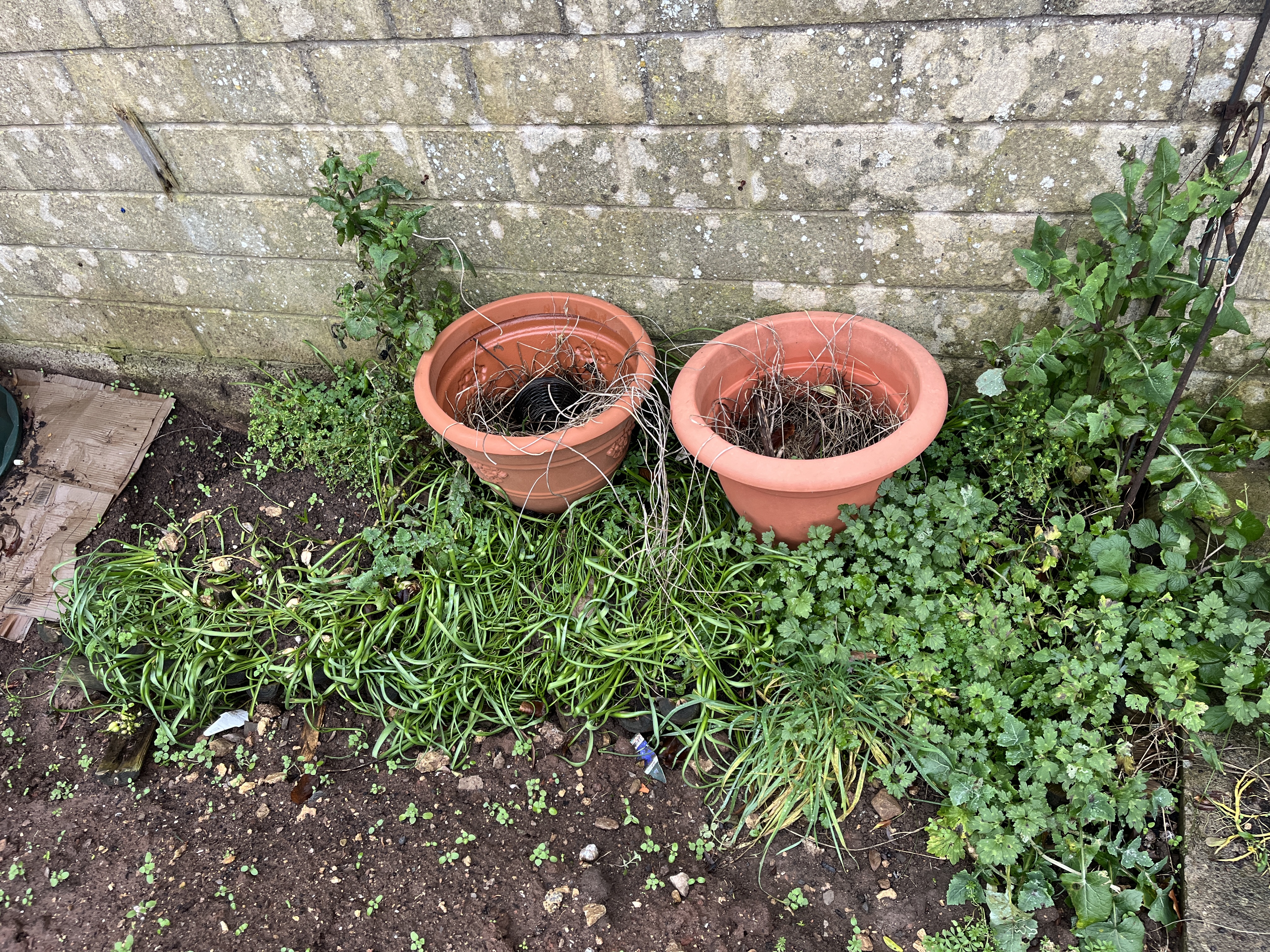
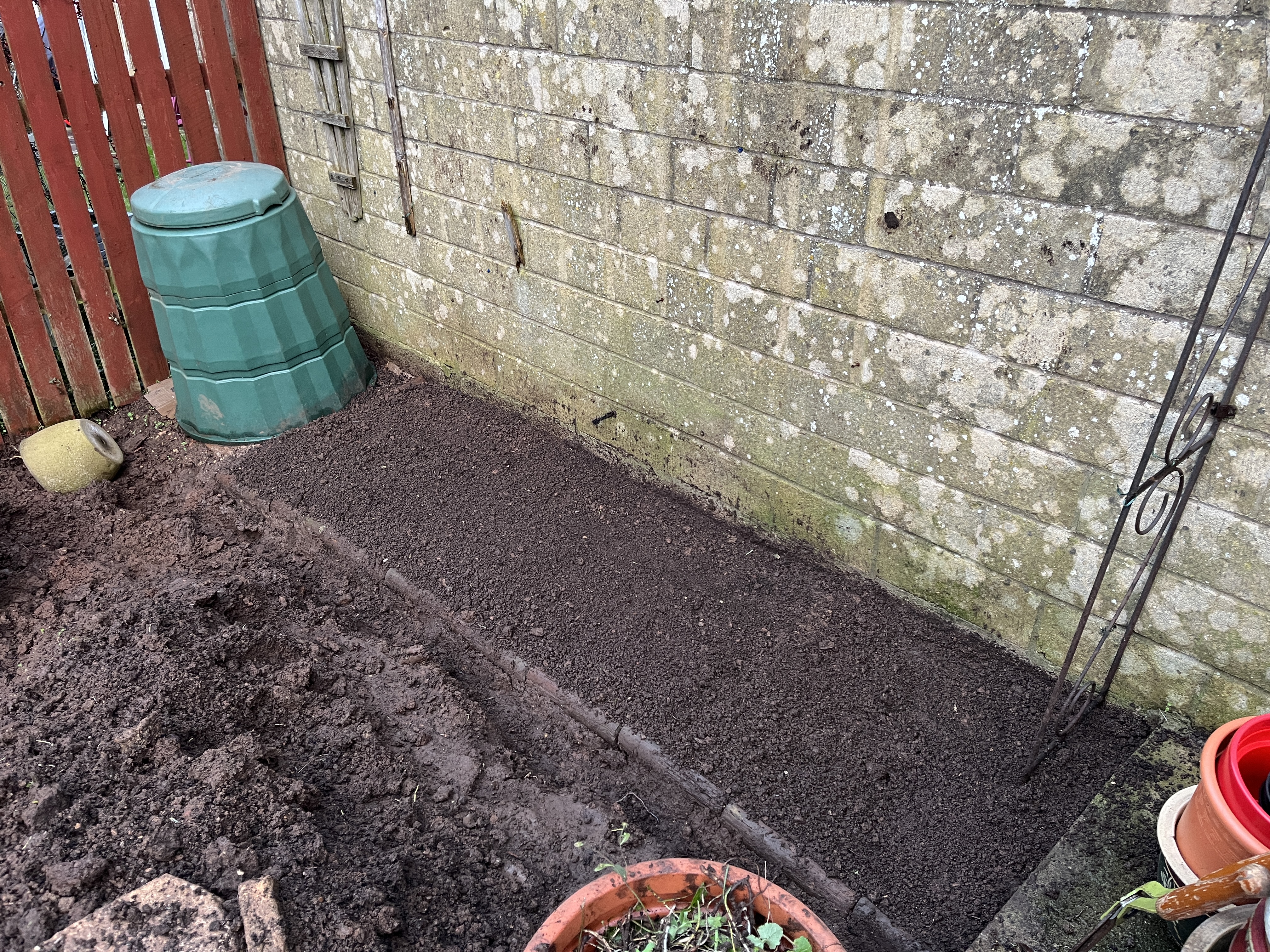
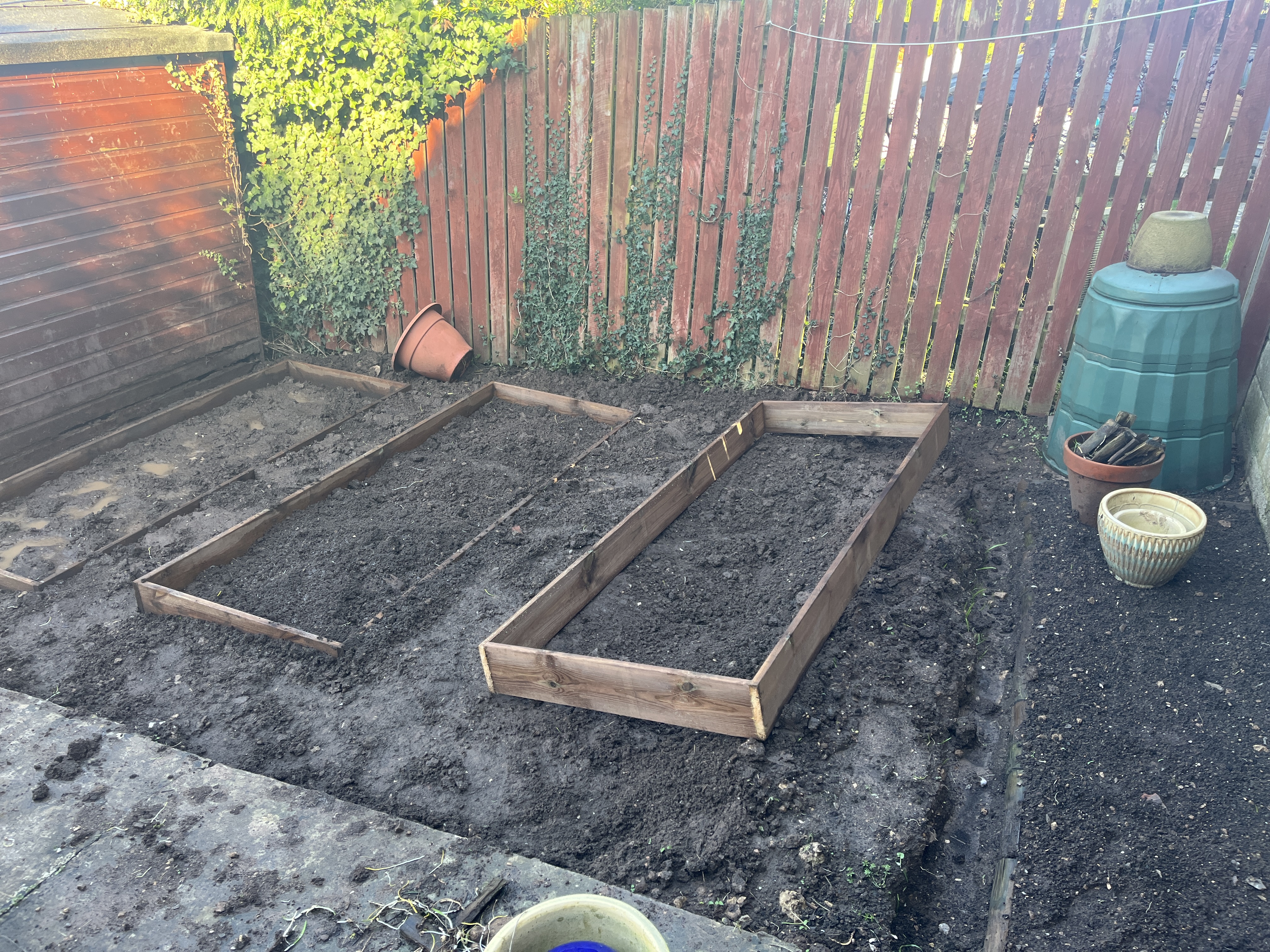
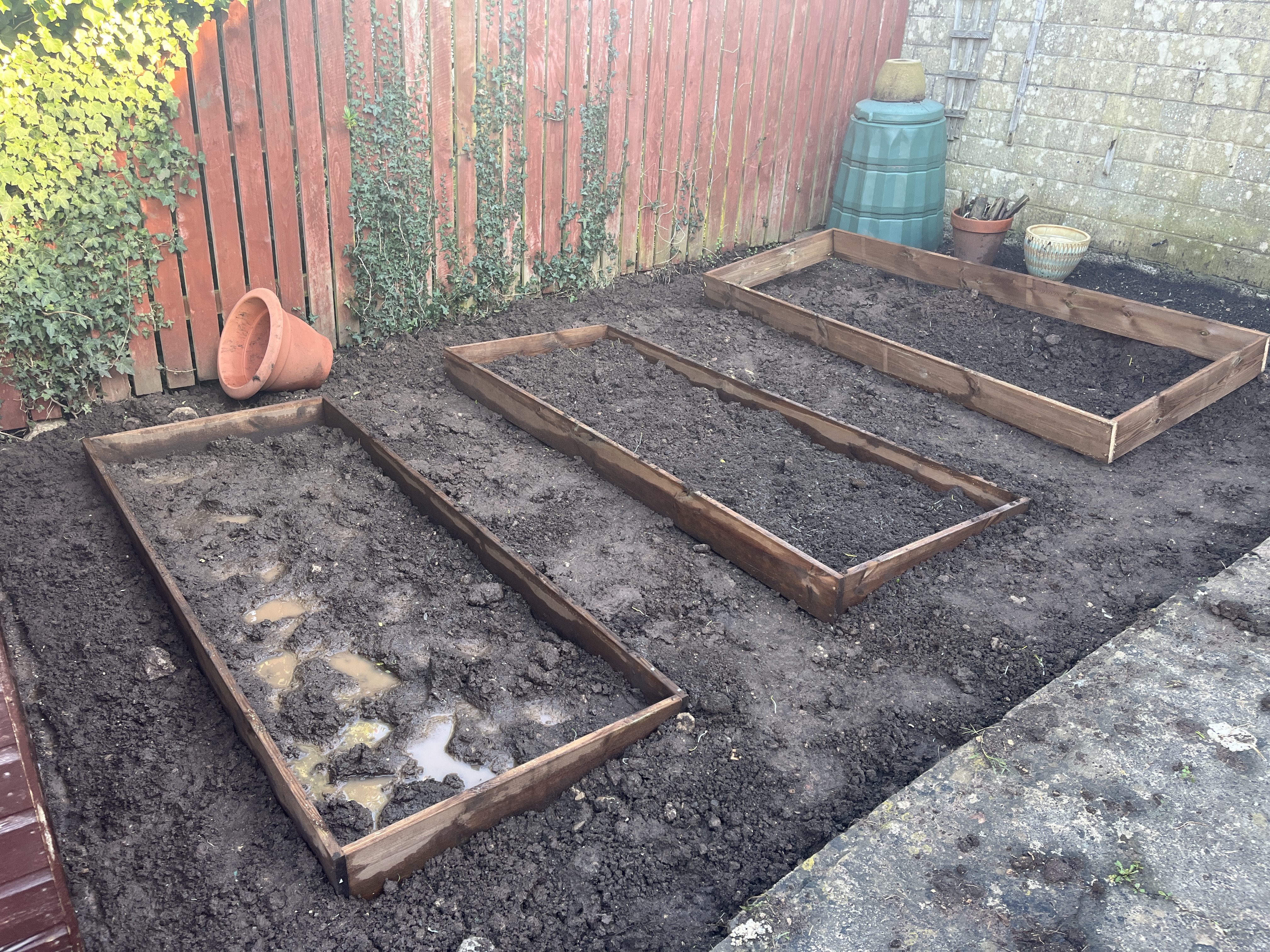
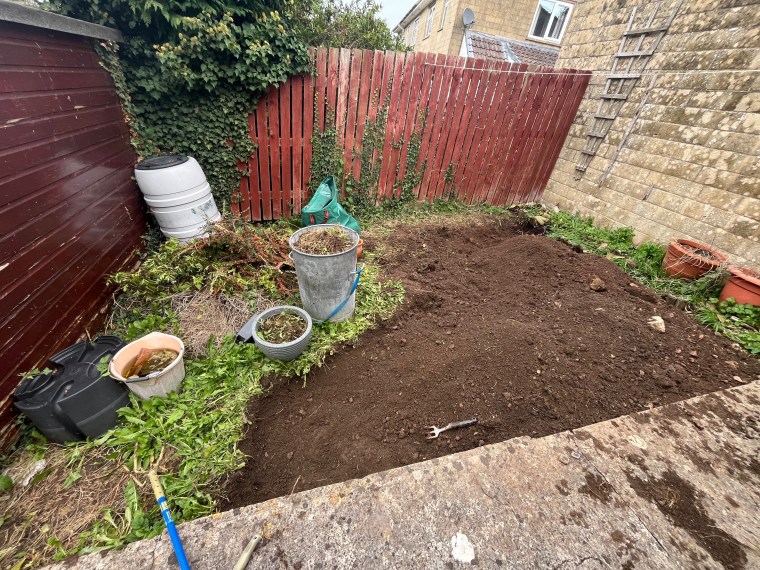
We’re still on the de-weeding mission – slowly but surely clearing the first section of what will hopefully become the veg patch. It feels like a very slow process, and I have to remind myself not to be discouraged. Realistically, we’ve only been able to get outside in short bursts: during Shem’s lunch break or when Evalina’s napping in the afternoon.

I’m very much looking forward to longer days and lighter evenings, when we can get stuck in together without competing with daylight.

And, by the way – if you’re wondering who Evalina is – she’s our little girl, and she just turned six months old!

A bad morning, a brighter afternoon 

Wednesday started as one of those days. The kind where everything seems to take twice as long and go half as well. Nothing dramatic, but everything was just… off. That slow morning meant we arrived very late to a baby class, only to discover the elevators were out of order, which meant not actually going in at all. Then to top it all off, I somehow lost the parking ticket I needed to leave the car park. Classic.

It was one of those frustrating mornings where you just want to hit reset and start again.

However, it was a sunny day and when Evalina went down for her nap, I knew exactly what I needed… an afternoon in the mud!

The joy of gardening

There’s something about being outside, breathing fresh air, digging up weeds, and letting your worries drift away. Whilst gardening, I was thinking about writing this post and wondered if there was some sort of philosophical reflection or some cheesy thing like that brewing. 

But honestly? When I stopped to ask myself what I was actually thinking about… it was nothing.

And I mean that in the loveliest way.

I realised how much joy I found in not thinking. Not calculating when Evalina last ate, not stressing about the dirty dishes still in the sink, or replaying the morning’s frustrations. Instead I just found joy in digging. Using my hands, keeping an eye out for roots and feeling strangely victorious each time I pulled one up.

Sometimes joy doesn’t come from thinking deeply – it comes from giving your brain a moment to switch off.

And on Wednesday afternoon, that simple, muddy, quiet joy was exactly what I needed.

I almost forgot!!

When I first went out into the garden, the bad morning had tried to follow me. I excitedly went to check on my new compost bin only to find a pile of vegetable scraps and leaves… and the compost bin itself a few metres away!

So if this has happened to you before, or if you have any tips on compost bins not flying away, please let me know. (See my quick fix in the pictures below)

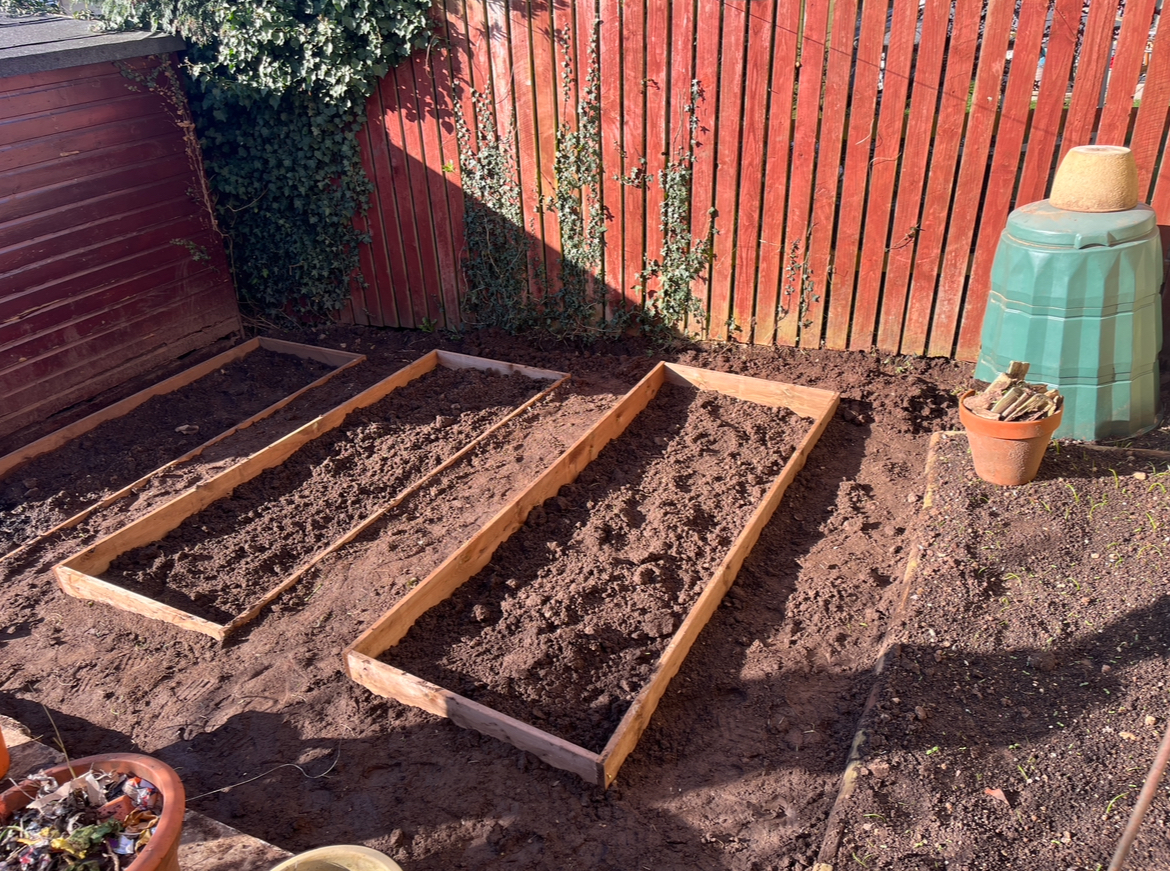
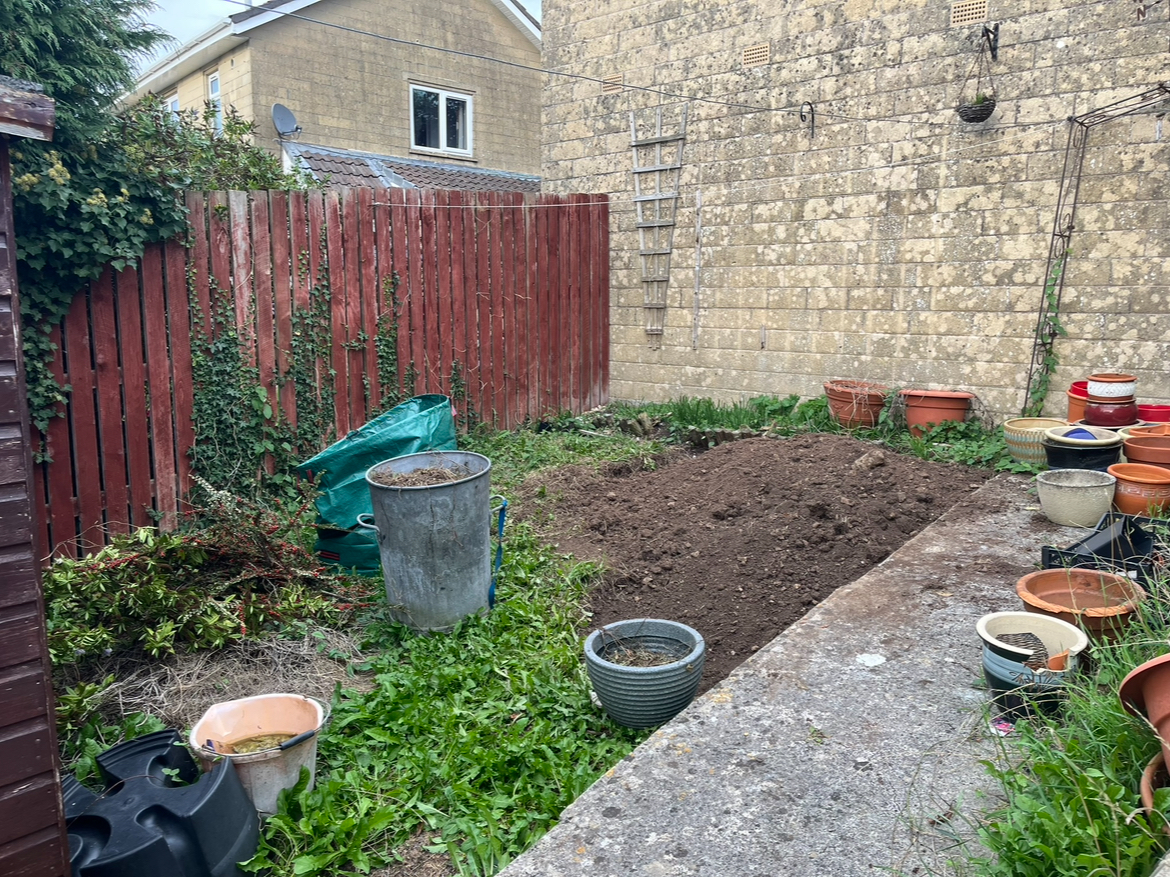
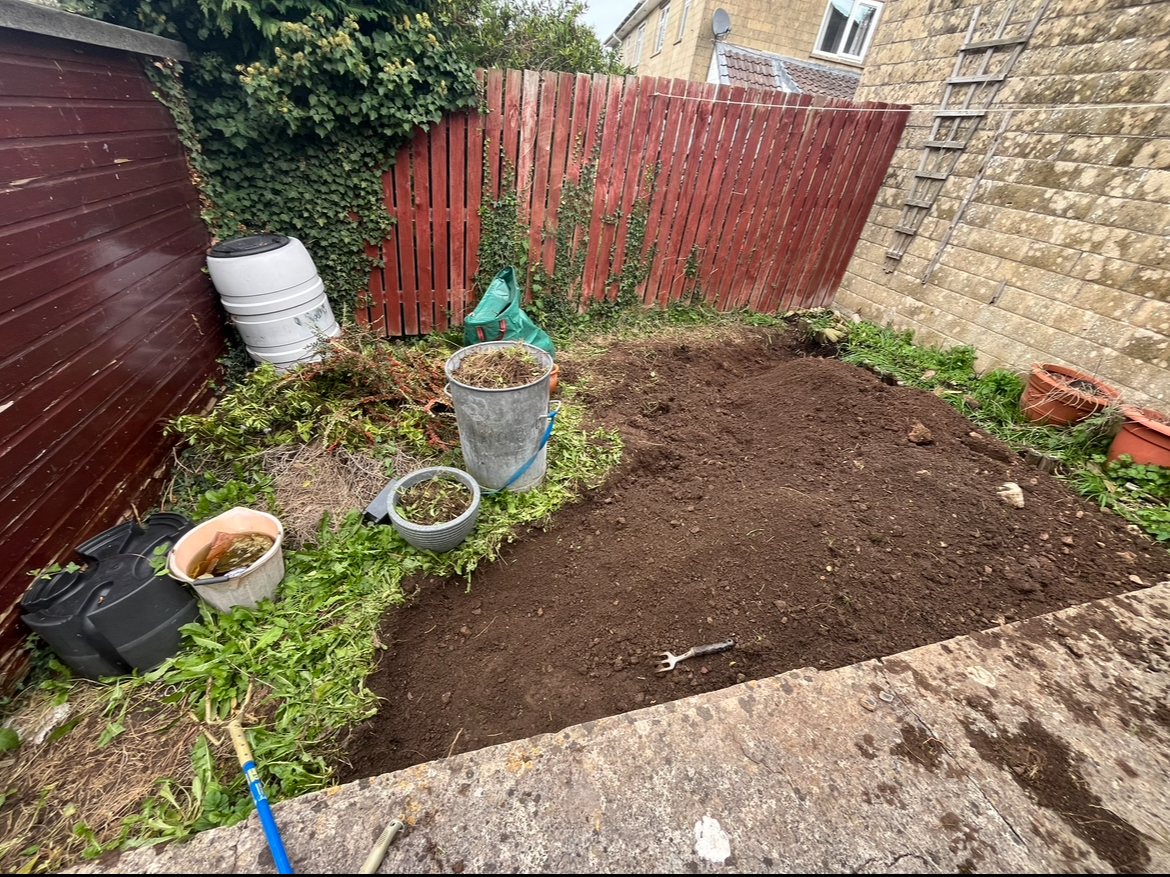
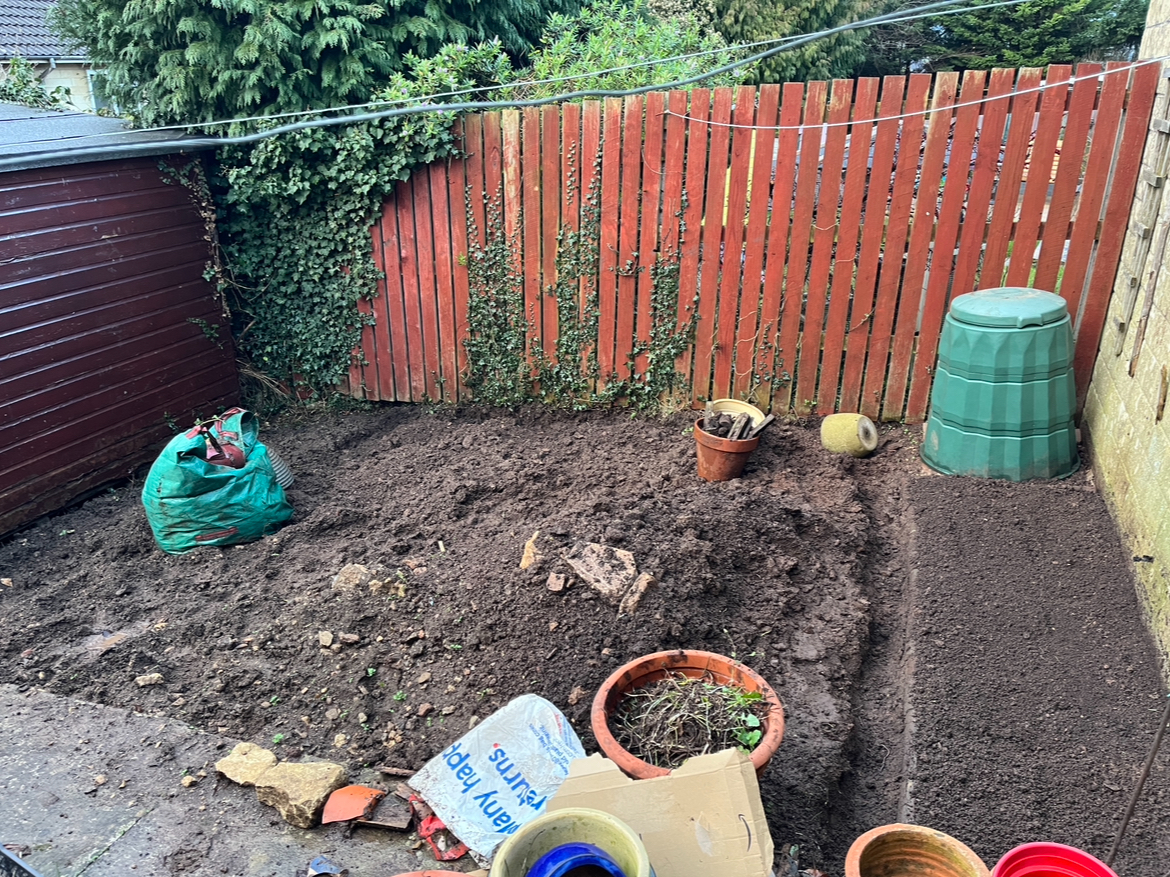
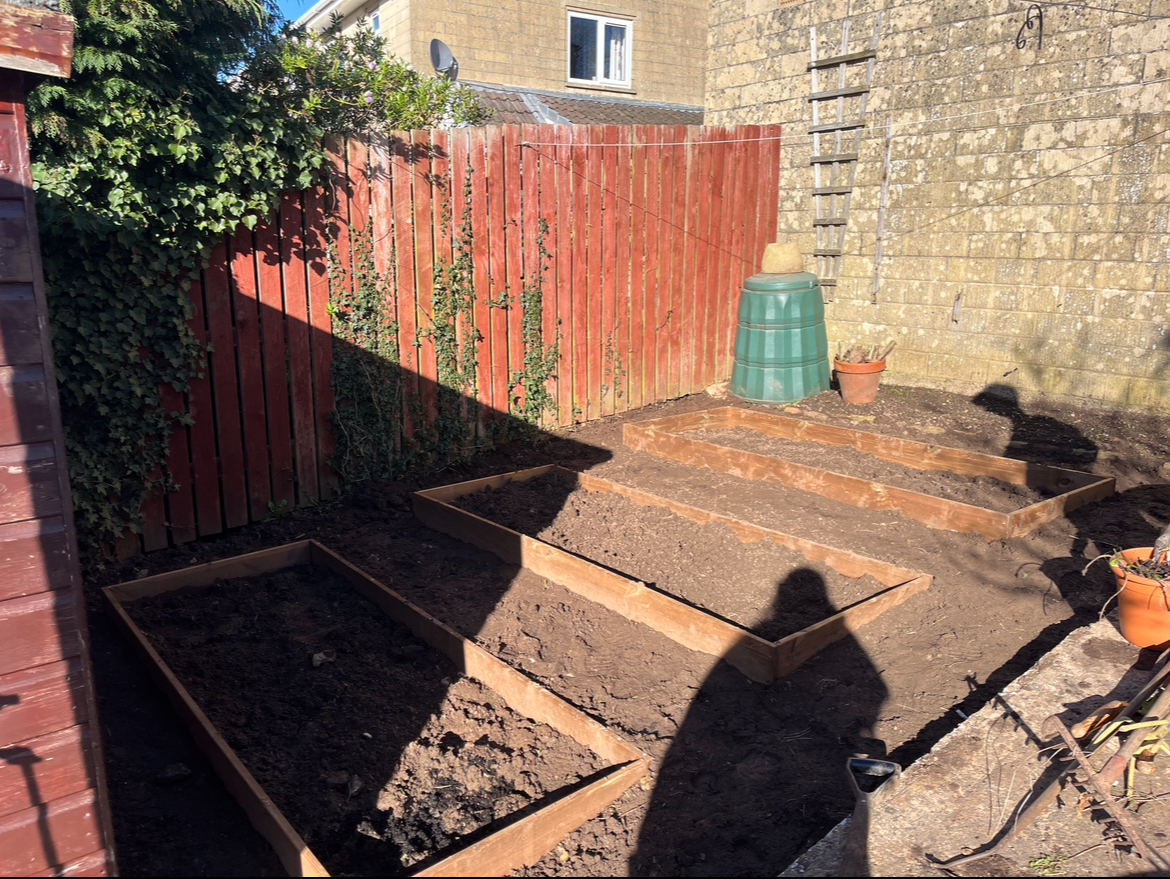
An update on our digging:

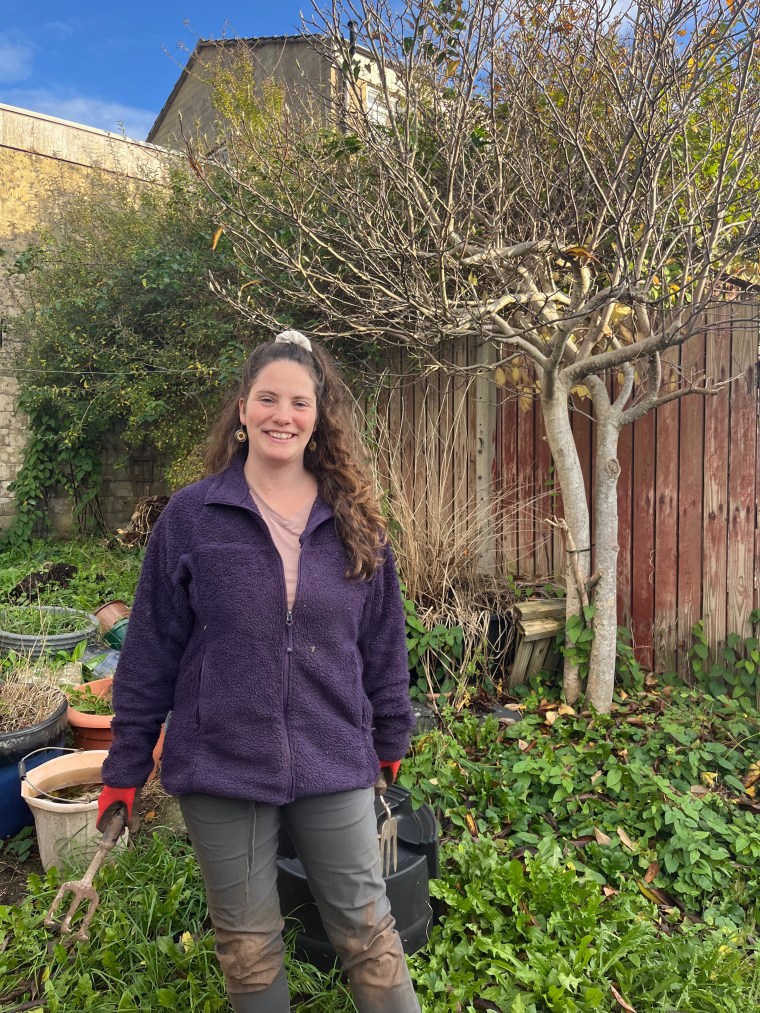
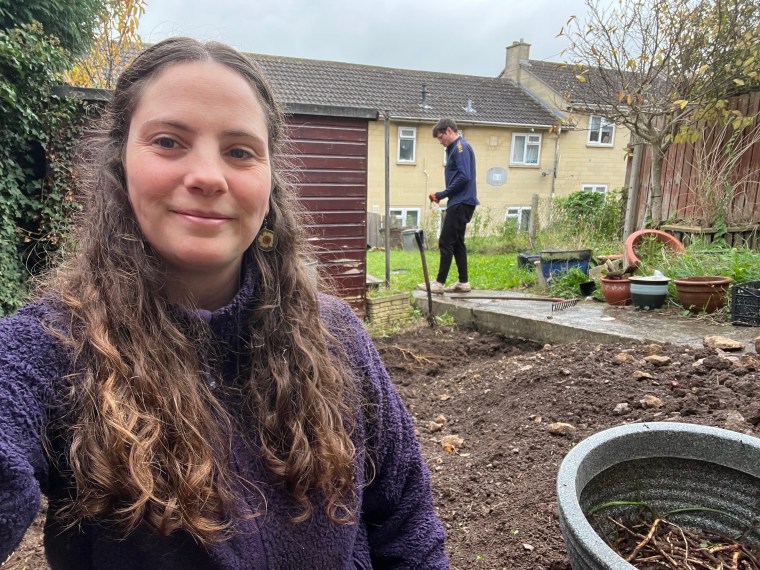
  • Author looking happy in the garden
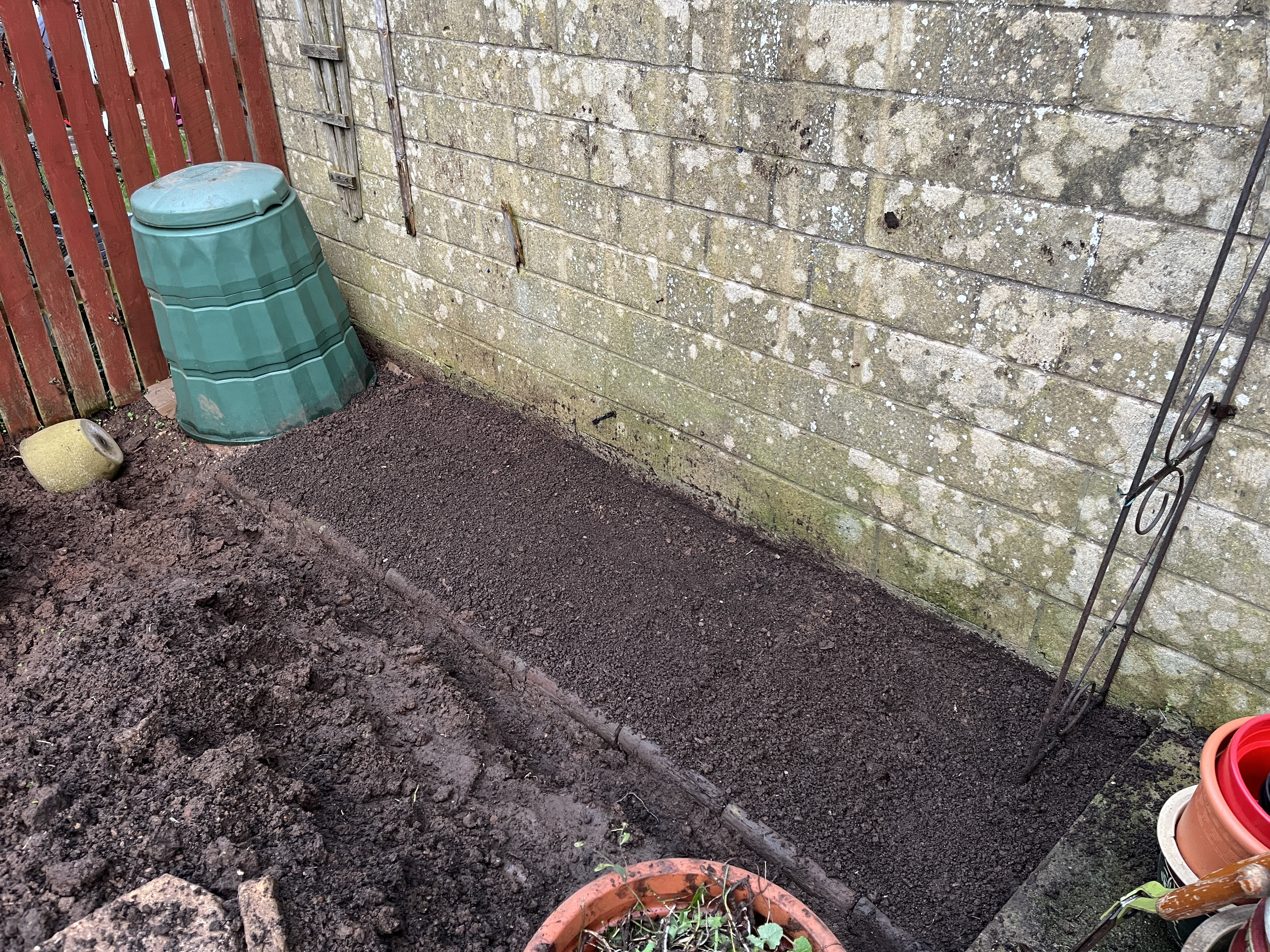
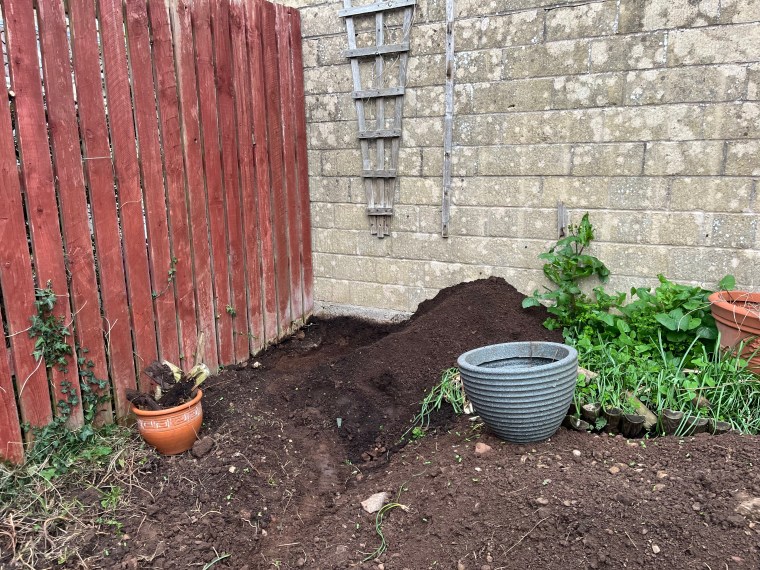
  • Garden update (angle 1)
  • A compost bin with an upside down plantpot on the lid.
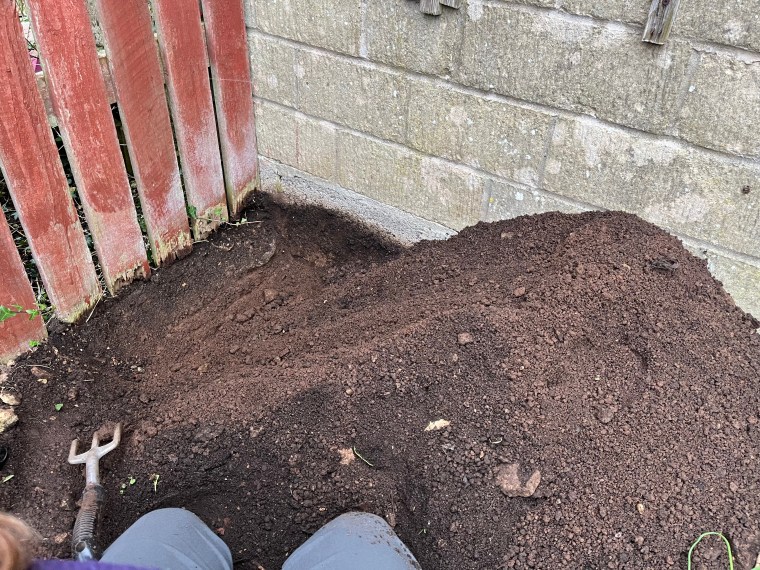
  • Garden update (angle 2)
  • Garden update (angle 3)

Diary of a clueless gardener: Starting a compost bin from scratch


I’m finally at the point of having my very own compost bin! 

It might sound a bit funny, but I’ve been wanting my own compost bin for years. I love the idea of taking waste and putting it to good use – to create organic, high-quality soil that will help me grow nutrient-rich food. It’s like recycling… but for vegetables!

Before starting a compost bin, I asked myself three questions: 

  1. Where should I put a compost bin?
  2. What shall I put in my compost? 
  3. How long does it take to make compost?

To answer these questions, I watched videos, read online articles, and even read through the composting section of the RHS book I bought Shem for his birthday – How to Garden: When you’re new to gardening. Here’s what I’ve learnt while preparing to start a compost bin from scratch. 

Where should I put a compost bin? 

When deciding where to put our compost bin, we wanted it close to our soon-to-be veg patch and somewhere easily accessible. 

My research pointed to two other helpful considerations: placing the bin at the top of a slope for better drainage, and choosing a spot that gets some sunlight (to help the bin warm up) without giving up precious growing space.

There is a range of bins to choose from when making compost. The main ones being:

  • Circular plastic ones – cost-effective and great for small spaces
  • Larger wooden ones – environmentally friendly, but more expensive
  • DIY options – in his Simple Guide to Composting video, Huw Richards offers a very simple homemade compost bin using pallets

The house we bought came with a compost bin already in the garden, and it seems to be in good condition. It’s one of the standard stationary plastic ones. Ideally, I’d love to build a wooden bin one day, but for now – given our limited space and my dislike of waste – the plastic bin wins.

What shall I put in my compost?  

The key thing when thinking about ingredients for compost is that you have your greens and browns. The greens heat up the heap, which is key for making compost, and the browns help reduce bad odours, prevent pests and stop the compost from becoming too slimy.

But once you know the “greens” and “browns” rule, composting suddenly feels much simpler.

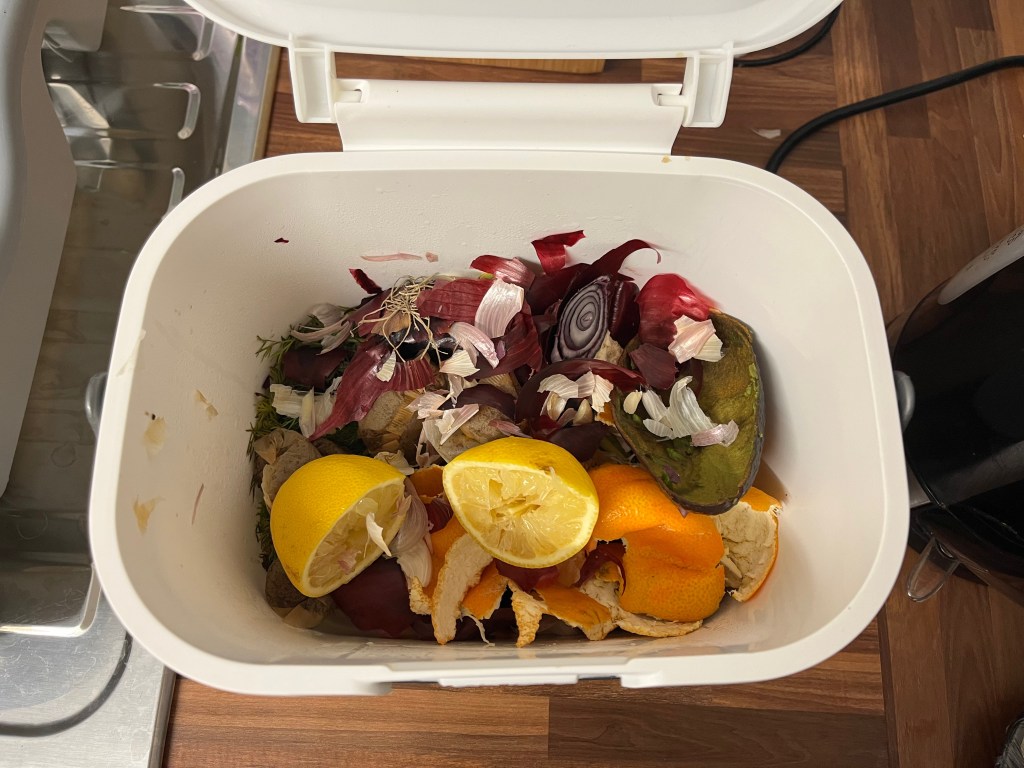
Greens are fresh materials and release nitrogen – so this would be your veg waste, grass clippings, coffee granules, or even animal manure. 

A picture of various kitchen waste greens ready for the compost bin

Browns are dry materials full of carbon – such as cardboard, leaves, paper, sawdust. 

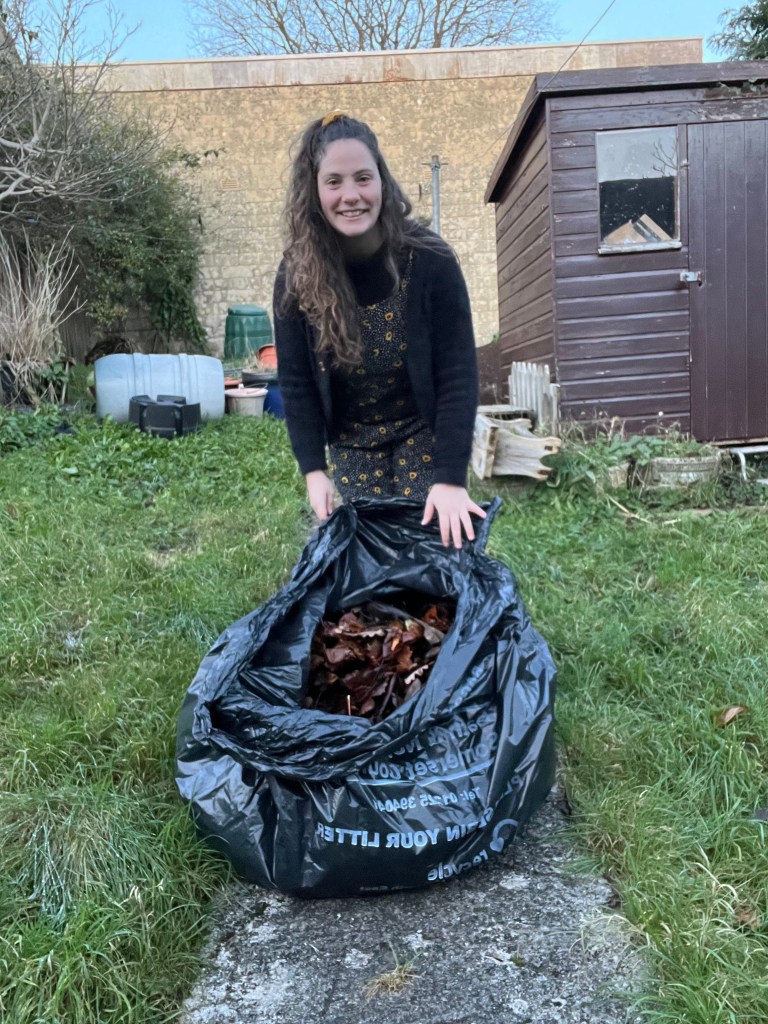
As it’s autumn, I had planned to go and gather lots of leaves from a street down the road from me. By happy coincidence, on the day I planned my leaf-collecting mission, I walked straight into two council workers clearing the exact path I had in mind. At first I kicked myself for not going sooner… and then I realised they were actually saving me a job. So I asked if I could have a bag of leaves -and they very kindly agreed!

Author, Poppy, showing the bag of leaves given to her by the road workers.

When thinking about what not to put in your compost, Better Homes and Gardens has put together a very helpful list.

Now there seems to be some conflicting information about the ratio of how much of each you put in. In the video mentioned earlier, Huw Richards suggested a browns-to-greens ratio of 2:1. However, in GrowVeg’s video, The Ultimate Compost Masterclass with Charles Dowding, it’s recommended to use three parts green and one part brown. 

Two very conflicting pieces of information there! 

So I sought help from other articles too. Although some more mixed views, there seems to be a lot of people suggesting a browns-to-greens ratio of 3:1 – including The Spruce and RHS.

My granny recommended Huw Richards so I’m going to take his advice and start with a browns-to-greens ratio of 2:1. Furthermore, because it’s winter, not having too many browns will mean that the compost heap will heat up more. 

How long does it take to make compost? 

Most sources say compost takes around 12 months to mature. Turning the heap once or twice a month can speed things up by adding oxygen and mixing the materials.

Either way, monitoring the heap seems beneficial. The ratio might need adjusting depending on the weather, the smell, and how warm the heap feels – if it isn’t heating up much, adding extra greens (nitrogen-rich material) can help.

Overall, it looks like this compost won’t be ready for spring when I plan to start my planting. But it will be great mulch to add to my (hopefully thriving) veg patches at the end of next summer. How exciting! 

______________

Learning about the process of compost has put things into perspective for me. Gardening is a slow process. You put in time and effort long before you see any results. But it’s so exciting to be starting our garden and to be sharing our learning and progress with you all.

If you’ve started composting yourself – or if you’re miles ahead of me and already have a thriving heap – I’d love to hear what you’ve learned along the way. What’s worked for you? What mistakes did you make early on?

And if you’re also a clueless-but-keen beginner like me, feel free to follow along as I muddle my way through this gardening adventure. Here’s to slow, steady progress and soil that’s (eventually!) worth the wait…

Diary of a clueless gardener: My 5 reasons to get gardening


I’m starting to think October might not have been the best month to begin a gardening project…

Between the busyness of life – my husband working full-time, having a four month old baby and the house being hit by a wave of seasonal colds – it’s been difficult to get out in the garden recently. I’m all too aware that winter is looming, and the ground will start freezing before we know it, making the task of digging up a large patch of lawn rather difficult! 

So, in order to give myself a bit of a kick up the bum, I thought I’d reflect on all the wonderful reasons to get out in the garden – whatever the weather! 

One of my life mottos has always been: you make time for the things you care about. So, maybe reminding myself of the “whys” behind our gardening project will help me make a little more time to get digging again. 

Creating a happy place 

For the last 5 years of living in Bath, I’ve longed for my own outside space. Somewhere I can make my own, a place to sit in the sun with a cup of tea and a good book. Finally, I have this space, and I don’t want to waste it! 

Plus, now with a little one who will grow up in this garden, I’m excited to make memories out there – having tea parties, teaching her how to grow food, and picking and smelling flowers together. 

Right now this does seem like a little bit of a pipe dream – but for now, every bit of digging, clearing and de-weeding is a step closer! 

The pull of a project

I don’t know about you but I thrive off of having an ongoing project. Something positive and productive to fill my spare time with. It’s especially wonderful when it’s a tangible project, something you can see progress with – and gardening is perfect for this. 

I also love finding projects that I can do alongside my husband. Working alongside each other seems to strengthen our relationship, and reminds us what a great team we are (most the time anyway)! 

Happy, healthy soil 

Did you know getting your hands dirty is good for both your mind and body?

The microbes in soil produce serotonin (our happy hormone), and exposure to them makes our gut microbiome more diverse – improving our digestion, immunity and overall health. Definitely a good way to start preparing for the winter and the seasonal colds that seem to spread so easily!

Plus, according to the RHS, “There’s research showing that exposure to soil, especially in early childhood, can improve immune markers and reduce rates of asthma and allergies.” Learning this today gives my fond childhood memories of mud fights in the woods an even greater appreciation. 

A dose of fresh air

I’m really not much of a winter person, and I often find myself feeling quite low during those darker months. As the days get shorter and the cold sets in, I tend to leave the house less and less.

The lack of fresh air and Vitamin D, and a generally gloomy outlook all add to that seasonal downness I feel. I’m hoping that by having a project to focus on – and a garden to love and care for – I’ll find more reasons to get outside this winter and embrace the cold but fresh air. 

Accountability – that’s you!

Now that I’ve started writing about this gardening adventure, it means I actually need to see it through. Honestly, this is one of the reasons I wanted to share this journey.

I hope that you’ll enjoy watching the progress, and hopefully pick up some helpful tips along the way. But I am also a stickler for accountability so, dear readers, please do follow along with this journey, keep me accountable when I start to slip, and share your own advice as I go! 

Well, that was helpful, some reminders to hold on to when the weather’s grey and life’s to-do list is long. What are your gardening motivations? What gets you outside with your hands in the soil? Feel free to just ponder, or let me know – I’d love to hear what inspires you. 

Alternatively, if you haven’t ever embarked on your own gardening journey – what’s holding you back? 

  • Poppy (writer of the blog) in her garden

Diary of a clueless gardener: Bindweeds!!!


I know I’ve only just started, but I think I may have already found my gardening nemesis…

Each week when our food waste goes out, I’m horrendously reminded of how much of it could have gone towards our future soil. So, while Shem (that’s my husband!) continues to tackle the main de-weeding, I decided to focus on a smaller project: getting the top corner of the garden ready for a compost bin.

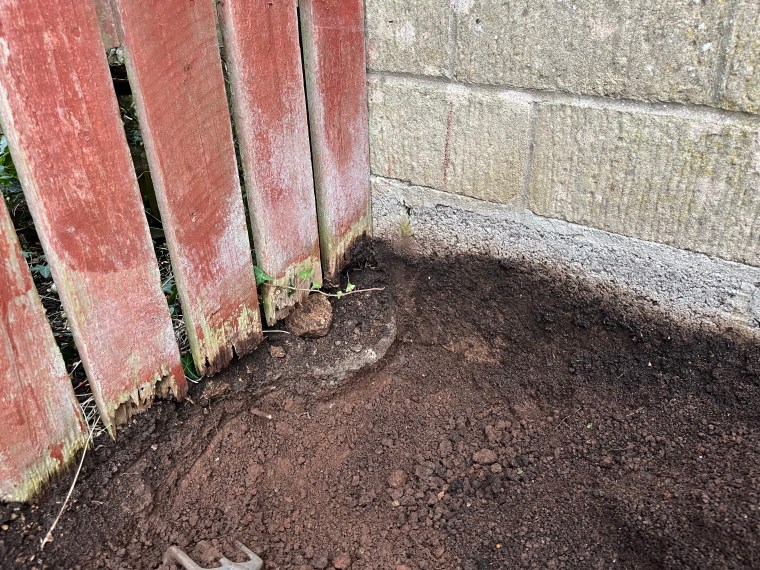
However, this week I discovered that the corner is absolutely filled with bindweed.

What is bindweed? 

Bindweed is an invasive plant that grows quickly and can twist around other plants, choking and stunting their growth, or even killing them. Not something I would like in my garden! 

There are two types: hedge bindweed and field bindweed. According to The Wildlife Trusts, the way to distinguish between the two is by the flowers. Hedge bindweed has large trumpet-shaped flowers, while field bindweed’s flowers are much smaller. 

When our garden was growing wild over the summer, we had both large and small flowers growing. So it seems we’re infested with both field and hedge bindweed! 

Why the purge? 

Bindweed is difficult to get rid of. It’s an irritatingly intelligent and stubborn plant. If you leave any trace of the plant or its root, it will sprout back into a new plant.

Quite an amazing part of creation, but rather frustrating if you’re trying to rid your garden of it!

Dealing with bindweed (without chemicals)

According to Love the Garden, the most straightforward and effective way to remove bindweed is to use weedkiller. 

But we’re keen to keep our garden chemical-free, so it looks like it’s going to take more time, patience, and digging.

Thankfully, Gardeners’ World has given some helpful ways to tackle bindweed organically:

  • In beds and borders, dig out the roots completely. Winter to early spring is the best time, before new growth begins.
  • Remove every last bit of the root (a fork helps avoid snapping them).
  • If it’s tangled around established plants, carefully loosen the soil on either side and pull out the roots whole.
  • In summer, when digging isn’t possible, cut or pull off new shoots regularly to weaken the plant.
  • Homemade weed killers and weed burners can help reduce top growth but won’t kill the roots.

My experience with bindweed

Although it takes a lot more effort getting out at this time of year, it looks like October is a good time to tackle bindweed by digging up the ground. 

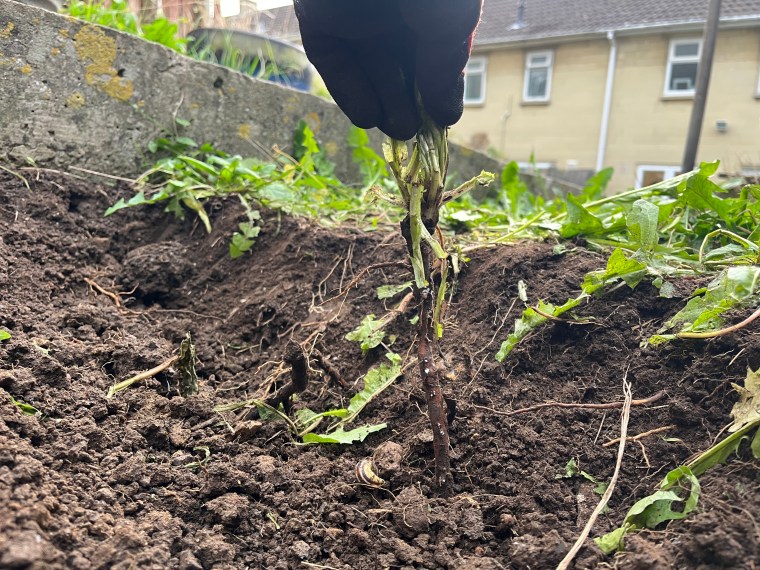
So that’s what we’ve been doing – digging, digging, digging. I’ve gone about an arm’s length deep, and I’m still finding more roots! Especially in the corner where I’m planning to place the compost bin.

On the bright side, I think I’ve located where a lot of it stems from. The downside? It feels endless. And because it’s where our compost bin will be, I really want to make sure the soil is clean before we start. It would be awful if our compost becomes infested with bindweed. 

It does feel like I’m making some progress, at least there are a lot of bindweed weeds in my little bucket… 

But a lot of the roots seem be coming from under our fence to the neighbour’s garden. I’m not sure how to stop them creeping back without using chemicals. 

Help, please?

Have you had any experience with bindweed? Do you have any advice for getting rid of it naturally – or keeping it from coming back? Please do let me know in the comments or messages! I’d love to hear your experiences.

  • Corner of the garden where the compost bin will be
  • Bucket of bindweed roots
  • Bucket of bindweed roots
  • Poppy and Shem digging in the garden
  • Depth of the hole dug in the garden
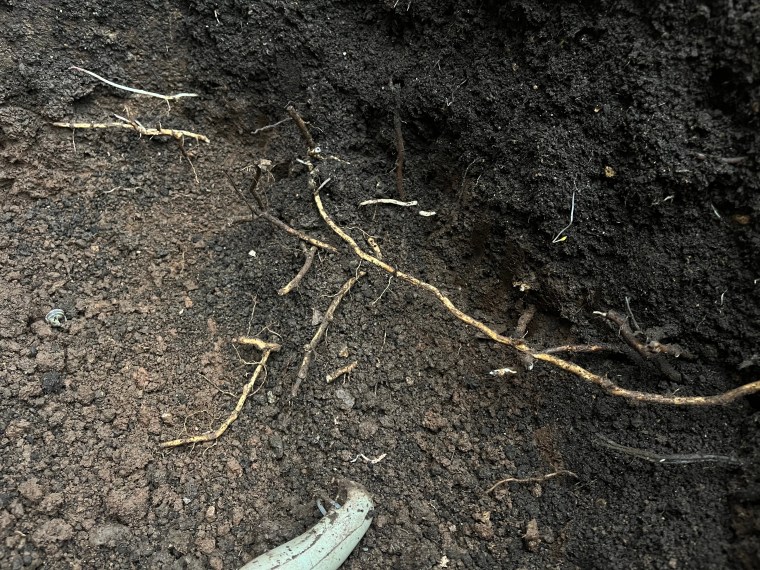
  • Bindweed roots coming from the neighbour's garden
  • Bindweed roots coming from the neighbour's garden
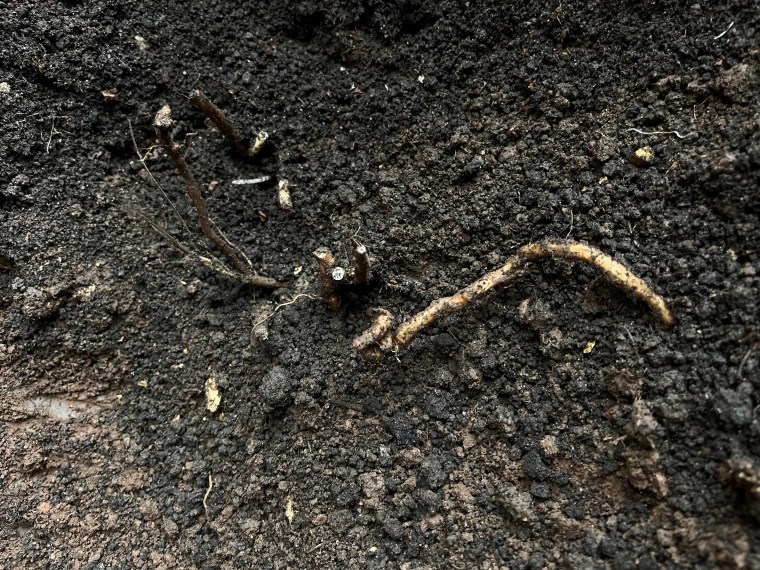
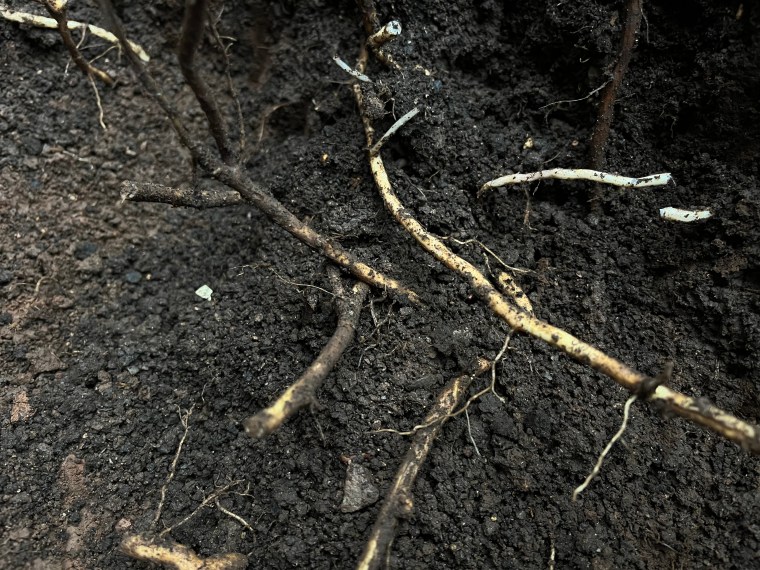
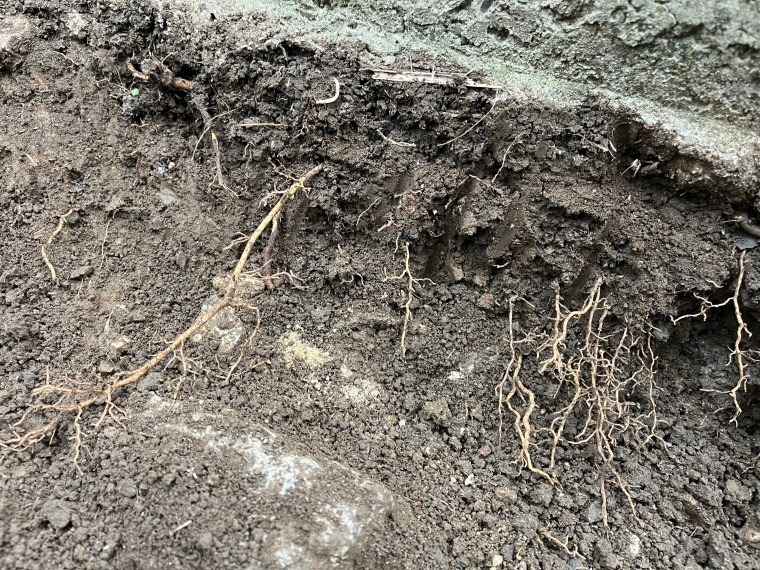
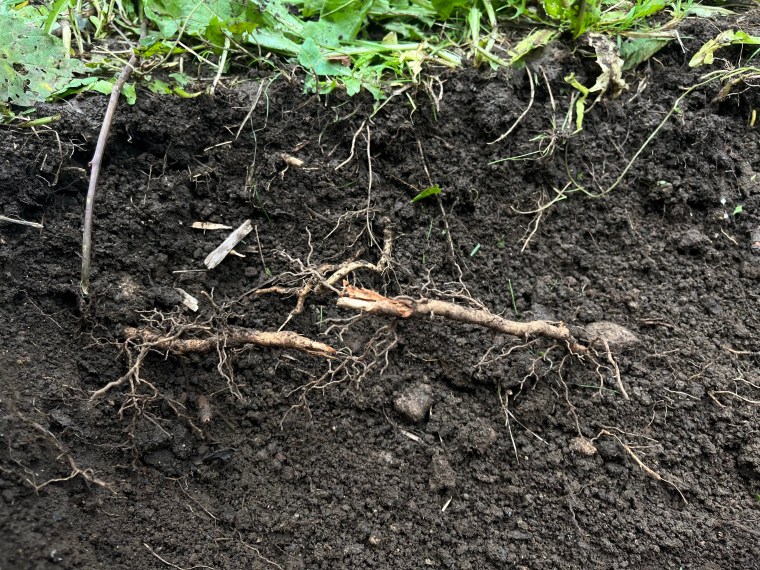
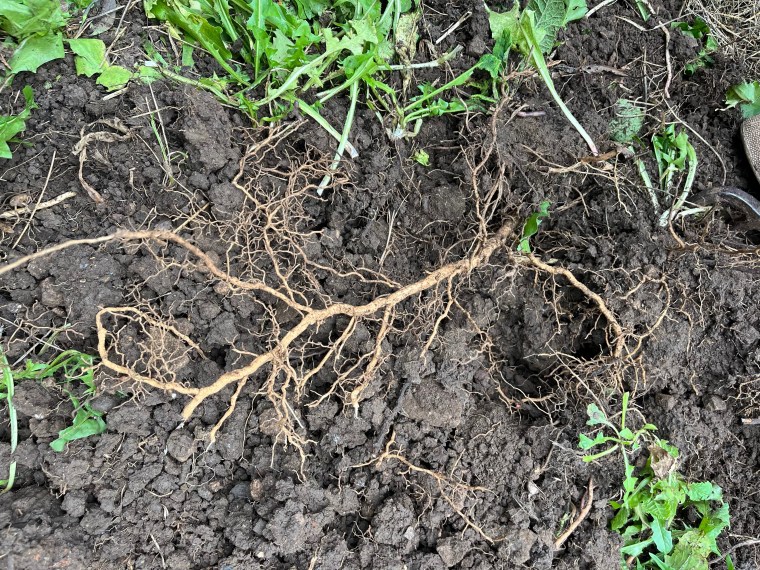
  • Bindweed roots in the soil
  • Bindweed roots in the soil
  • Bindweed roots in the soil

Diary of a clueless gardener: Getting to the root of it


The other morning, whilst lying in bed, my husband and I decided it was time to make a start on the garden. He was very excited to go out and buy some wood to build the veg boxes. After discussing, we realised we would be jumping the gun a little bit. We had a much bigger problem to tackle first… 

When we first moved in, we had a small tidy up of the garden. My husband mowed the lawn and we gathered plant pots left by the previous owners. When I say “we”, I actually mean my husband – I was 36 weeks pregnant at the time! Then our little girl was born in May, which meant we were a little preoccupied over the summer and the garden had to wait. 

It turns out, this was a blessing in disguise. By letting the garden grow free, we were able to discover what plants already existed, and what weeds needed to be dealt with. 

We discovered that bindweed has taken over our garden. According to our neighbour, this is what’s making our lawn bumpy. Plus, because of their deep roots, removing the dandelions that cover our garden is going to be hard work.

Essentially, we need to overturn the grass areas of our garden and start afresh, otherwise any veg boxes or flowerbeds will quickly be overrun by weeds.

Getting the job started 

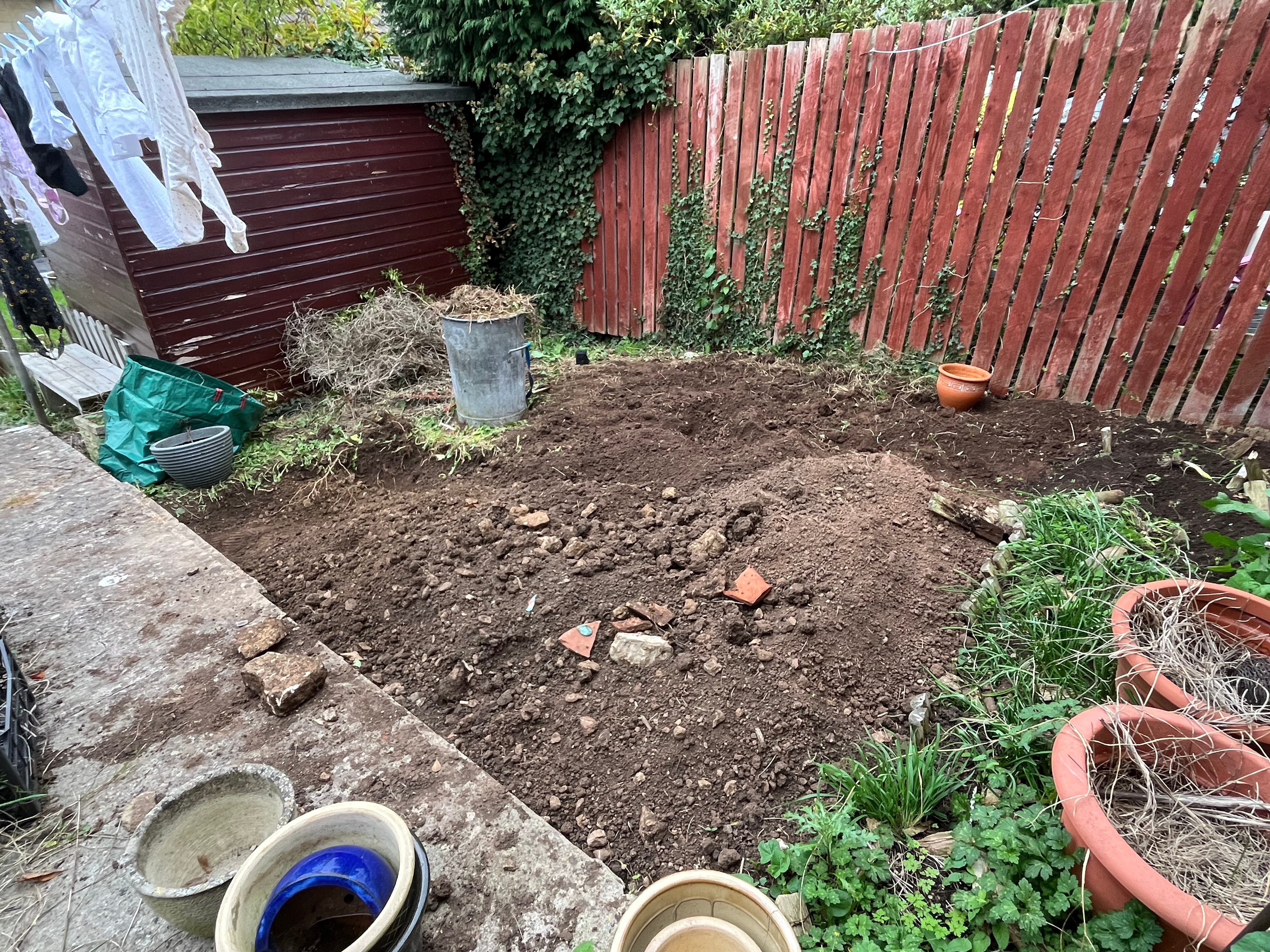
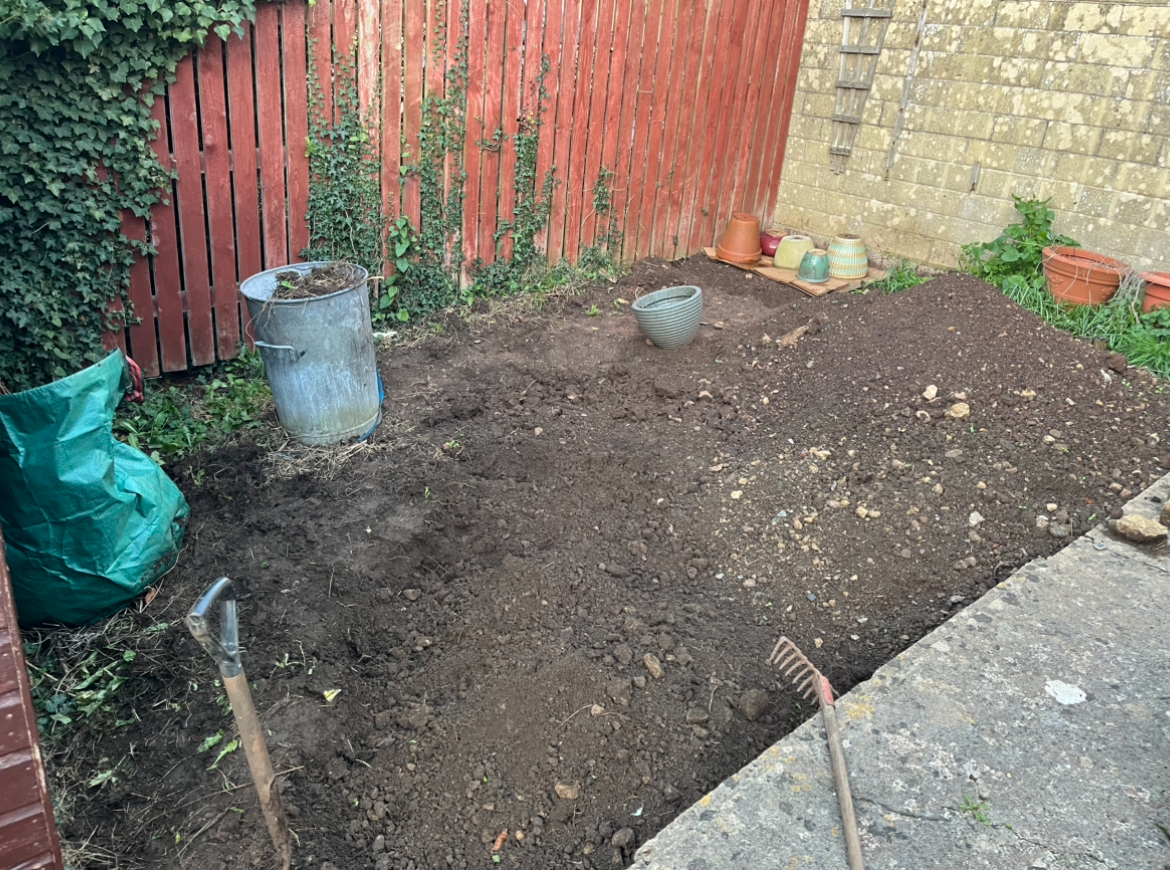
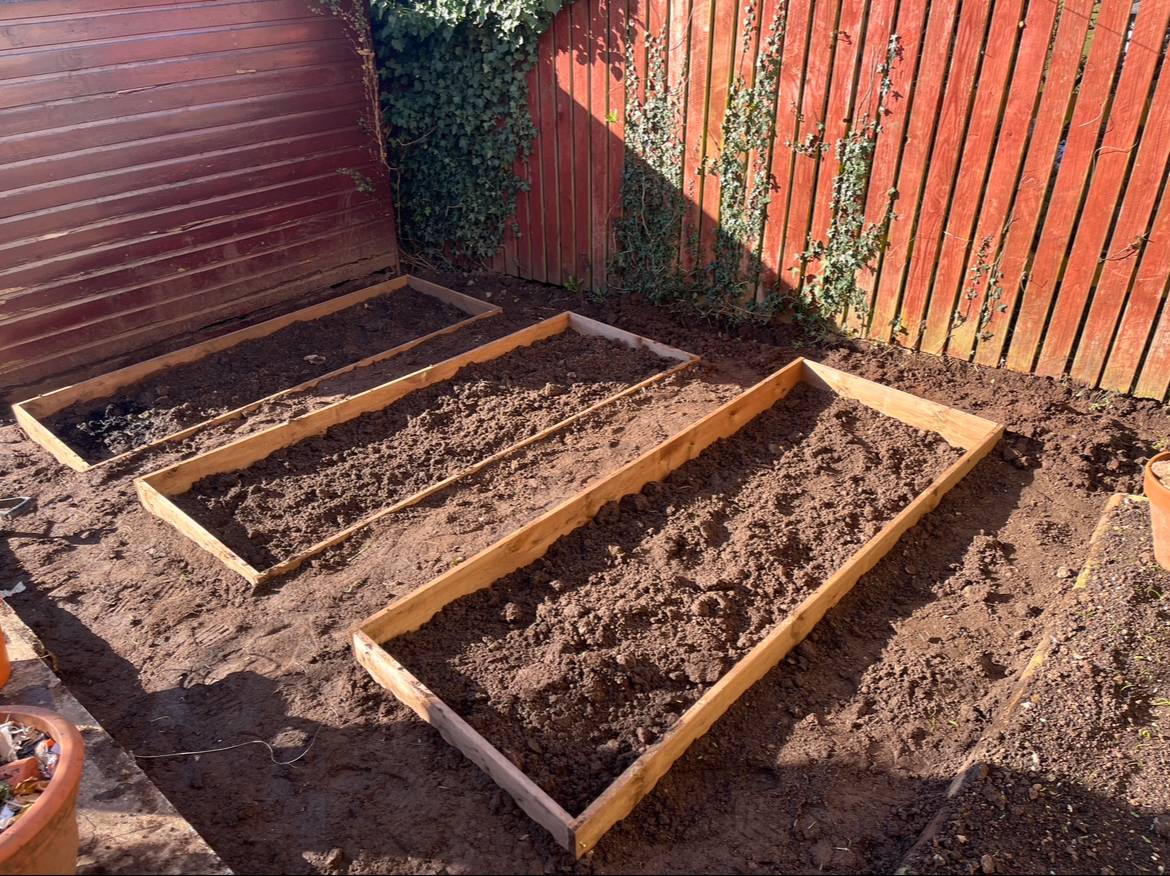
In order to make the project doable, and a little less overwhelming, we’ve mentally split our garden into four parts: Veg patch, section opposite the veg patch, flower beds, and the rest of the garden. We’re starting with the veg patch – roughly 3m x 5m – with a hope to have boxes ready for planting in spring.

Our immediate aim is to dig up the area by hand and remove as many roots as possible. We’ll be trying to avoid the use of chemicals during this whole process to protect the wildlife in the soil, plus it keeps the garden ecosystem healthier overall.

We are on day five of digging and about a quarter of the way through the patch. Here’s what I’ve learned so far: 

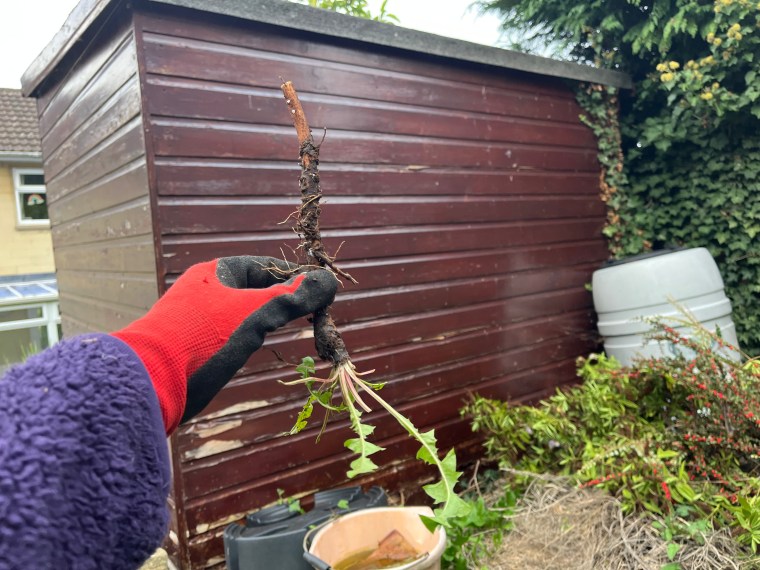
  • Dandelion roots go deep! We’ve dug about one foot down and still haven’t gotten to the bottom of some of them. 
  • Free medicine. Did you know about the health benefits of dandelion roots? Chucking them all away feels like I’m wasting free medicine – perhaps I’ll make some tea with it in the coming weeks. 
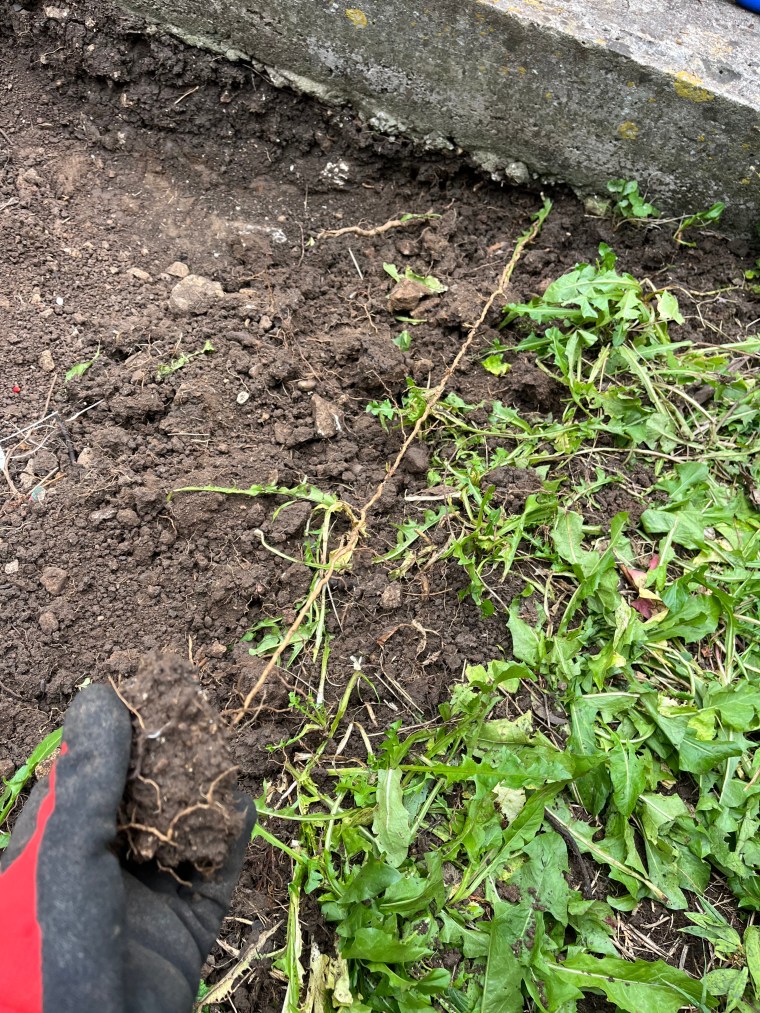
  • Bindweeds roots travel far! Not usually as deep as dandelions, but tug one root and there’s movement over a metre away. 
  • An irritatingly intelligent plant. I read somewhere that if you leave any part of a bindweed in the ground, it will grow again – you need to be thorough with your digging! 

Any advice is appreciated

So far it’s been enjoyable getting our hands into the dirt and having an excuse to get outside – even though we’re getting less and less daylight in the evenings now!

But it’s also been a bit of an eye opener of just how much work we have to do. We’ve made good progress, but when you compare it to the rest of the garden? We have a very long way to go. 

If you’ve ever battled bindweed, dandelions, or just the chaos of an unkempt garden, I’d love to hear your tips. How did you survive your first digging adventure?

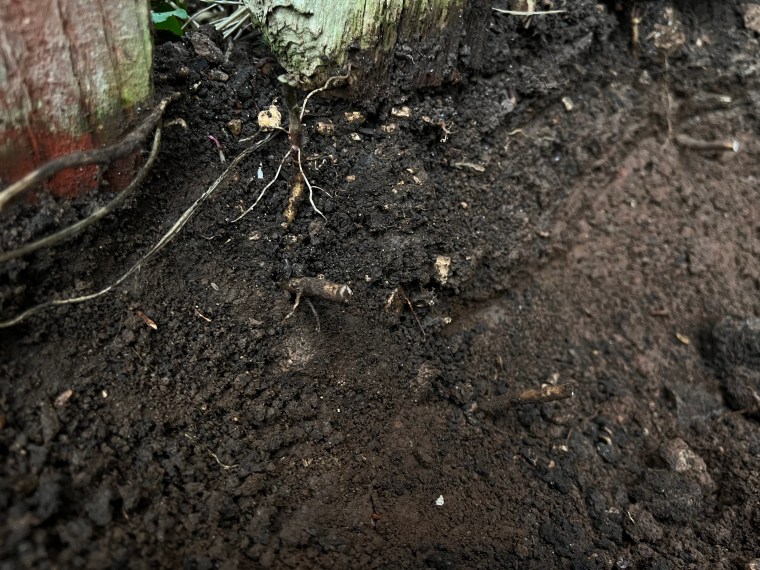
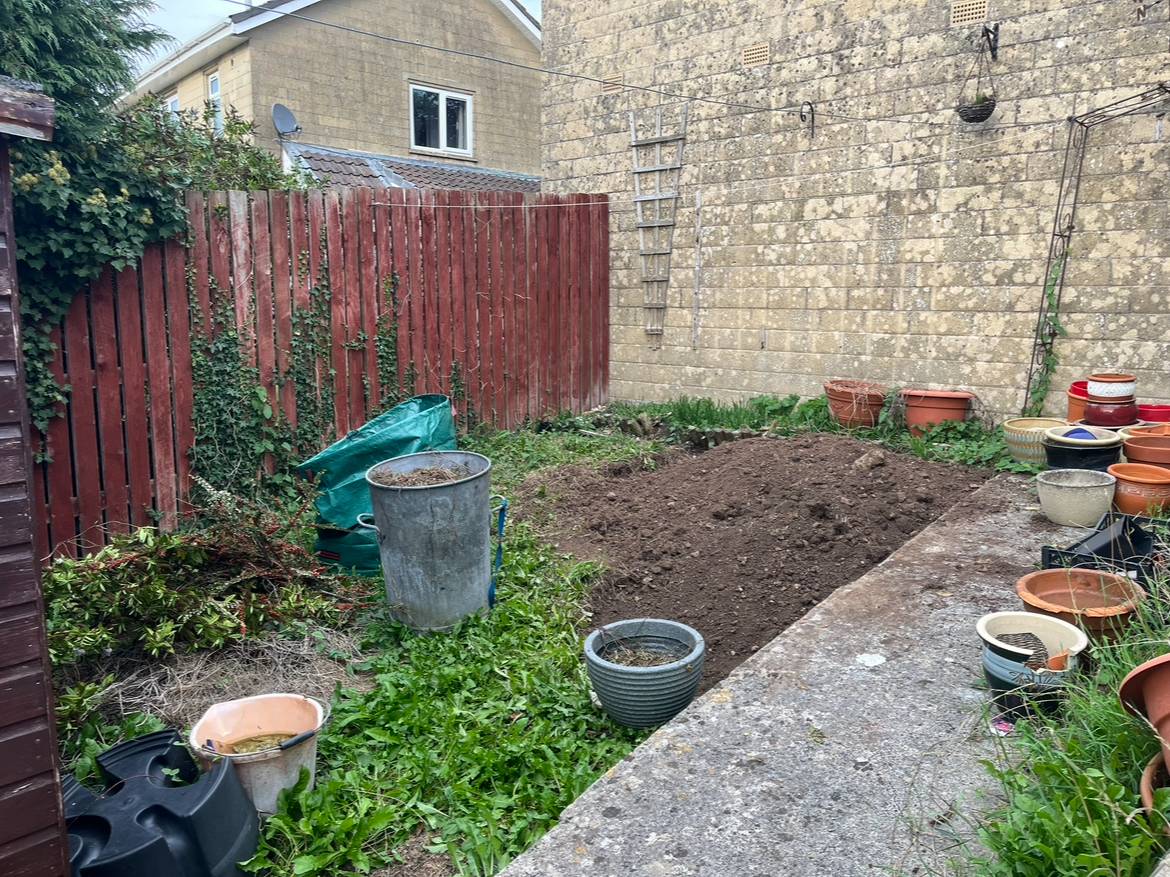
An update on our digging, and some discovered roots:

If you can identify the last two photos, please help!

Diary of a clueless gardener: Starting my gardening journey


I’ve always dreamed of growing my own veg and filling a garden with bright and colourful flowers. And now, after buying a house with my husband, I finally have a garden!

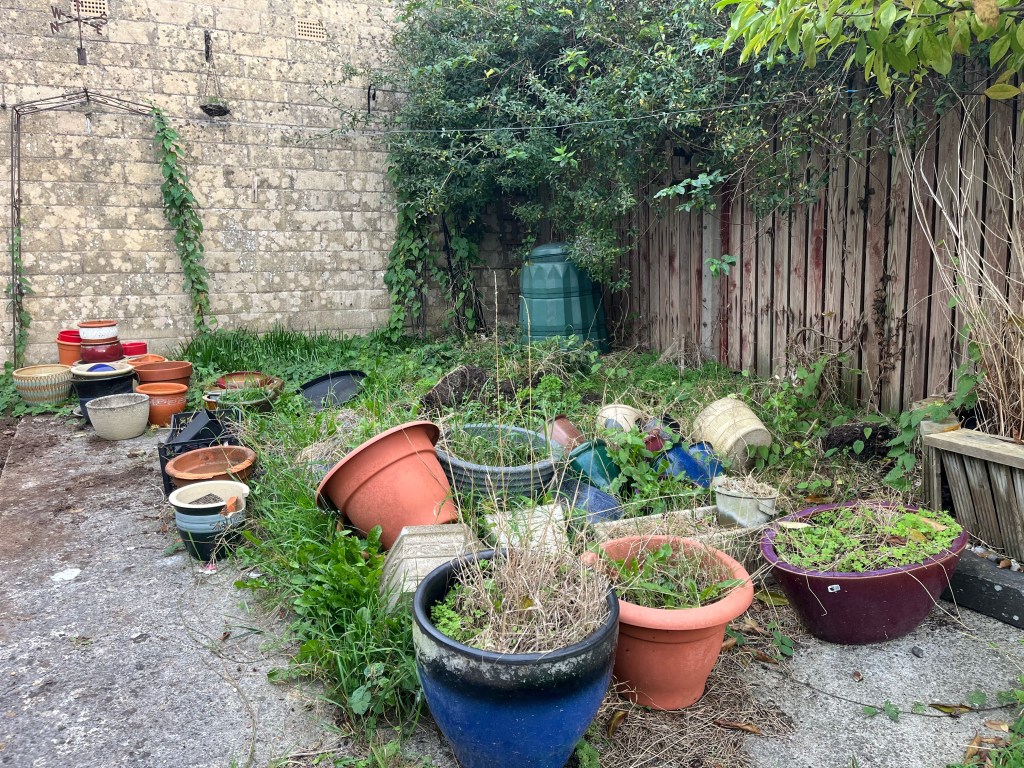
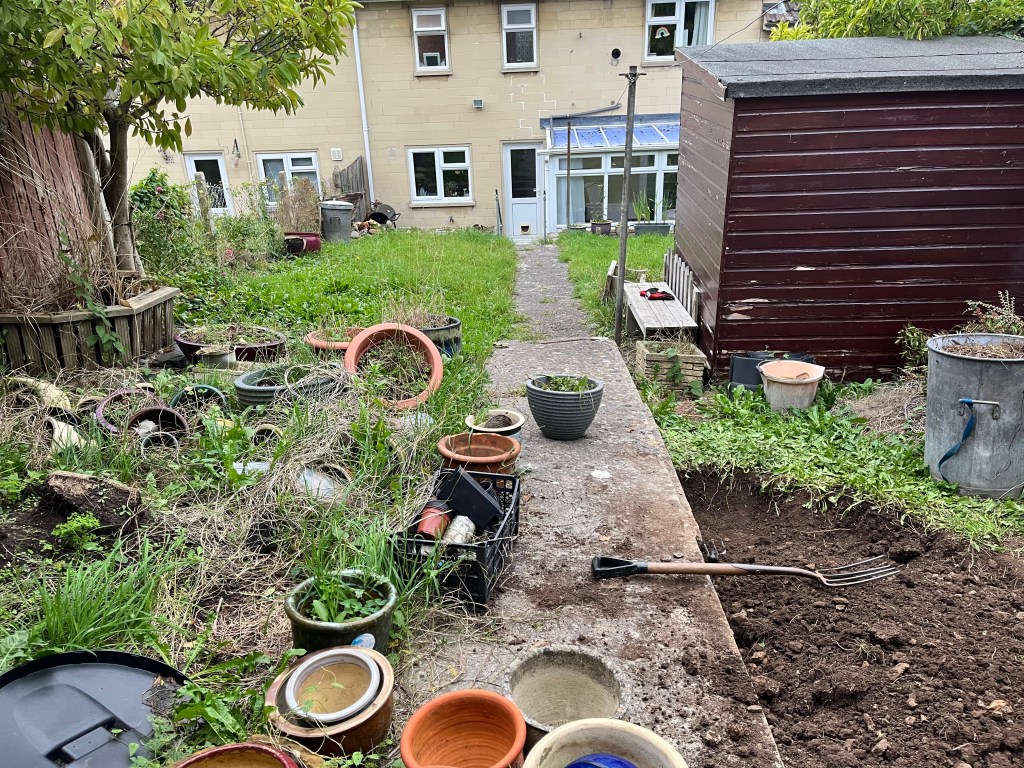
The only catch? I don’t know a thing about gardening – and it’s currently far from ‘grow your own’ ready. Between the infestation of invasive weeds, the bumpy lawn and the flowerbeds that look like they’ve barely survived an explosion, it’s going to take a lot of work to bring this garden back to life. 

But it’s an adventure we’ve decided to take on – so here’s where it begins, with more enthusiasm than expertise, and a hope to share some helpful insights along the way.

As I embark on sharing this gardening journey, an introduction is in order. I’m Poppy – 28 years old, two years married, and we’ve just welcomed our first little one into the world. We live in the beautiful city of Bath and bought our first home at the beginning of the year. 

I grew up in North Devon, surrounded by rolling countryside, so since moving to the city I’ve longed for a little green escape of my own. But now that I finally have the opportunity to create one, I need to figure out how to make it thrive.

So why a full-blown garden project instead of just a tidy-up and some nice patio furniture? Well, the idealistic goal is to grow my own food.

I’m tired of fruit and veg that are coated in chemicals, or the disappointment of bringing home greengrocer produce to find it’s already gone bad. I want fresh, trustworthy food straight from my own back garden.

But this is going to be quite a journey, because my current gardening knowledge goes as far as helping my mum in our front garden as a child – she somehow managed to rope a bunch of other kids from the estate to help her too. I loved the sense of community it brought – everyone working towards the same goal, whilst tending their own little patch. 

That memory has always stayed with me, and it’s partly why I want to share this journey here – not just to document the process, but to rediscover that same sense of connection and joy that comes from growing something together.

So here we go. I’m clueless but excited, and ready to get my hands dirty. 

If you’ve ever started a garden project – or at least attempted one – I’d love to hear your best tips. What do you wish you’d known when you first started gardening?

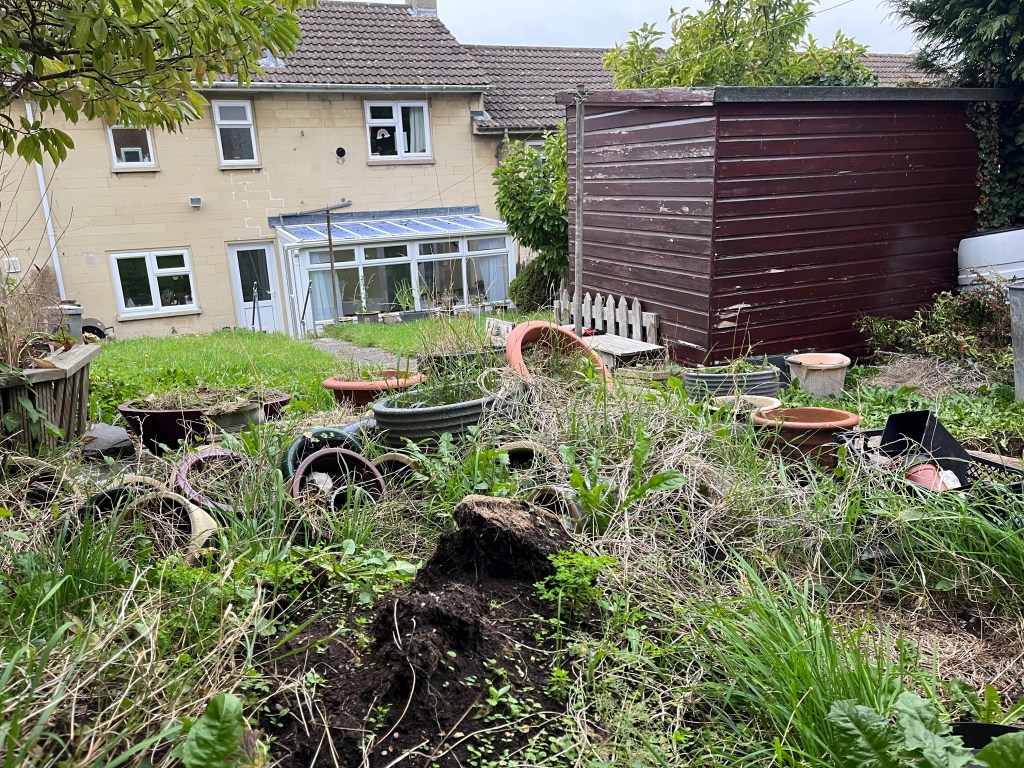
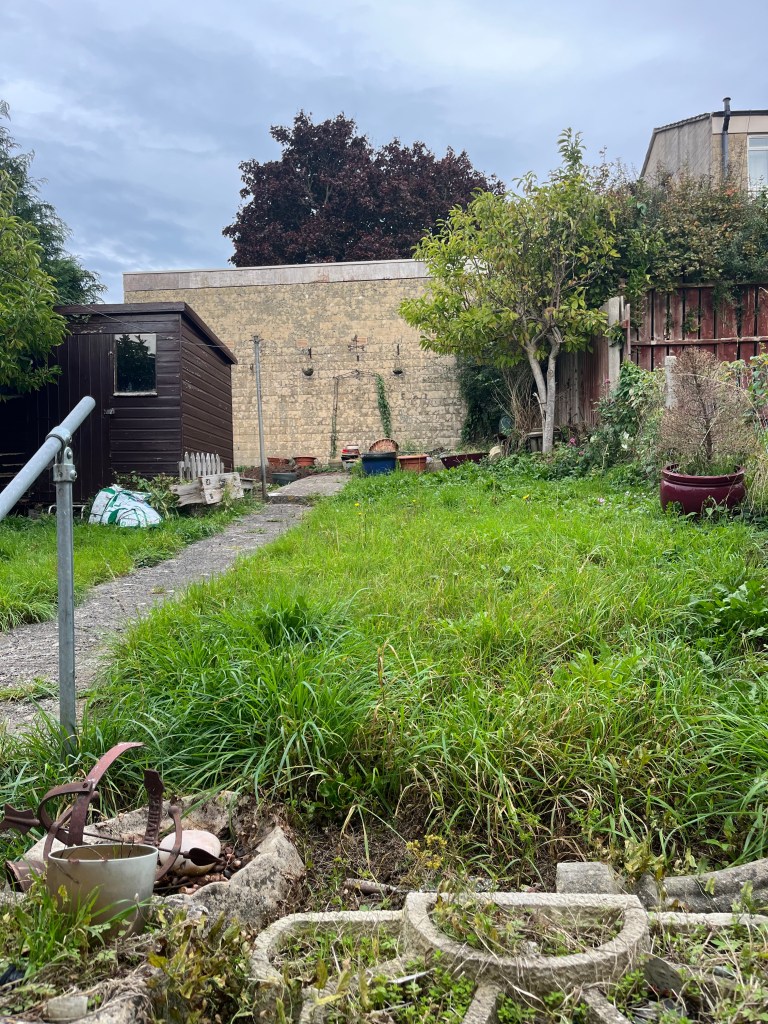
The current state of the garden:

Can anyone talk to God? Understanding prayer and repentance


Have you ever wondered if God hears your prayers?

Over the last couple of weeks we’ve been thinking about prayer. So far we’ve taken a deeper look at this timeless practice and established that prayer is more than a list of requests, it’s an intimate conversation with God. We’ve also thought about how to approach praying – using the Lord’s prayer as a template. 

It’s been wonderful reflecting on the intimacy that we can have with God in prayer, and it’s been important to remember that we pray through Jesus to a God who deserves reverence. 

But from research that I’ve carried out, one of the most common questions around prayer is ‘can anyone talk to God?’

So, let’s explore this tricky but crucial topic. It includes thinking about the God that we are praying to and a word called ‘repentance’. 

Repentance… 

What comes to mind when you think of this word? 

You may be all too familiar with it, and be practicing it daily. 

You may think you know the meaning of repentance because it’s a word that’s thrown around a lot at church but when you look at your life, you struggle to see where this word practically comes into play. 

And finally, you may have no idea what this word is – or just think it’s one of those mumbo-jumbo words that you hear religious people talking about. 

Wherever you stand on the understanding of this word, please do stay tuned because it’s a pivotal part of prayer, and something that’s helpful for us all to be reminded of. 

What is repentance? 

In it’s simplest form, repentance purely means acknowledging wrongdoing and actively turning away from it. 

It’s crucial to remember that God doesn’t expect perfection, but a sincere heart that seeks Him and desires change. Repentance is not about shame, but about transformation through God’s grace.

It means recognising that the way I’ve been living, or something I’ve done, is a grievance to God, so confessing this to God and then repositioning my heart and mind towards Him. 

The turning away from the wrongdoing is a really important part. Before truly becoming a Christian, I would pray to God. I would say sorry for something, acknowledge a wrongdoing… but then go and do the same thing again and again! 

I thought I was repenting but I now see that really I was just making empty promises because my heart wasn’t truly in it.

I will take a deeper look into repentance at a later date but for now I want to highlight it’s importance in regards to prayer.

So why do we need repentance to pray? 

The first thing to establish is that we’re praying to a God who is holy and wants to have a relationship with His creation (us). However, our natural state of being is shutting God out, and being the rulers of our own lives.

God isn’t looking for distant, religious rituals; He wants to be close to us. And repentance is about restoring that closeness when we’ve drifted away.

The second thing of note is that God is morally pure so prayer and a relationship with Him requires a heart pointing in the same direction. The darkness and evil of this world grieves God, so if we are looking towards that, He cannot have a relationship with us. 

There are a few Bible verses that highlight this: 

Whoever shuts their ears to the cry of the poor will also cry out and not be answered.” (Proverbs 21:13)

If I had cherished sin in my heart, the Lord would not have listened.” (Psalms 66:18)

When you spread out your hands in prayer, I hide my eyes from you; even when you offer many prayers, I am not listening. Your hands are full of blood!” (Isaiah 1:15)

These verses show that God cares about the states of our hearts, and the need for repentance become more understandable. It is a privilege to have a relationship with God and for Him to hear our prayers. Why would He listen to us if we are purposely doing things that grieve Him?

Just like King Charles wouldn’t want to be friends with someone plotting treason, God desires a relationship with those who genuinely seek His will, not those intentionally turning their backs on Him.


So that this post isn’t too long for you, feel free to click on the option below that’s the most relevant to you. Or, if your interest is piqued, read both parts – they’re helpful to think about no matter your spiritual positioning!

  1. What does repentance look like for someone exploring faith?
  2. What does repentance look like for a Christian?

What does repentance look like for someone exploring faith? 

Seeking a relationship

Essentially when you’re first exploring faith and looking to seek a relationship with God, the greatest thing to ‘repent’ of is having rejected God up until this point. 

We are born into a natural state of putting ourselves first. Even if you grew up in a Christian home and believe in God, by following your own way rather than His, you are still rejecting Him. Relationship with God isn’t about belief, it’s about aligning your mind and heart towards Him. 

If you relate this to the relationships we have with people in our every day lives – just because you’re aware of someone’s existence, it doesn’t mean you automatically have a relationship with that person. 

And as the Creator of this whole world and everything in it, God has a certain standard required in order to have a relationship with Him. But as humans, we can’t meet His morally pure standards… 

And this is where Jesus comes in

Before Jesus, people had to follow specific rituals and sacrifices to connect with God. But when Jesus came to this earth as fully man and fully God and died on the cross, He became the ultimate sacrifice. 

This means that rather than following the old age Jewish rituals and sacrifices, we can now have a relationship with God through Jesus’ sacrifice (which is why Christians go on about Jesus so much – He’s kind of the centre to it all). 

Because of Jesus, we don’t have to be perfect to approach God in prayer. His grace covers our imperfection, and repentance allows us to draw nearer, acknowledging where we’ve fallen short and seeking His guidance to do better.

This means we can now approach God in prayer, confident that He hears us. But first, we need to acknowledge our need for Him and turn our hearts toward His will. 

So! Initial repentance looks like… 

Recognising that there is a perfect God that created us and wants a relationship with us. That we can not meet His level of perfection. That we’re sorry for having rejected God thus far and that in order to have a relationship with God, we recognise Jesus’ sacrifice on the cross. 

It’s inviting Him to come into your heart and life so that we can turn away from the things that grieve God, and turn towards His goodness and light. 

If you’re new to exploring faith, take a moment to reflect: are there areas in your life where you’ve been pushing God away? Inviting Him in starts with repentance and an openness to the change He offers.

Now that we’ve explored what repentance looks like for someone who’s just starting their journey with God, let’s shift to what this means for those of us who already have a relationship with Jesus.

What does repentance look like for a Christian?

Repentance isn’t a one-stop wonder

It’s not something that you do and then suddenly you’re living a perfect life, never upsetting God. 

I think this is a very important thing to hold on to because it should humble us, and make us think twice before judging others. 

The wonderful thing about becoming a Christian is that as you grow, you learn more and more about God, and you learn more and more about yourself too. 

Going against God comes in all shapes and sizes. But it’s not a list of dos and don’ts, it’s a positioning of the heart. 

Plus, each time we repent, we’re reminded of God’s incredible grace – that no matter how many times we stumble, His arms are always open to receive us again. Repentance is a daily opportunity to realign with God and live more fully in His love.

Recognising the position of my heart

Whenever I need help in recognising where my heart lies, I turn to Galatians 5. This section of the Bible offers a wonderful contrast between the fruits of our human state:

The acts of the flesh are obvious: sexual immorality, impurity and debauchery; idolatry and witchcraft; hatred, discord, jealousy, fits of rage, selfish ambition, dissensions, factions and envy; drunkenness, orgies, and the like.” (Verses 19-21)

And the fruits of knowing God: 

But the fruit of the Spirit is love, joy, peace, forbearance, kindness, goodness, faithfulness, gentleness and self-control.” (Verses 22-23)

So, if I’ve had an altercation with my husband, I can ask myself did I respond with hatred, selfish ambition, and a fit of rage? Or did I respond with love, kindness and gentleness.

If my response is the former, it’s likely that I have a reason to repent because I not only upset my husband but I also upset God. 

Other times, the grievances I cause are much bigger than a spat with my spouse. Sometimes I can fall into a much greater sin. 

But big or small, sin is sin. If we’ve grieved others or God, then there’s a need to say sorry. And because of the grace of God, we can freely do this. 

Knowing that I will be forgiven, because that’s what’s promised, brings so much freedom. It means that I don’t need to harbour guilt and shame! 

A prayer of repentance from the Bible

Psalm 51 offers such a beautiful prayer of repentance and they’re words that we can use and take to God as a prayer for ourselves: 

Have mercy on me, O God, according to your unfailing love; according to your great compassion blot out my transgressions.Wash away all my iniquity and cleanse me from my sin.

For I know my transgressions, and my sin is always before me. Against you, you only, have I sinned and done what is evil in your sight; so you are right in your verdict and justified when you judge.” (Verses 1-4) 

Create in me a pure heart, O God, and renew a steadfast spirit within me. Do not cast me from your presence or take your Holy Spirit from me. Restore to me the joy of your salvation and grant me a willing spirit, to sustain me.” (Verses 10-12) 

Deliver me from the guilt of bloodshed, O God, you who are God my Saviour, and my tongue will sing of your righteousness. Open my lips, Lord, and my mouth will declare your praise.” (Verses 14-15)

The language of this Psalm is very poetic but it highlights God’s mercy and forgiveness; that when we do wrong – even when we’ve hurt other people – we’ve sinned against God; and asks for a renewal of spirit and restoration of joy. These are things that we can be praying for each day! 

So, as you grow in your relationship with Jesus, take time to reflect: are there areas in your life where you’ve drifted away from God?


As we come to the end of this exploration, I hope you’ve gained a deeper understanding of how repentance is inseparable from our prayer life. 

Without repentance, we’re holding on to things that block our connection with God. It’s like trying to have a conversation while something stands in the way. But repentance clears that barrier and brings us back into open, honest communication with Him. 

Whether you’re just beginning to seek God or have been walking with Him for years, repentance isn’t something to shy away from – it’s a gift that brings us closer to God, time and time again.

Through Jesus, we are invited into an ongoing relationship where grace abounds, even when we fall short. Repentance opens the door to that grace, helping us realign our hearts with God’s will and embrace the transformation He desires for us.

So, as you move forward, I encourage you to take time to reflect and pray. Whether you’re acknowledging areas where you’ve drifted or seeking to deepen your intimacy with God, know that He is always ready to listen and eager to restore. Remember the words of Psalm 51 and the promise that when we come to Him with a sincere heart, He is faithful to forgive and renew us.

May your journey in prayer continue to be one of growth, honesty, and grace – knowing that each time you repent, you draw nearer to the One who loves you more than you can imagine. 

“Jesus said to him, ‘I am the way, and the truth, and the life. No one comes to the Father except through me.'” (John 14:6)
How do I approach praying? A simple guide for more meaningful prayer 


In my last post, we took a deeper look at the timeless practice of prayer and recognised that it is an intimate conversation with God.

This conversation is central to the relationship we can have with Him, and when viewed this way, prayer becomes a wonderful means of deepening that relationship, and helps us know how to approach God. 

Approaching prayer

Let’s think about this in terms of the relationships we have with people in our every day life…

If you don’t know someone very well, you may start a conversation with them by introducing yourself, explaining why you’re speaking to them, and ask them who they are too. 

In the same way, if you feel like you don’t really know God, you may start off with more simple prayers, that could look like:

“Hello God, I’m sorry I’ve not lived my life in a way that recognises you but I’d like to get to know you better. Things have been really hard in my life recently, and I could do with some hope. I recognise that you are a giver of hope and would like to get to know you more. Please will you show me more of who you are. Help me to get to know you better through the Bible and other people.” 

However, if you now go to the other side of the relationships spectrum and think about someone that you know really well, what would a conversation look like with them? 

You would recognise them for who they are in your life – perhaps a spouse or close friend. It would likely be much deeper than your usual conversation. Perhaps you would share with them things you wouldn’t usually share with others, or admit to things that you wouldn’t tell just anyone. You may ask them to help you in different areas of your life. 

For those that know God more intimately, your conversation with Him would mirror the intimacy of someone you know well – and so would the regularity of speaking to Him. 

Wherever you are on this spectrum of relationship with God, approaching God in prayer can be as simple or as deep as your relationship with Him – and the goal is always to grow closer. 

Do we have to pray in a certain way? 

There are lots of different types, reasons and circumstances for prayer. I pray constantly throughout the day. I pray for the small things, I pray for the big things. I pray for help in every day situations, and even pray for random people that I pass on the street. 

However, it’s important to not just be doing these kinds of prayers. I love that I can constantly turn to God in prayer, and that He is with me throughout each day, wherever I am. But I also need to recognise Him as an Almighty God that deserves a level of reverence, worship and awe. 

It’s good for us to reflect on our lives in relation to God and the way that He calls us to live. It’s important to be on guard against temptation and where we feel weak, and ask for safe-keeping from this. It’s a privilege to be able to ask for comfort in situations we’re scared of, and to be able to pray for the wellbeing of the people that we love. 

Maintaining reverence reminds us of God’s majesty while recognising His constant presence in our everyday life fosters intimacy.

A great example of prayer

For longer form prayers, it can sometimes be a struggle to know where to start – there can be so much to prayer for! 

In Matthew 6:9-13, Jesus taught us how to pray. You may be familiar with this prayer – it’s known as the Lord’s Prayer. 

I find this prayer a wonderful template for my everyday, longer prayers. It can be taken and applied to each of our lives. 

Recognising who you’re praying to

Our Father in heaven, hallowed be Your name, Your kingdom come, Your will be done, on earth as it is in heaven.” (Matthew 6:9-10)
I think it’s important to start prayers off by recognising and submitting to the God that you are praying to. It’s also just respectful to speak to someone in a way where you recognise their importance in your life (similar to speaking to your grandmother, for example).

What’s more, God has many attributes that can speak into different areas of our lives and remembering these can be helpful to shape the rest of your prayer. For example…

If I’m feeling scared I may start a prayer off with, “Lord, I know that you are my refuge and fortress”.

When I am thankful I might begin with, “God you are the great Provider and Creator of this world”. 

Or when anxious, I may remember God’s character in saying, “Lord you are King of Kings and ruler of this world, I recognise that my times are in your hands and I can trust you.”

“…Your kingdom come, Your will be done…” is also a helpful reminder to have as you enter into prayer, especially if you’re asking for things. 

Just because we’re asking God for something, it doesn’t mean He has to grant it. Sometimes what we ask for may not be in our best interest.

This can be discouraging, but we can trust God’s judgement in this – just as we would trust our parents’ judgement when growing up. Plus, trusting God in the unknown is part of growing in faith. 

Daily provisions

Give us this day our daily bread.” (Matthew 6:11) 

This short verse holds a lot of meaning and it can be viewed in two different ways:

a. Recognition of provision

When praying this section, I stop to be thankful for all that God has provided for me. Whether that’s the basics of food, water, shelter, or the blessings of luxuries in my life. 

b. A need for Jesus and His wisdom 

In John 6:35, Jesus declared: 

I am the bread of life. Whoever comes to me will never go hungry, and whoever believes in me will never be thirsty.

When Jesus says this, He is speaking in spiritual terms. Each day we need wisdom to overcome the challenges this life throws at us. He offers His presence to comfort and support us when we are feeling scared, and guidance for when we are feeling lost. 

And just to say, the best way to receive this “daily bread” is by reading the Bible daily – as this is where we can hear His wisdom, comfort and guidance. 

Forgiveness

And forgive us our debts [sins], as we forgive our debtors [those who have sinned against us].” (Matthew 6:12)

Again, this verse is loaded with a lot of helpful things. First of all, it gives us an opportunity to reflect on where we have sinned (also known as upsetting God, or going against His will for us). 

It’s easy to brush past this and use a very generic statement, such as ‘forgive me for sinning’ or ‘I’m sorry for going against your will’. 

I find it helpful to stop and really reflect and be specific here. What have I done that day to upset God? Did I speak to someone unkindly? Did I gossip about others? Did I feel resentment towards a work colleague?  

And the second half of the verse reminds us that because we are forgiven, we too should forgive others. It also challenges us to think about where we may not have forgiven someone, and offers an opportunity to ask for help in doing this. 

Protection

And lead us not into temptation, but deliver us from the evil one.” (Matthew 6:13)

This is a great privilege of prayer. We all have things that we struggle with or are tempted by. Jesus taught us to ask for help in this. 

We are not perfect beings, and when we rely on ourselves to overcome our challenges, we’re probably going to fail. 

It also touches on the spiritual battle of life. There is an evil one who seeks to tempt us into turning away from God. He wants us to reject God and follow our weaknesses. But Jesus invites us to pray for protection against this. 


As we thought about last week, prayer is more than a ritual or a list of requests – it’s a living, intimate conversation with God.

No matter where you are in your journey with Him. Whether you’re approaching Him with simple prayers or engaging in deeper, more personal conversations, each moment spent in prayer brings you closer to understanding His heart. 

As we follow the example Jesus gave us in the Lord’s Prayer, we are reminded to come to God with reverence, gratitude, and trust in His will for our lives. 

So, wherever you find yourself today – whether you’re struggling to find the right words or confidently pouring out your heart – know that God is listening. He desires a deeper relationship with you, and prayer is the key to growing in that relationship. 

Take a moment to reflect on your own prayer life. How might you grow in intimacy with God through more intentional, heartfelt conversations with Him? Start where you are, and trust that He is ready to meet you.

If my people, who are called by my name, will humble themselves and pray and seek my face and turn from their wicked ways, then I will hear from heaven, and I will forgive their sin and will heal their land.” (2 Chronicles 7:14)

What is Prayer? A deeper look at a timeless practice


Prayer is a universal practice, deeply rooted in cultures and religions across the globe. But what does it truly mean to pray?

This month I’m going to do a focus on prayer. I’ll be looking at what Christian prayer is, different ways to pray, and examples of prayer in the Bible. 

But before we dive in, let me ask you: do you ever pray? Maybe you find yourself praying when you’re scared or in trouble. Or perhaps you’re a practicing Christian, and prayer is a regular part of your day.

Or maybe the only time you’ve ever prayed was during a school assembly or at a wedding or funeral.

It’s something that’s been in our lives one way or another. 

Now, let’s think a little bit about what prayer actually is. 

What is prayer?

If you Google “definition of prayer”, the following result comes up:

“a solemn request for help or expression of thanks addressed to God or another deity.” 

I think this definition is just the tip of the iceberg.

One thing that prayer definitely is not is a list of demands. I’ve known many people, some that would call themselves Christian, that seem to approach prayer as a list of requests from God. 

I would also argue that prayer is not a religious ritual. It may be something that’s often done in religious settings but I believe that true prayer comes from the heart. 

In a nutshell, prayer is an intimate conversation with God. It’s a central part of the relationship that we can have with Him. 

Viewing prayer through this lens helps us understand how to approach it. Each of us are at a different stage of relationship with God, and so this means that we might not all approach praying at the same level – something that will be explored in my next post on how to approach praying.

Now that we’ve considered what prayer is, let’s explore some of the benefits of prayer…

Why should I pray?

Mental health benefits

Something that’s always struck me is how much the secular world takes bits of praying and recommends it to help with mental health. 

Gratitude journals are a prime example of this. It is good for us to be grateful, to recognise the good in our life, this is an integral part of prayer too. But who are we being grateful to in gratitude journals? 

Prayer also provides opportunities to be still and reflective. We live in such a fast-paced world filled with distractions and noise. It is good for our souls, and mental health, to be still and reflect. 

I love that prayer gives us a direction for our inner most thoughts, and gives us someone to be thankful to.

Having a friend to take your troubles to

Life isn’t always easy. Sometimes things happen that are completely out of our control and there’s nothing we can do about it. Sometimes people hurt you and you don’t know what to say or do to make things better. 

To know that I can relinquish the control I try to have over my life to God, and trust that He wants to do good in a difficult situation brings me so much peace, and hope. 

This was particularly prevalent when Mum was unwell. So often it felt like everything was whirring out of control and I was scared during such uncertainty. Prayer, and my relationship with God, were an anchor during these times. 

On the flip side of the coin, sometimes there are things that I think or feel that I struggle to admit to other people. But I’m able to take these things to God through prayer. I’m able to seek forgiveness for these things and pray for help against them. 

The wonderful thing about God is that for how mighty and holy He is, He is also a friend who wants us to bring both the big and small things to Him through intimate conversation in prayer.

Relationship with your Creator

For anyone reading this that isn’t a Christian, let’s just say for arguments sake that there is a God, that you were created by a higher power that is bigger and better than anything you could ever imagine in this world. 

Now, imagine that awesome, mighty Creator wants to have a relationship with you. That He loves and cares for you, and wants to hear about your life – this can be done through prayer, what a gift!

For those that know God and follow Him, prayer is the avenue for you to get to know God even more. But more than that, if you love someone, you spend time with them. Prayer and reading the Bible are ways to spend time with God. 

If you had a relationship with a friend, and they barely spoke to you and only ever asked you for things when they did speak to you – you wouldn’t feel very loved by that friend would you? Well it’s exactly the same for your relationship with God. 

What can I pray for? 

One of my favourite Bible verses is Philippians 4:6: 

Do not be anxious about anything, but in every situation, by prayer and petition, with thanksgiving, present your requests to God.

In this verse it states that we can pray in every situation – how beautiful is that?! There’s nothing that we bring to God that He dismisses because He thinks it’s too small. 

There have been so many times that I’ve lost something and am searching around my living room looking for it, and just before I really start to get irate, I pray and ask God to help me find it. Within a couple of minutes it’s found – it’s astounding. 

This may seem like a silly example, but it’s times like that that I’m reminded that God really does hear my prayers, and He cares about all things. He is my heavenly Father that takes joy in me bringing these things to Him. 

But there are some other important bits to recognise in Philippians 4:6. We bring our petitions to God with thanksgiving. As I said earlier, a prayer is not a list of demands. 

Before we come to God with requests, it’s important to remember who He is in the situation, which helps us not to be anxious, and to recognise all the good He has already given you with thanksgiving

Praying through Jesus

Do you know why we can come to God whenever we want with the big and the small? Well, the clue is in the subheading – because of Jesus. 

Before Jesus, people had to follow specific rituals and sacrifices to connect with God. But because of Jesus’ sacrifice, we can now speak directly to God anytime, anywhere.

This is really important to remember when praying, and Jesus gave some direction on this too in John 16:23-24: 

Very truly I tell you, my Father will give you whatever you ask in my name. Until now you have not asked for anything in my name. Ask and you will receive, and your joy will be complete.


As we’ve explored, prayer is more than just a ritual or a list of requests—it’s a profound, intimate conversation with God. Whether you’re seeking comfort in difficult times, expressing gratitude, or simply desiring to connect with your Creator, prayer offers a way to bring your deepest thoughts and emotions to someone who truly cares.

I encourage you to reflect on your own experiences with prayer. Whether you’re new to it or have been praying for years, there’s always an opportunity to grow deeper in your relationship with God. 

Take time this week to be still, to listen, and to speak to God from your heart. Perhaps consider setting aside a few minutes each day to pray or reflect. What do you want to share with God today? You might be surprised at the peace, guidance, and joy that can come from this simple yet powerful practice.

And as we continue this series on prayer, I hope you’ll join me in exploring new ways to connect with God through prayer, learning together how prayer can be a vibrant part of our daily lives.

Then you will call on me and come and pray to me, and I will listen to you.” Jeremiah 29:12