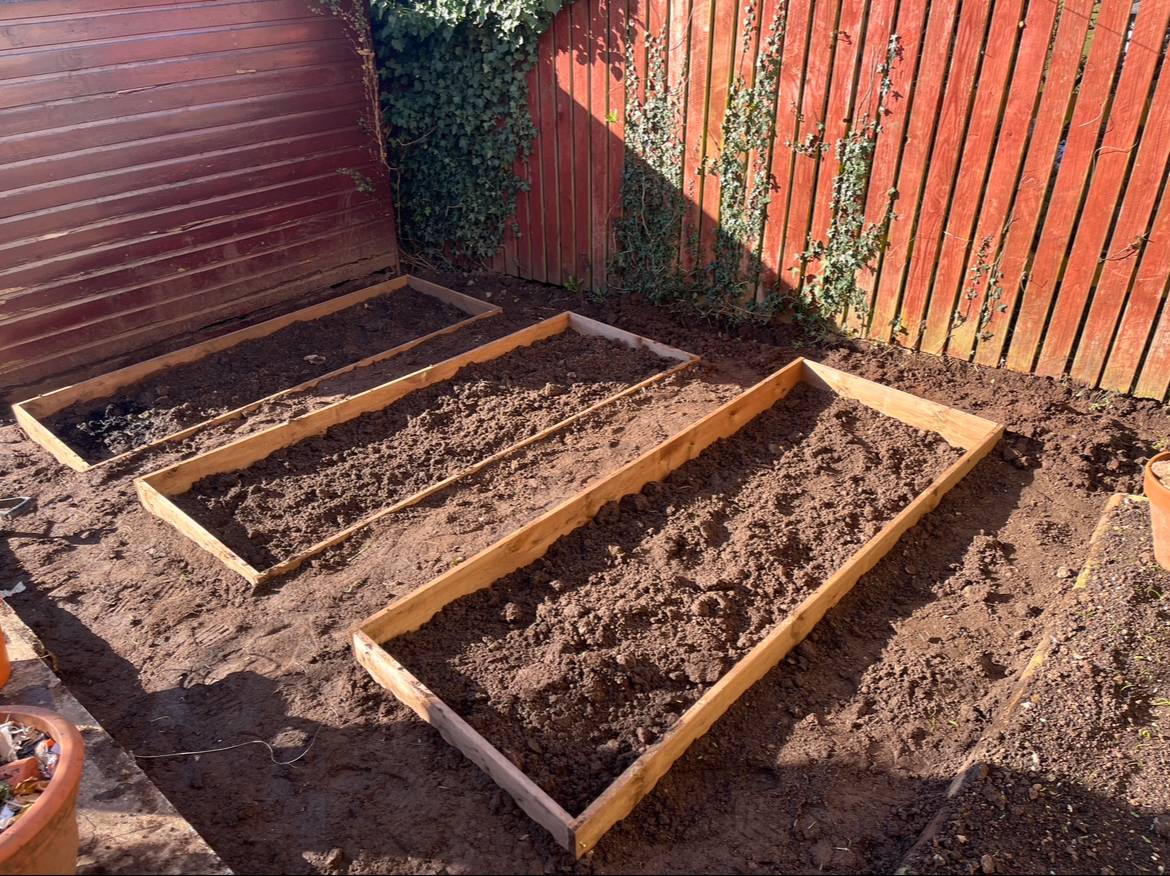
I’m so very excited to share that our veg boxes are in!
They are yet to be filled and planted in but we’re so almost there. Very exciting indeed. We’ll have veg growing before you know it! It’s taken hard work to get to this point, and we’ve already learnt so much on the way.
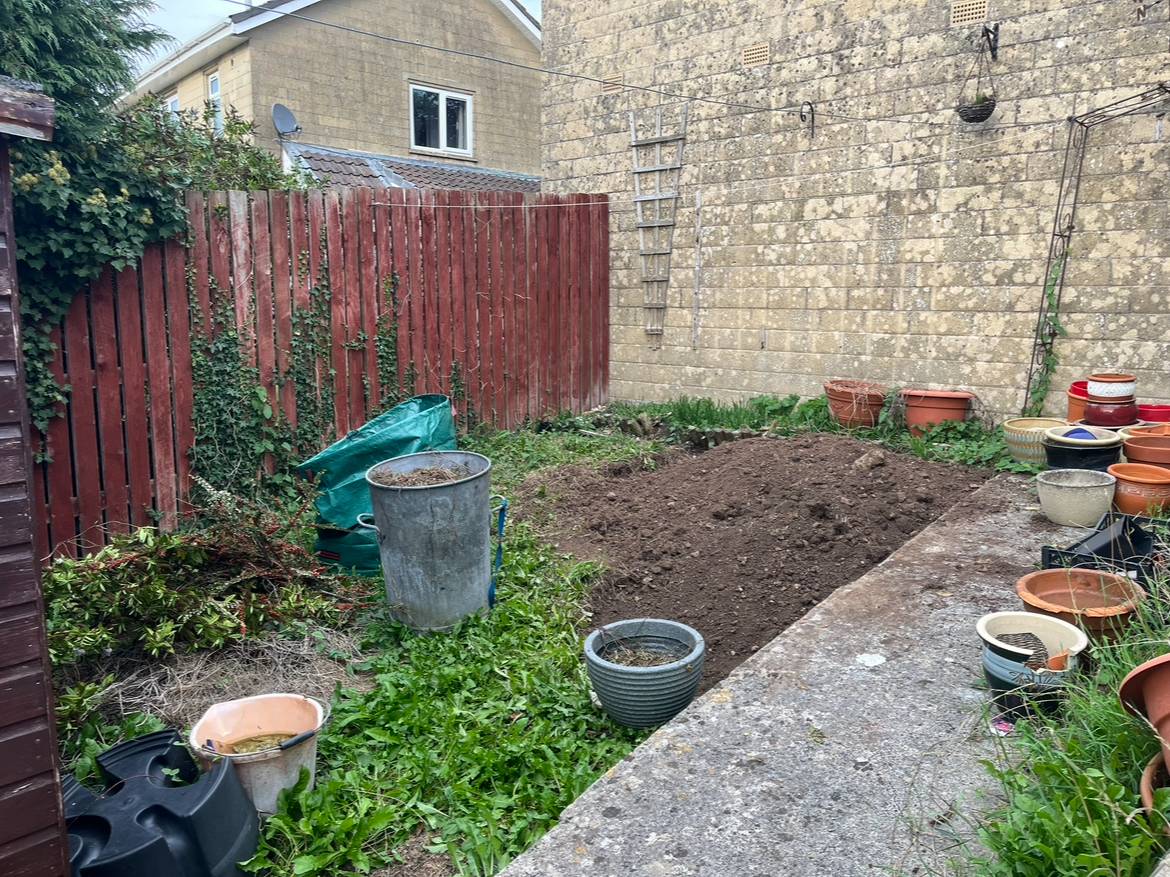
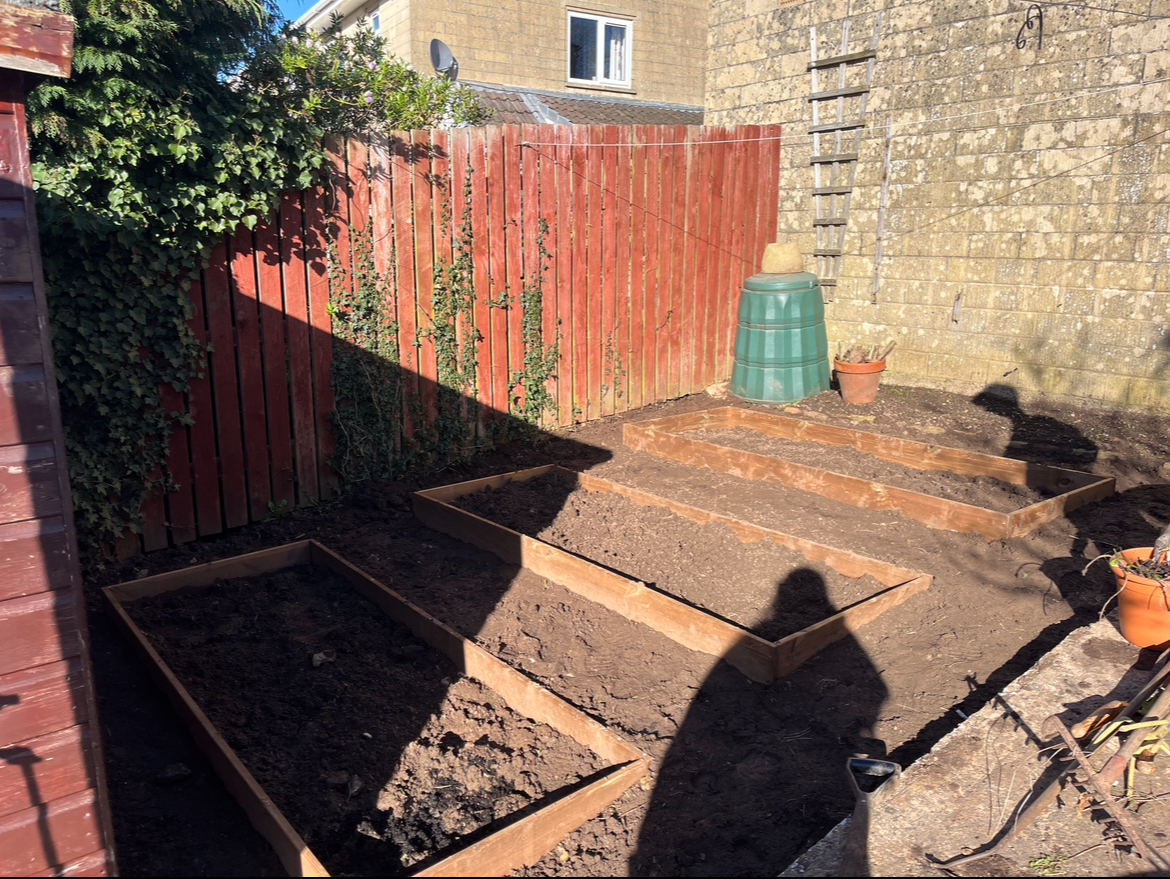
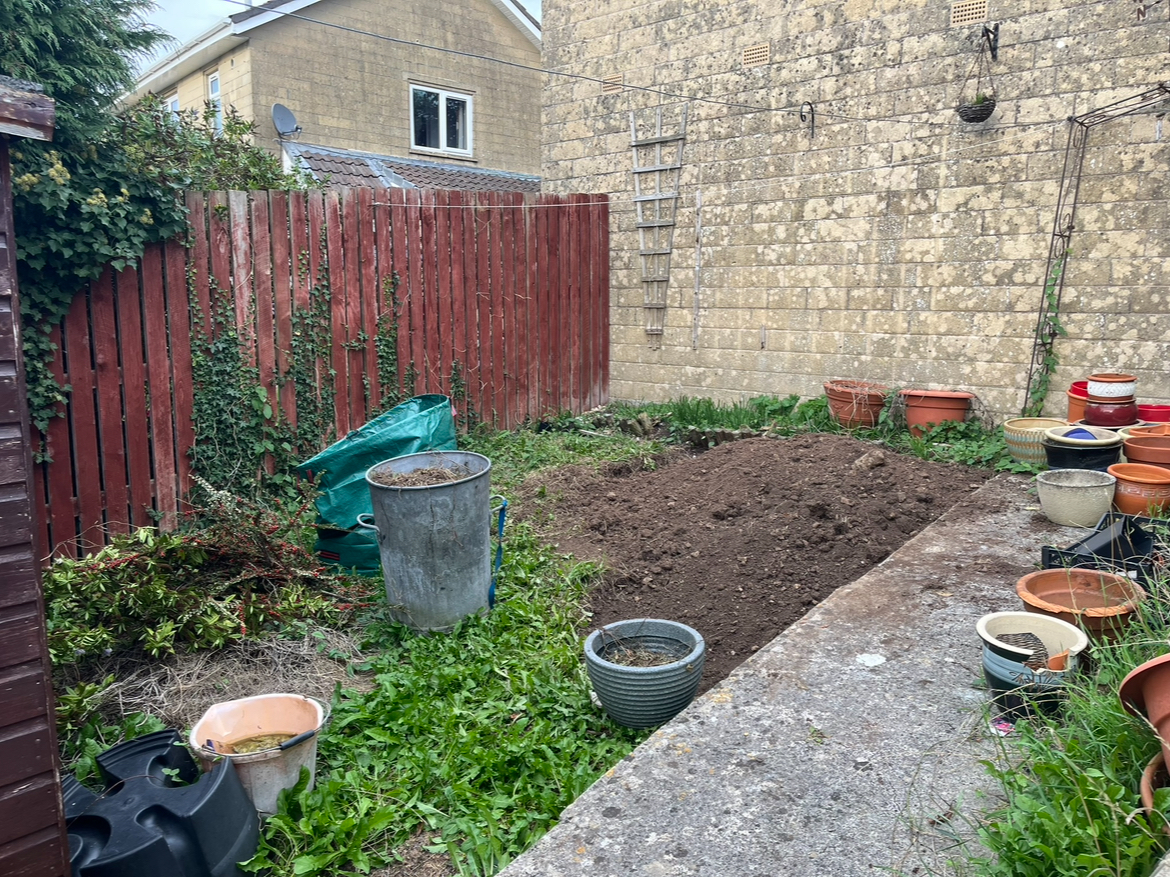
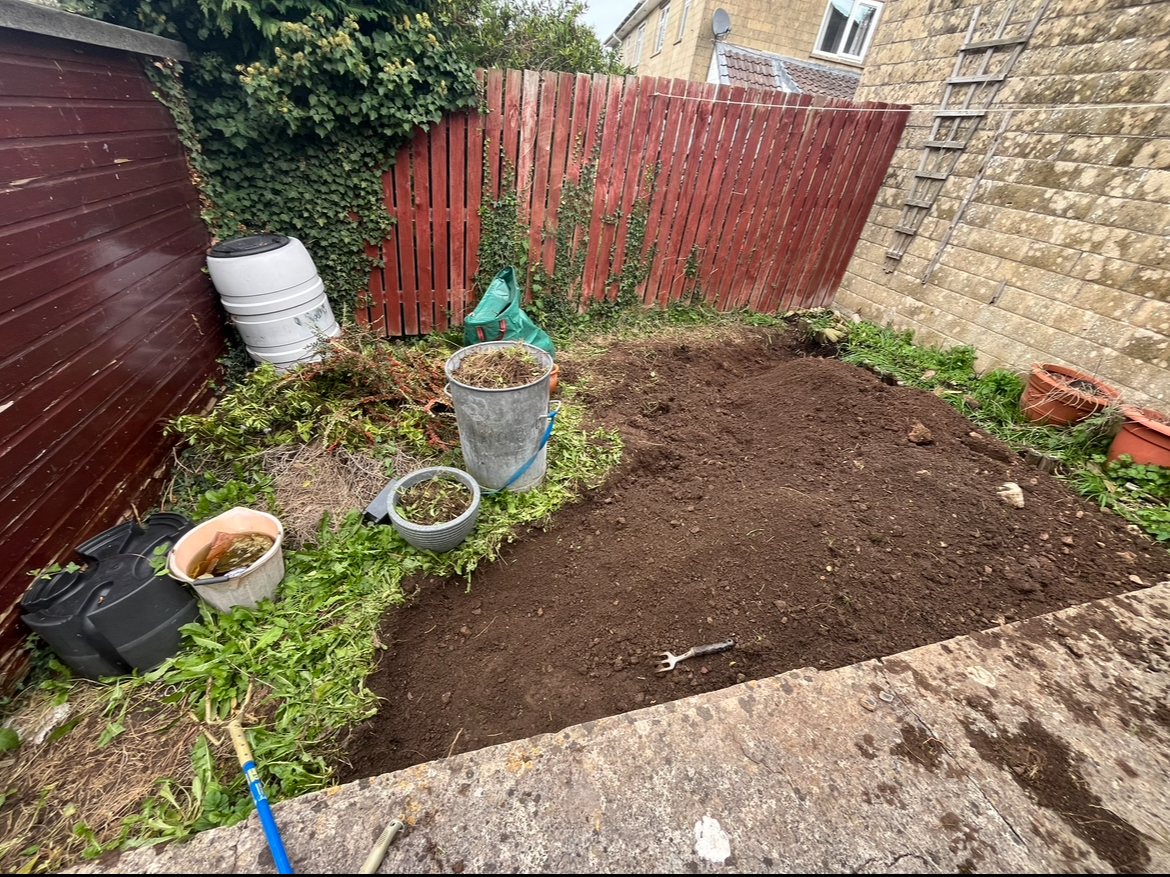
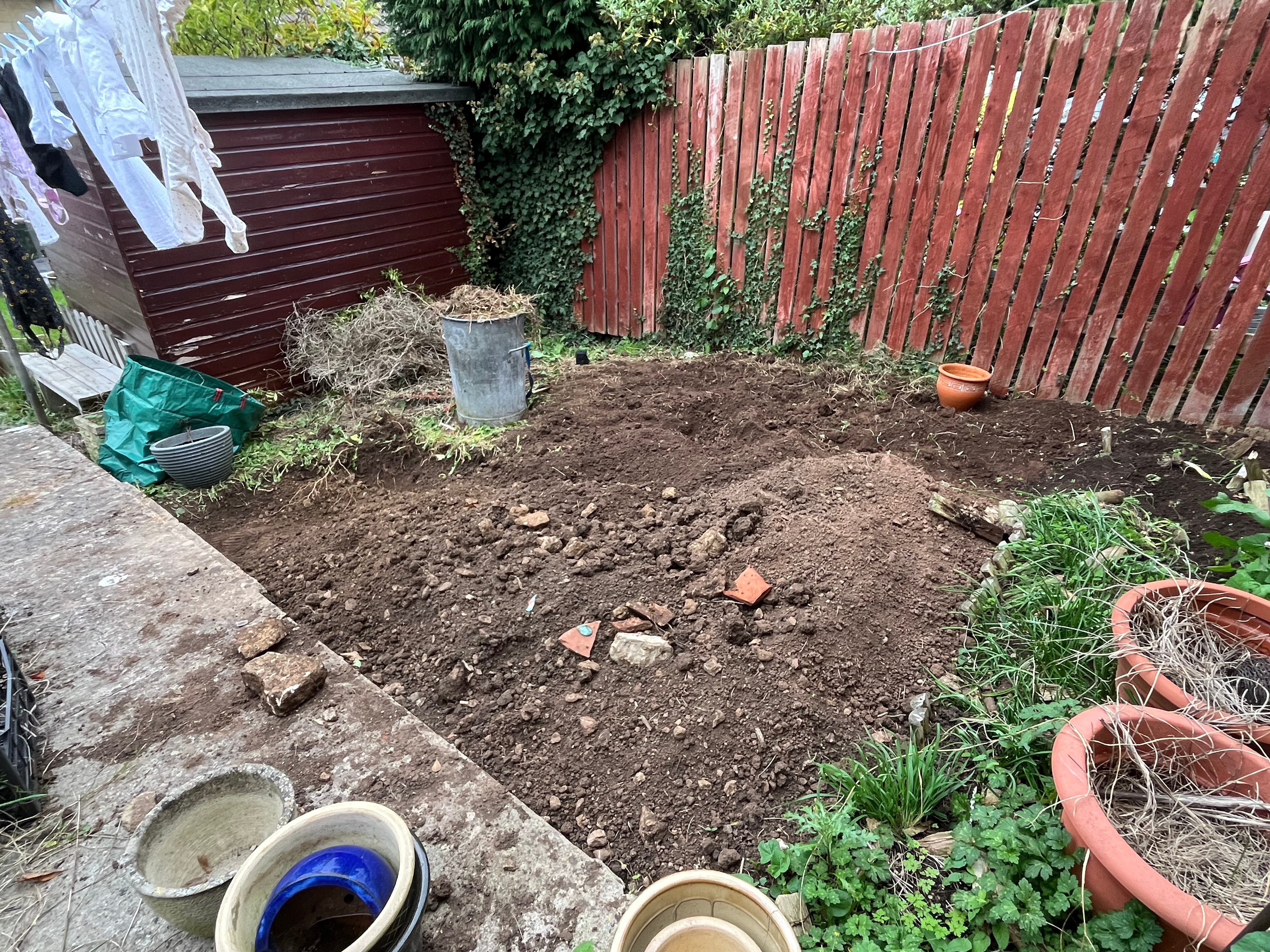
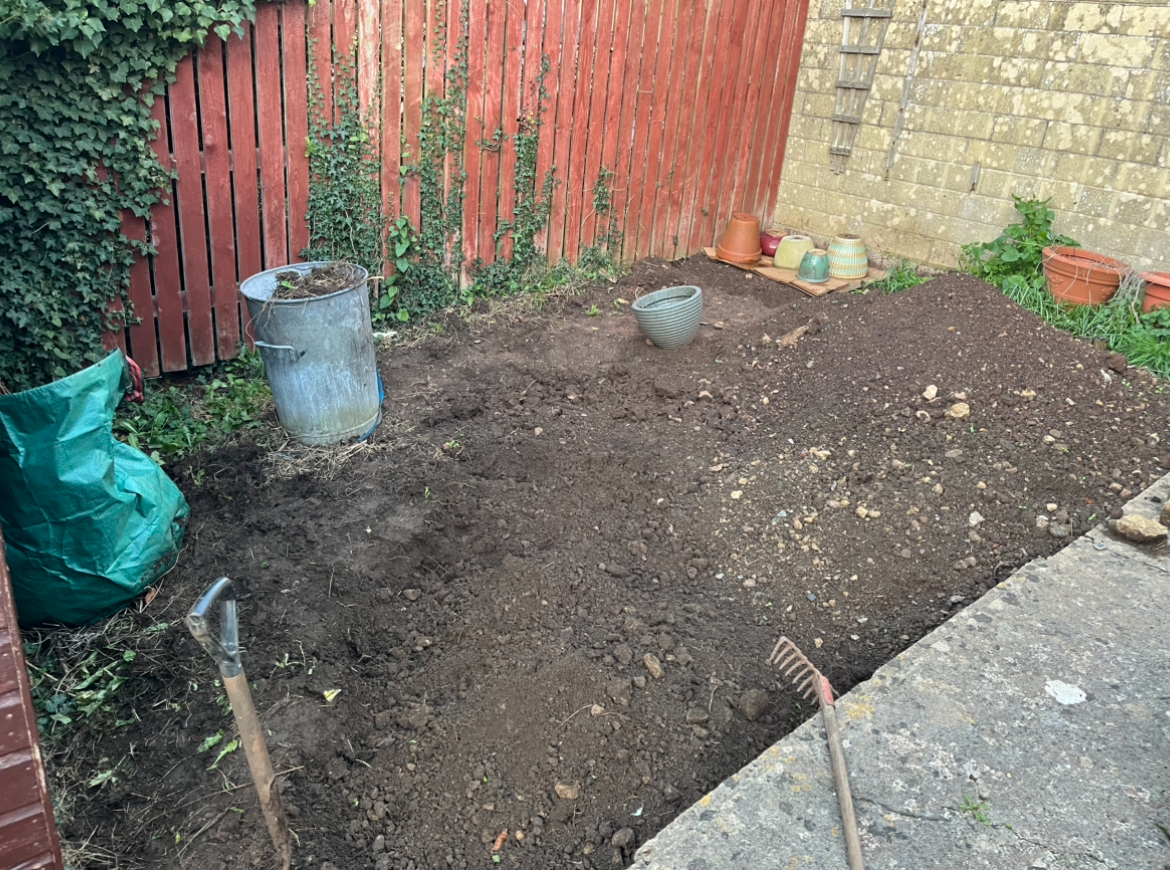
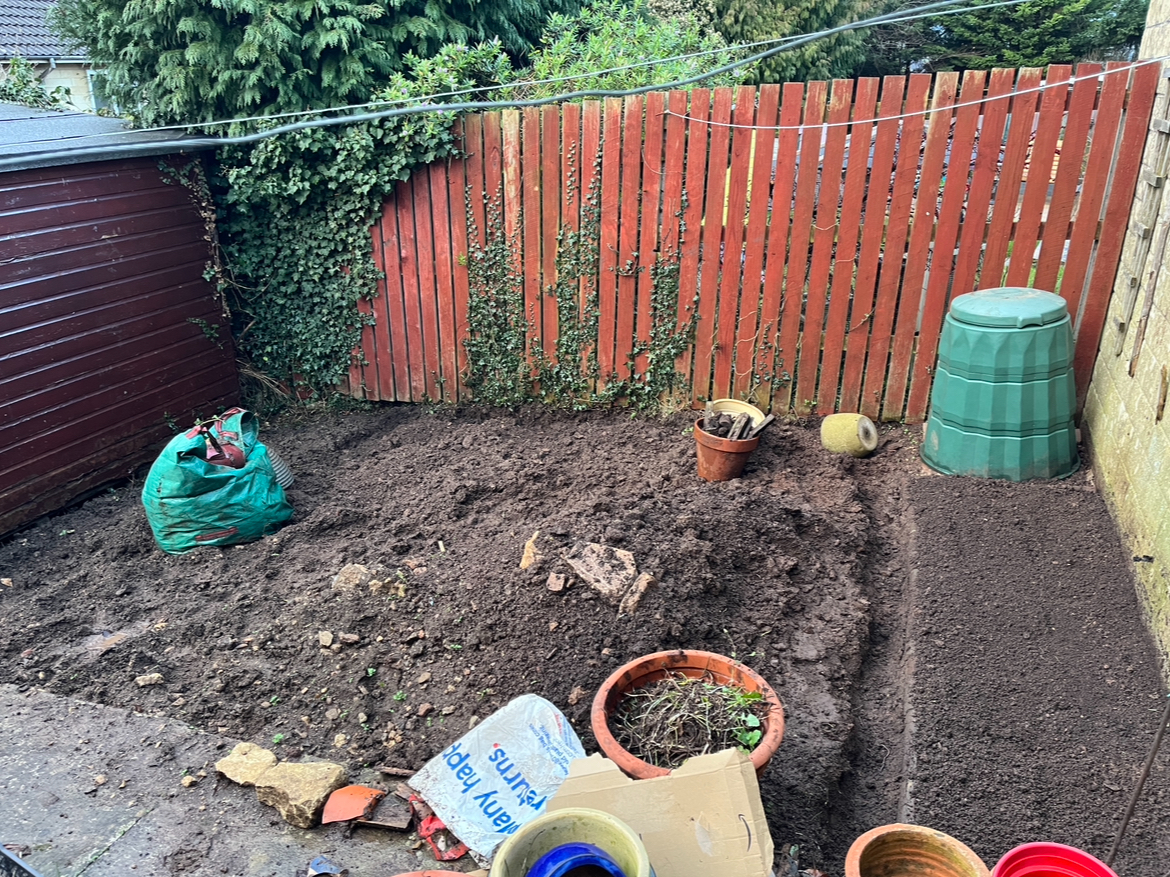
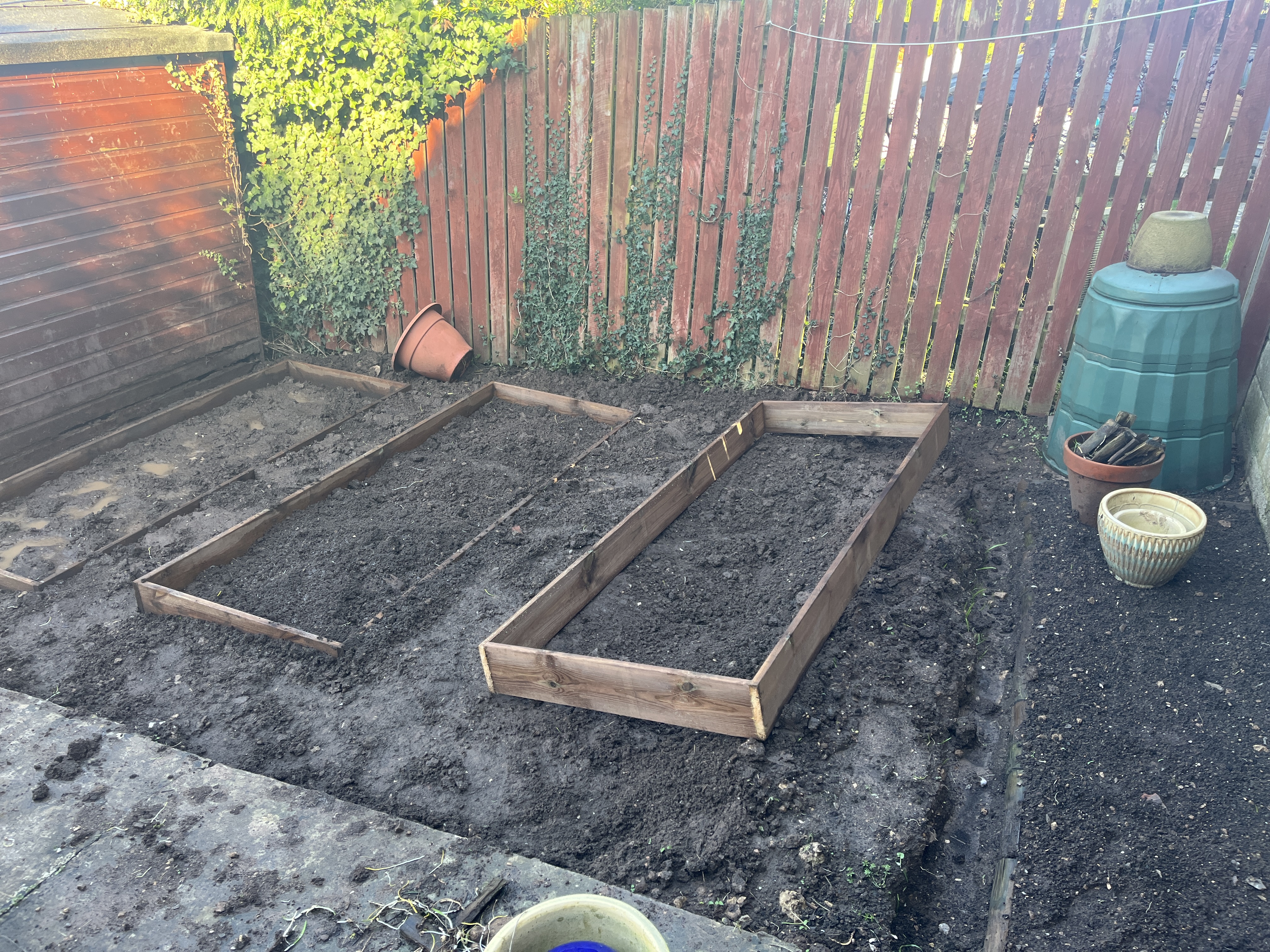
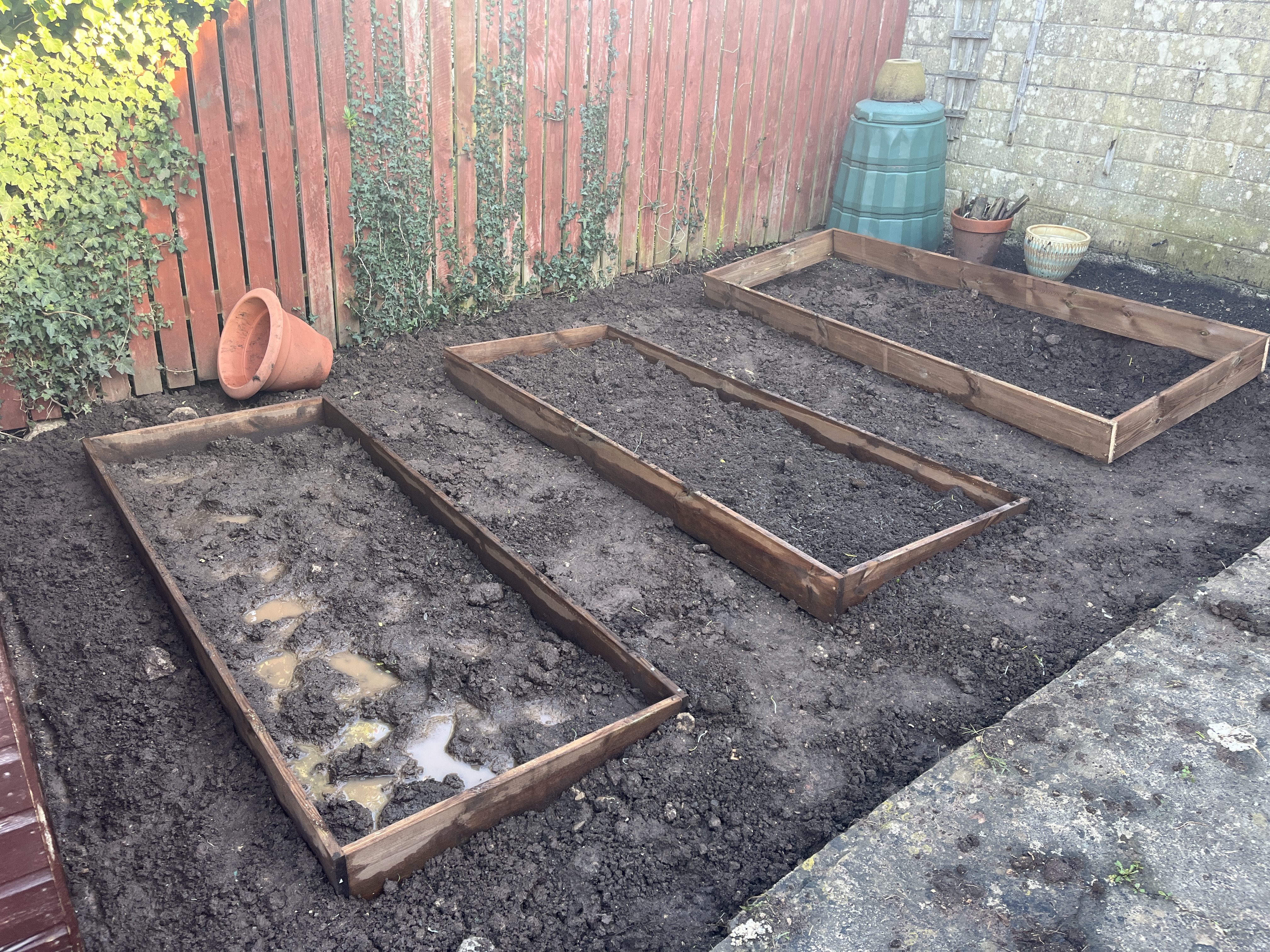
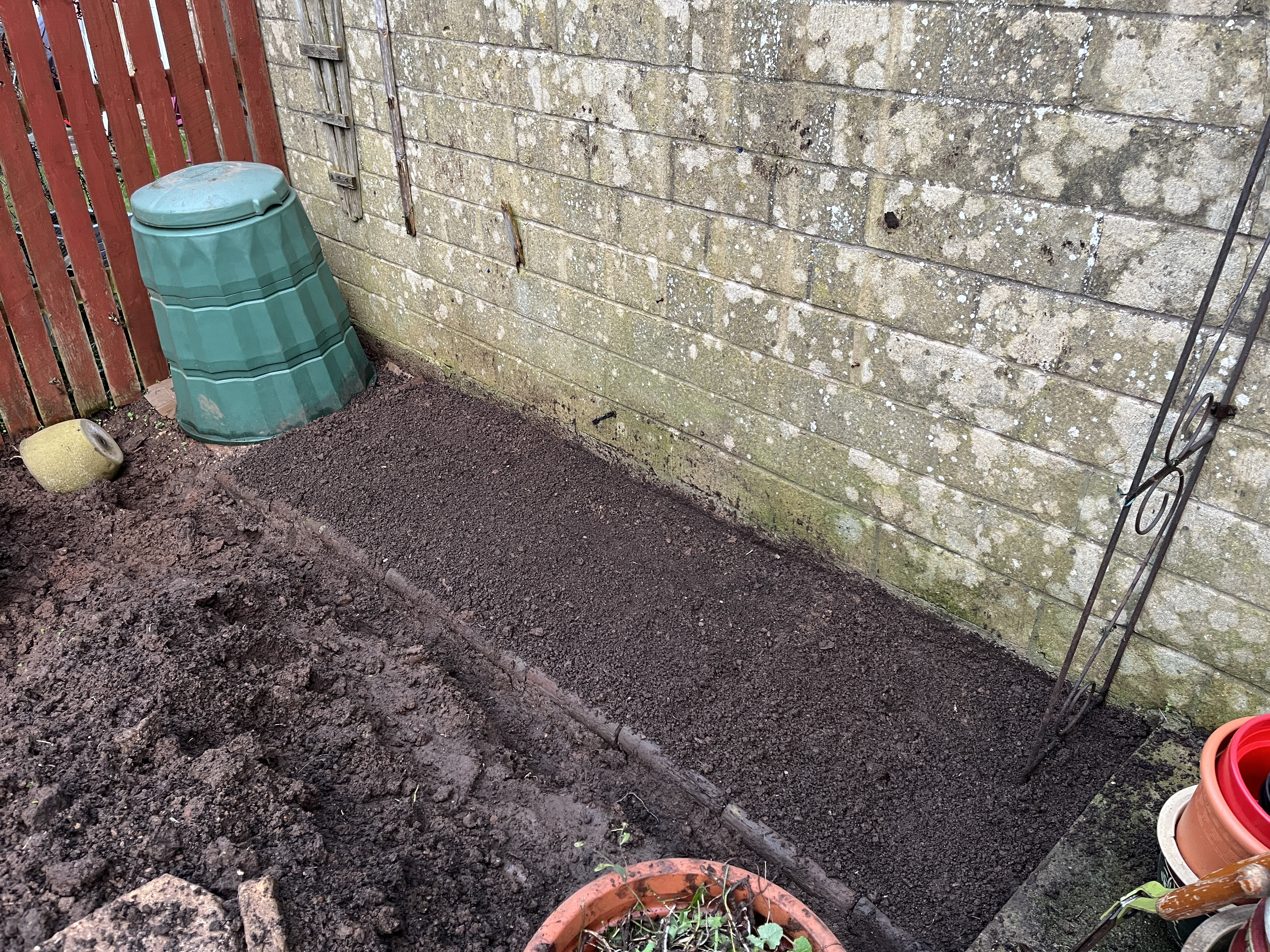
For anyone new here, let me share the journey the top corner of our garden has taken. What used to be a bindweed-ridden patch of grass slowly turned into something resembling a much muddier scene from Holes, before eventually becoming home to a compost bin, the beginnings of a flower bed, and now three wooden veg boxes. It’s been quite the transformation.
Clearing the ground
It all started in the last week of September 2025 (oh wow, how time flies!). Shem and I began our digging journey on the weed ridden area. I had considered doing the no-dig method but we wanted to be ready to grow vegetables in the coming spring 2026. From what I’ve heard, the no-dig method takes a while – especially when you’re dealing with stubborn weeds like bindweed and dandelions!
We also had no idea what we were doing, really. There were many moments when I was standing in the deep mess I had just dug, wondering if we had been rather incompetent in our approach.
However, I’m a big believer of the best way to learn is by doing – and that often includes mistakes too. I’m sure we will look back at this first experience of gardening and laugh at ourselves though.
Anyway, after lots and lots of digging – and lots and lots of pulling of roots – we finally started to get somewhere.
Planning our veg boxes
When building a vegetable patch, it’s important to think about space and layout. We wanted the veg boxes to be practical to work with, but also fit nicely into the corner without making the space feel cramped.
Shem has been the mastermind behind this planning really. He’s a numbers man, and has a great eye for detail. Here’s a little snap of his plan:
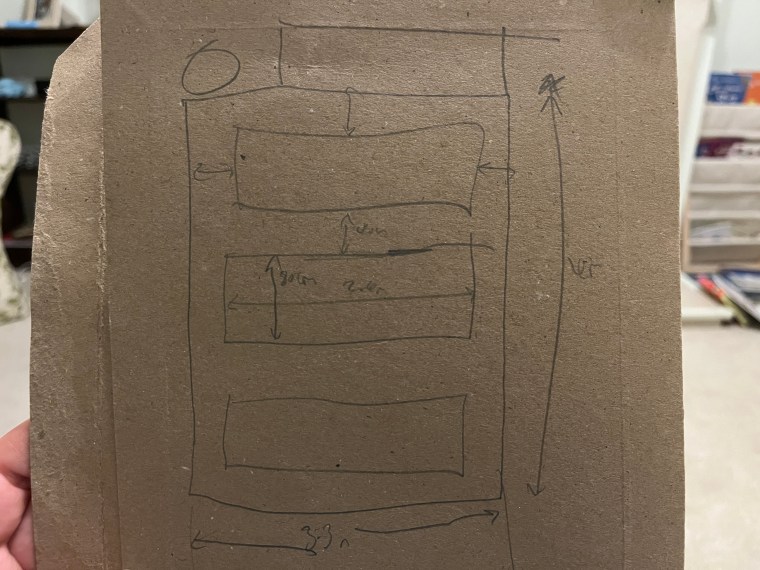
To translate the picture above, the plot is 4m x 3.3m. Each veg box is 2.2m x 80cm. We have also built a footpath around the veg boxes (which will be a wood chip path) of 40-50cm all the way around. Also, our garden is on a slope so each veg box is slightly platformed.
Why we chose veg boxes
Ok, so I keep calling them veg boxes but they’re technically not. We wanted to start simple so rather than investing in raised beds or pre-made structures, we went for DIY wooden veg boxes on the ground.
Essentially, they are planks of wood that Shem screwed together to create neat planting areas – something to contain the soil, define the space, and keep our veg organised.
There were a few reasons for this approach:
- Cost-effective – Using basic planks meant we could create multiple boxes without spending a fortune.
- Aesthetics – I quite like the look of borders around veg patches, and it makes everything feel neat and tidy.
- Control over soil – Even though the boxes are on the ground, they help keep the soil contained and make it easier to add compost or mulch.
- Beginner-friendly – As first-time gardeners, this was a manageable way to get started without feeling overwhelmed.
The idea is that the veg boxes will give a clear structure to the top corner of our garden and set us up nicely for when we start planting.
Positioning the boxes
I can’t say that I had much to do with actually getting the boxes in – that was all Shem. Thanks to such great planning beforehand, it was quite straightforward to do.
The biggest challenge, apparently, was shifting lots of soil to create the small platforms for each box. Our garden sits on a slope, so a bit of levelling was needed to make sure everything sat properly.
Once the frames were in a couple of layers of cardboard were laid down to kill off any leftover weeds and then topped with some soil.
So… what happens next?
Although I can finally look at the top of the garden and say “wow, this is actually starting to look like a vegetable garden”, we are far from finished.
Next up, we need to:
- Fill the boxes with compost and prepare the soil
- Make final decisions on what vegetables we’ll grow (I’m thinking we should start simple)
- Plan out our veg boxes and where each vegetable should grow
- Actually plant something – and hope it survives!
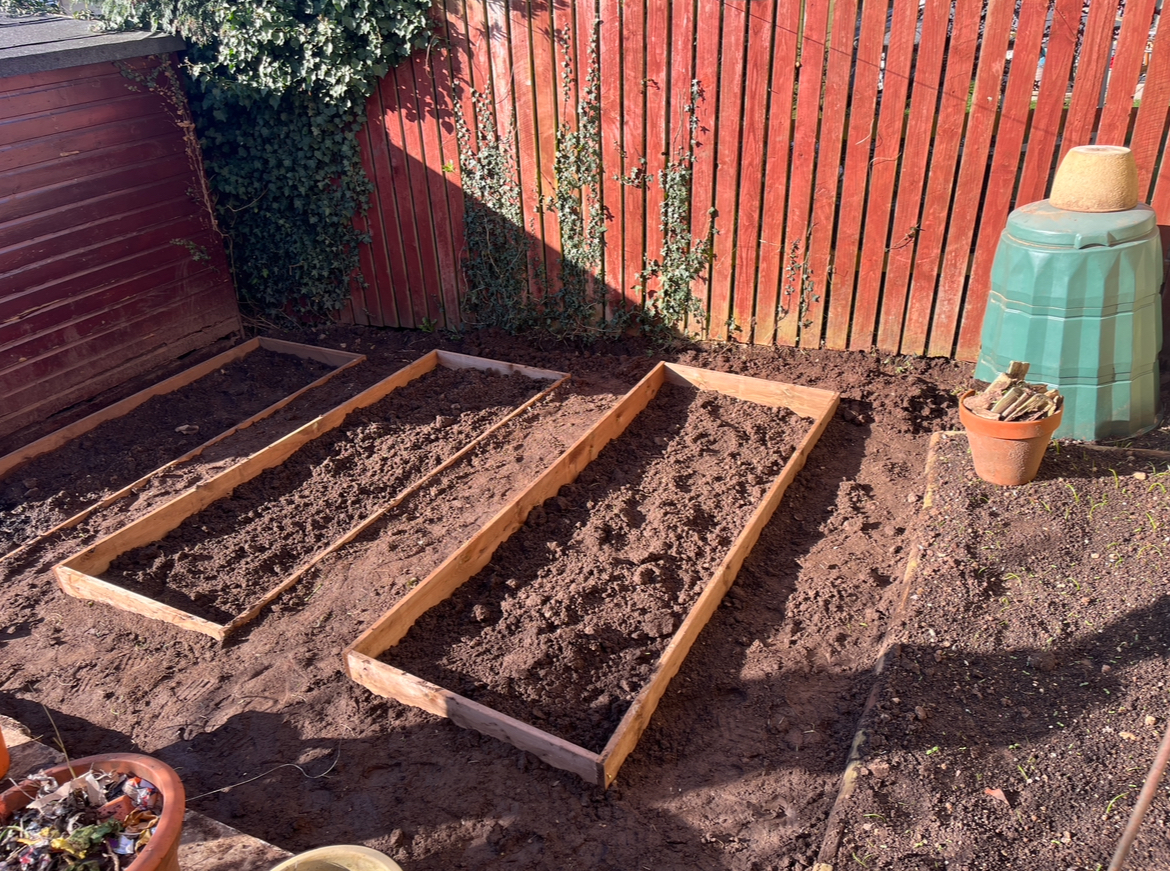
But for now, our veg boxes are just sat there empty, waiting patiently.
And Shem and I are basking in the joy of what feels like a finished job but is really just the beginning of our growing journey.
The proof is in the pudding! (Well, veg patch)
Follow my gardening journey…
If you’re a fellow beginner, a curious onlooker, or someone who just enjoys watching seeds (hopefully) turn into food – you can subscribe below and join me on this gardening adventure.
 GRACEFULL REFLECTIONS